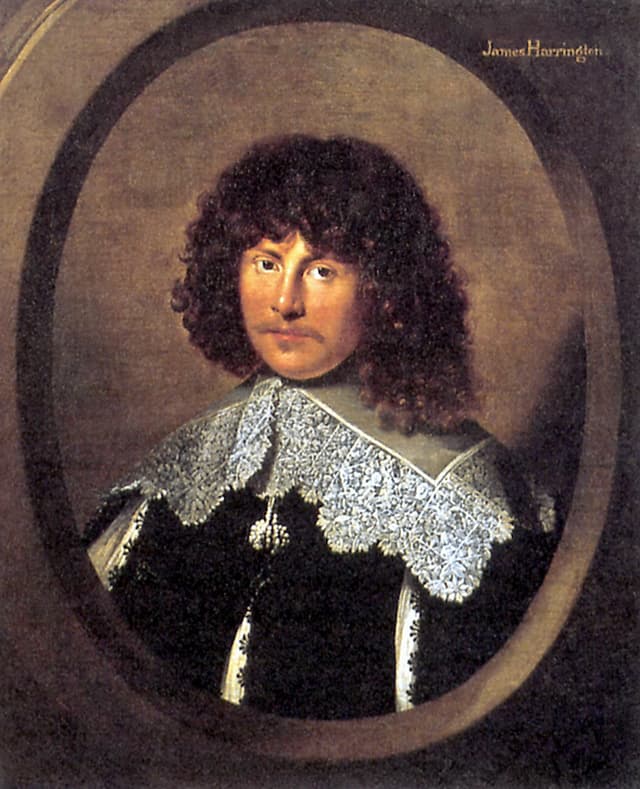
James Harrington
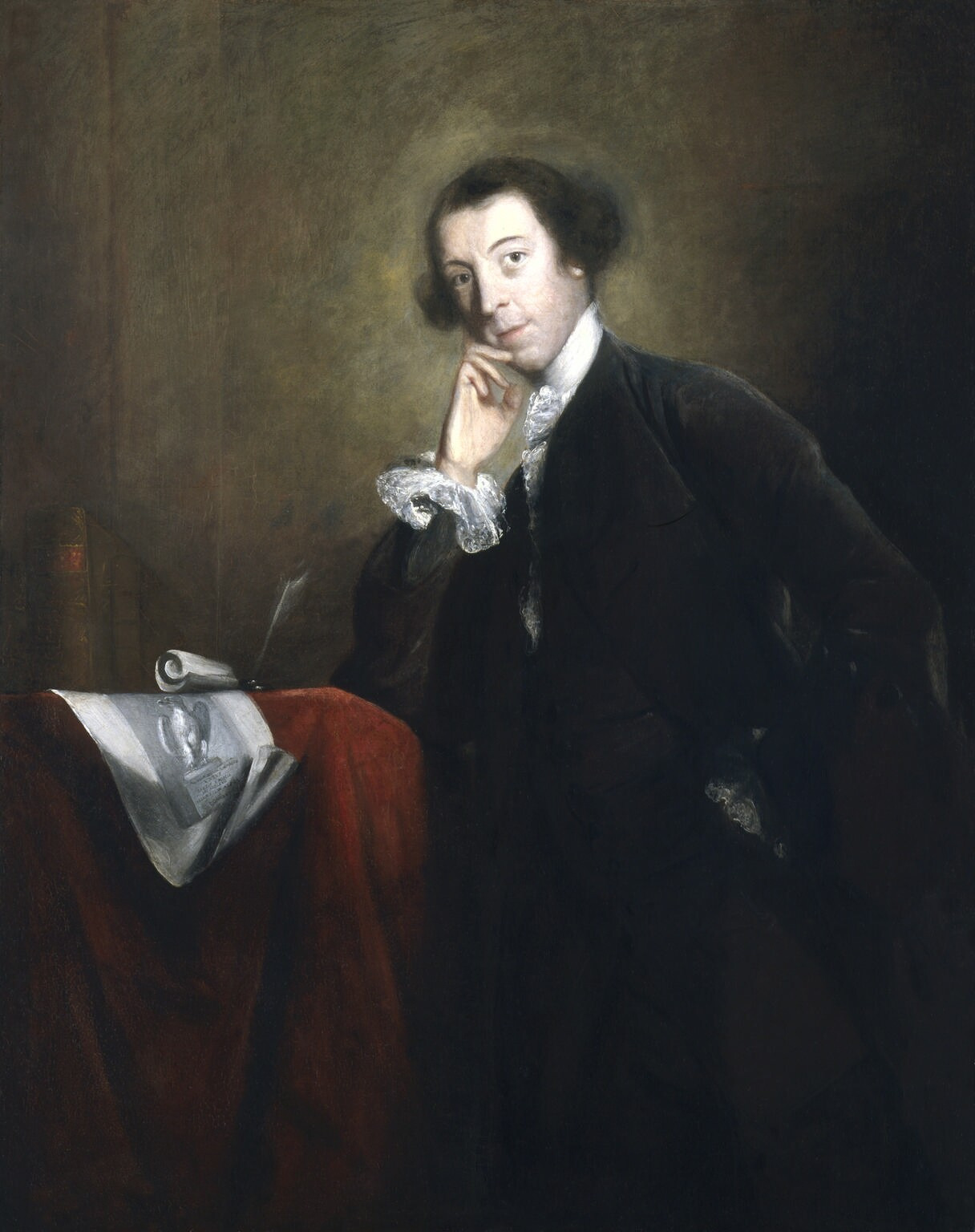
James Harrington was an influential English political theorist whose work significantly shaped the discourse of classical republicanism in the 17th century. Born in 1611, he emerged as a prominent figure during a time of political upheaval in England, advocating for a government that reflected the will of the people rather than the monarchy. His most notable work, 'Oceana,' published in 1656, presented a detailed vision of an ideal republic, emphasizing the importance of property ownership and civic virtue as foundations for a stable government. Harrington's ideas were radical for his time, proposing a system that balanced power among different social classes and promoted a participatory political culture. Harrington's theories not only influenced contemporary political thought but also left a lasting legacy on future generations of political philosophers. His advocacy for a mixed government and the separation of powers can be seen as precursors to modern democratic principles. Despite facing criticism and controversy, particularly for his views on monarchy and property, Harrington's work has been recognized as a significant contribution to the development of republican ideology. His writings continue to be studied for their innovative approach to governance and their impact on the evolution of political theory.
Famous Quotes
View all 10 quotes“Measurement is the first step that leads to control and eventually to improvement. If you can’t measure something, you can’t understand it. If you can’t understand it, you can’t control it. If you can’t control it, you can’t improve it.””
“A mystic seeks and finds the hidden, or as some would state it more aptly, the hidden finds the mystic, who is in search of the hidden.””
“De León: “Letting God be God” is key here. When we speak of the Divine, we need to be aware constantly of “unsaying” God, of not confining the Ineffable One to our language and images. God ultimately is “no-thing.” We call this Eyn Sof (“no end”) in the Kabbalah. I believe you use nihil, Latin for “nothing,” Meister Eckhart. My future countryman and fellow mystic John of the Cross will use the Spanish word “nada.” We cannot even say that God is everything because the language implies a definition that is less than the totality and because there is always nothing to something and something can always be expanded. Learning how to experience God, rather than defining God, is what our kind of apophatic mysticism is all about. Eckhart: Yes, Rabbi, I agree totally. God is nothing. No thing. God is nothingness; and yet God is something. God is neither this thing nor that thing that we can express. God is a being beyond all being: God is a beingless being.[17] De León: The Kabbalah warns against “corporealizing” God, diminishing God with some human description, like the ancient white-bearded man seated on a golden throne high above cotton-like cumulus clouds, surrounded by choirs of adoring angels. Doing so limits God to the poverty of our imagination. This becomes a trap that destroys the faith through which we must engage with God.””
Books from the author

Link to this page
Add a free, dofollow link to Lex on your blog, forum, syllabus, or reading list.

<a href="https://lex-books.com/author/james-harrington"><img src="https://lex-books.com/badges/read-on-lex.svg" alt="James Harrington on Lex" width="160" height="40"></a>[](https://lex-books.com/author/james-harrington)[url=https://lex-books.com/author/james-harrington][img]https://lex-books.com/badges/read-on-lex.svg[/img][/url]James Harrington on Lex: https://lex-books.com/author/james-harrington