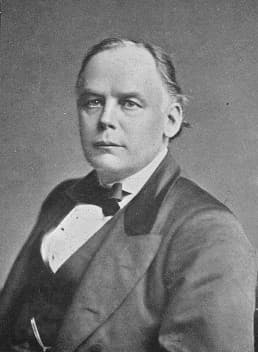
Charles Bradlaugh
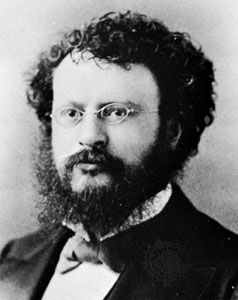
Charles Bradlaugh was an influential English politician and a prominent advocate for atheism and secularism. In 1866, he founded the National Secular Society, which played a crucial role in promoting secularist ideas in a time when religious influence was deeply entrenched in British society. His political career took off when he was elected as the Liberal Member of Parliament for Northampton in 1880, marking a significant moment for non-religious representation in government. However, his commitment to atheism led to a series of legal battles, including imprisonment for his refusal to take the religious oath required for MPs. Despite these challenges, Bradlaugh's determination saw him re-elected multiple times, highlighting his popularity and the support for his cause among constituents. In 1886, after years of struggle, Bradlaugh was finally permitted to take a secular affirmation instead of an oath, a pivotal moment that paved the way for future MPs who wished to affirm rather than swear. His advocacy extended beyond parliamentary procedures; he was instrumental in passing a bill in 1888 that allowed affirmations in both Houses of Parliament, further solidifying the rights of non-religious individuals in legal contexts. Bradlaugh's legacy lies in his relentless fight for secularism and the rights of atheists, making significant strides in the separation of church and state in England.
Famous Quotes
View all 3 quotes“I cannot follow you Christians; for you try to crawl through your life upon your knees, while I stride through mine on my feet.”
“Without free speech no search for truth is possible... no discovery of truth is useful... Better a thousandfold abuse of free speech than denial of free speech. The abuse dies in a day, but the denial slays the life of the people, and entombs the hope of the race.”
“Atheism is without God. It does not assert no God. The atheist does not say that there is no God, but he says 'I know not what you mean by God. I am without the idea of God. The word God to me is a sound conveying no clear or distinct affirmation. I do not deny God, because I cannot deny that of which I have no conception, and the conception of which by its affirmer is so imperfect that he is unable to define it for me.”
Books from the author


Link to this page
Add a free, dofollow link to Lex on your blog, forum, syllabus, or reading list.

<a href="https://lex-books.com/author/charles-bradlaugh"><img src="https://lex-books.com/badges/read-on-lex.svg" alt="Charles Bradlaugh on Lex" width="160" height="40"></a>[](https://lex-books.com/author/charles-bradlaugh)[url=https://lex-books.com/author/charles-bradlaugh][img]https://lex-books.com/badges/read-on-lex.svg[/img][/url]Charles Bradlaugh on Lex: https://lex-books.com/author/charles-bradlaugh