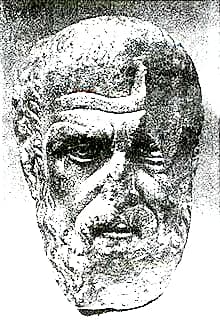
Arrian
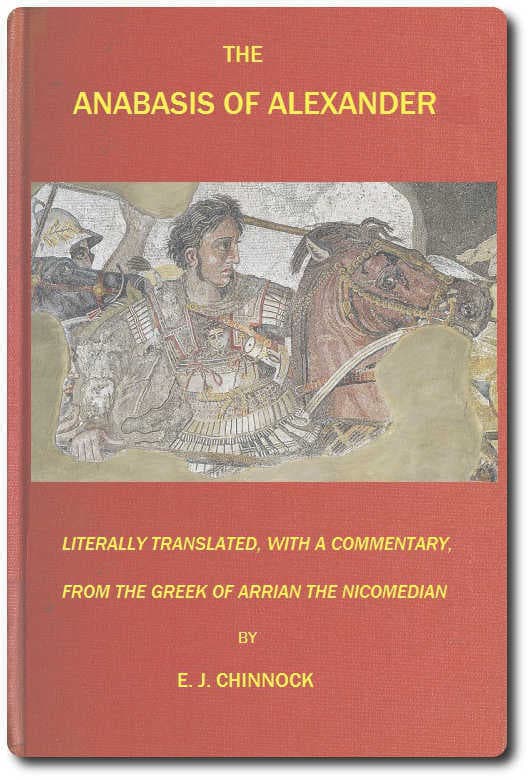
Arrian was a Greek historian, philosopher, and military commander, best known for his detailed accounts of Alexander the Great's campaigns. Born in Nicomedia, he was a student of the philosopher Epictetus, whose teachings on Stoicism influenced Arrian's writings. His most significant work, 'Anabasis Alexandri,' serves as a crucial historical source, providing insights into Alexander's conquests and the cultural interactions of the time. Arrian's narrative is notable for its clarity and organization, often regarded as one of the most reliable accounts of Alexander's life and military strategies. In addition to 'Anabasis,' Arrian authored 'Indica,' which describes the geography and customs of India, reflecting his interest in the broader world beyond the Hellenistic sphere. His works not only contributed to the understanding of Alexander's legacy but also influenced later historians and writers. Arrian's blend of historical narrative and philosophical reflection established him as a key figure in the tradition of ancient historiography, bridging the gap between history and philosophy. His legacy endures as a vital source for scholars studying Alexander the Great and the cultural dynamics of the ancient world.
Famous Quotes
View all 2 quotes“Most people, if they know they have done wrong, foolishly suppose they can conceal their error by defending it, and finding a justification for it; but in my belief there is only one medicine for an evil deed, and that is for the guilty man to admit his guilt and show that he is sorry for it. Such an admission will make the consequences easier for the victim to bear, and the guilty man himself, by plainly showing his distress at former transgressions, will find good grounds of hope for avoiding similar transgressions in the future.””
“In my opinion, at least, the splendid achievements of Alexander are the clearest possible proof that neither strength of body, nor noble blood, nor success in war even greater than Alexander's own... that none of these things, I say, can make a man happy, unless he can win one more victory in addition to those the world thinks so great---the victory over himself.””
Books from the author


Link to this page
Add a free, dofollow link to Lex on your blog, forum, syllabus, or reading list.

<a href="https://lex-books.com/author/arrian"><img src="https://lex-books.com/badges/read-on-lex.svg" alt="Arrian on Lex" width="160" height="40"></a>[](https://lex-books.com/author/arrian)[url=https://lex-books.com/author/arrian][img]https://lex-books.com/badges/read-on-lex.svg[/img][/url]Arrian on Lex: https://lex-books.com/author/arrian