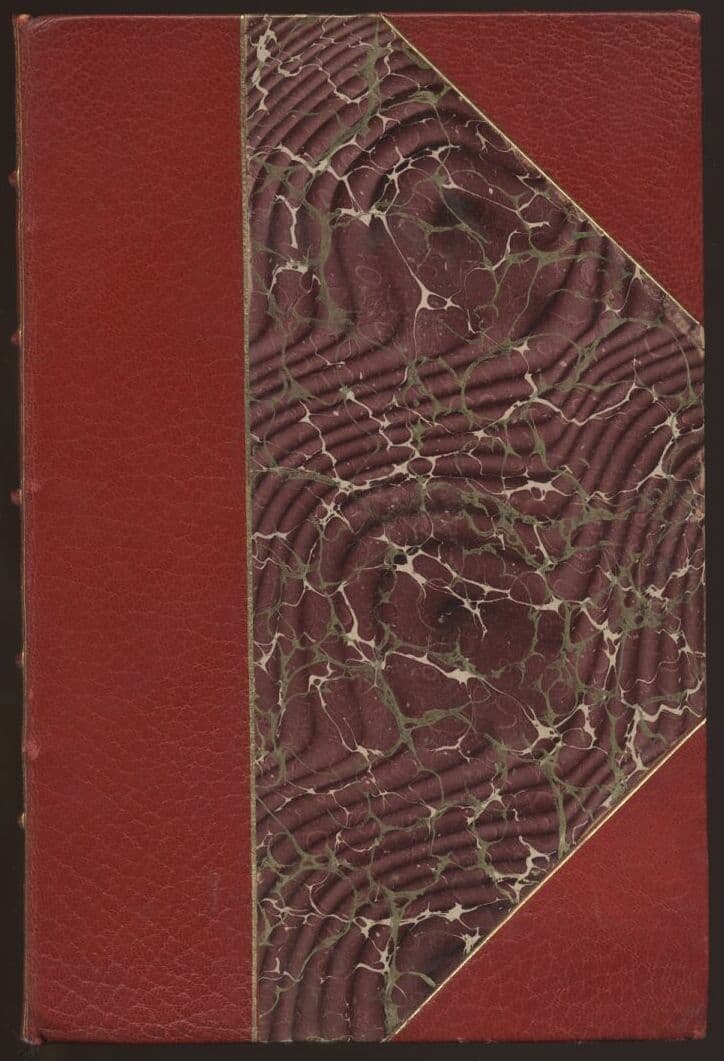
The Plumed Serpent
1926
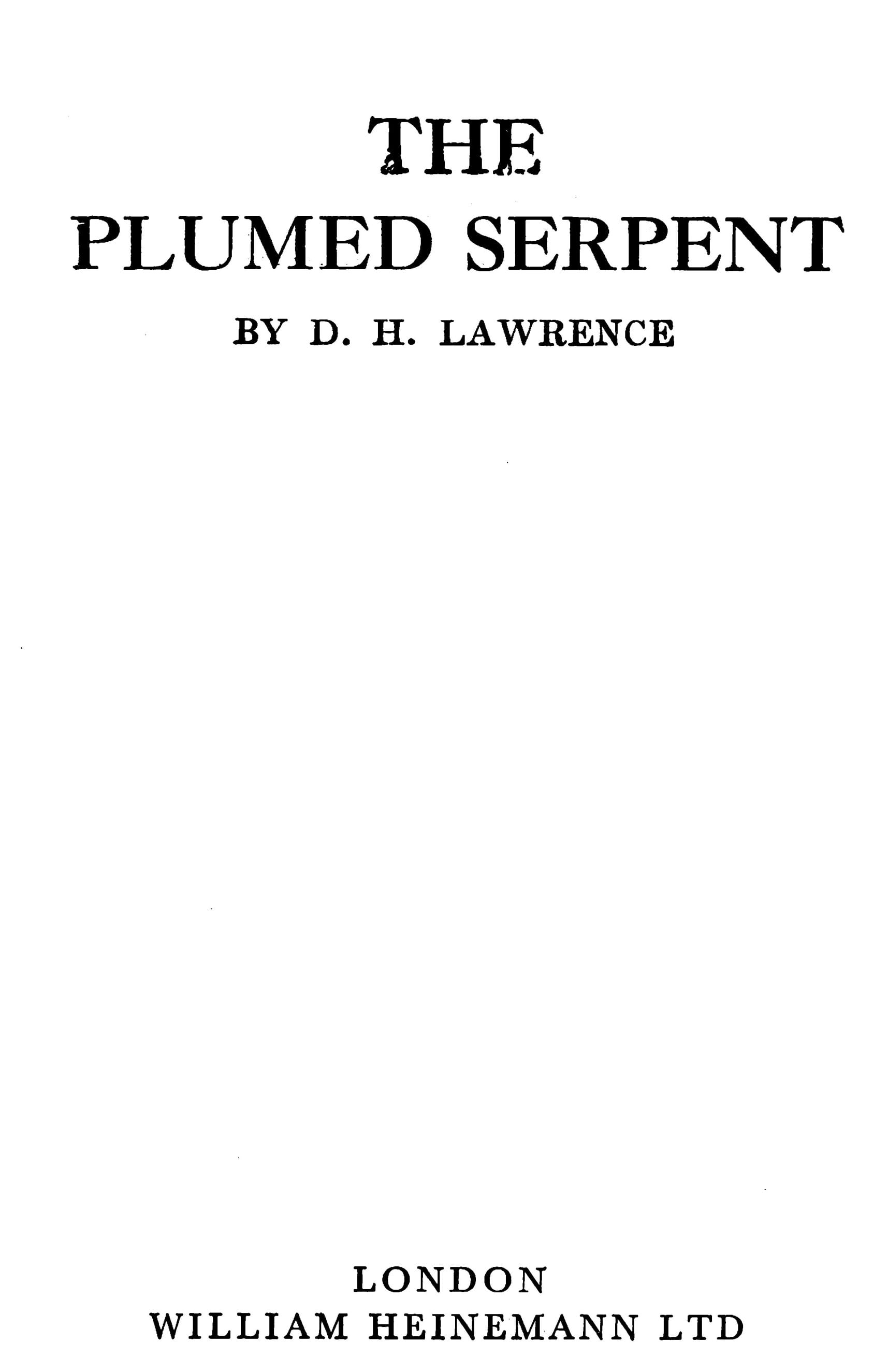
D.H. Lawrence's most radical and unsettling vision: an Irish woman abandons herself to a pagan Mexican death cult. Kate Leslie arrives in post-Revolution Mexico already hollowed out by grief and disillusionment. She falls for Don Cipriano, a general who serves as the earthly vessel for Huitzilopochtli, the war god. Under the spell of the Men of Quetzalcoatl, led by the enigmatic Don Ramón, she surrenders her name, her faith, her very self to something ancient and brutal. Lawrence constructs a fever-dream Mexico where Christianity collapses and blood-soaked gods return. This is not a comfortable read about "finding oneself", it is a descent into something dark and demanding. Is Kate liberated from Western nicety, or is she simply exchanging one submission for another? Lawrence, characteristically, refuses to say. The result is a novel that provokes, disturbs, and refuses to be forgotten.
Editions
X-Ray
“Used to all kinds of society, she watched people as one reads the pages of a novel, with a certain disinterested amusement.””
— D. H. Lawrence
“I have a very great fear of love. It is so personal. Let each bird fly with its own wings, and each fish swim its own course.”
— D. H. Lawrence
“In the depths of him, he too didn't want to go. But he was a born American, and if anything was on show, he had to see it. That was .””
— D. H. Lawrence
“I love the word Quetzalcoatl.''The word!' he repeated.His eyes laughed at her teasingly all the time.'What do you think, Mrs Leslie,' cried the pale-faced young Mirabal, in curiously resonant English, with a French accent. 'Don't you think it would be wonderful if the gods came back to Mexico? our own gods?' He sat in intense expectation, his blue eyes fixed on Kate's face, his soup-spoon suspended.Kate's face was baffled with incomprehension.'Not those Aztec horrors!' she said.'The Aztec horrors! The Aztec horrors! Well, perhaps they were not so horrible after all. But if they were, it was because the Aztecs were all tied up. They were in a cul de sac, so they saw nothing but death. Don't you think so?''I don't know enough!' said Kate.'Nobody knows any more. But if you like the word Quetzalcoatl, don't you think it would be wonderful if he came back again? Ah, the names of the gods! Don't you think the names are like seeds, so full of magic, of the unexplored magic? Huitzilopochtli!--how wonderful! And Tlaloc! Ah! I love them! I say them over and over, like they say Mani padma Om! in Tibet. I believe in the fertility of sound. Itzpapalotl--the Obsidian Butterfly! Itzpapalotl! But say it, and you will see it does good to your soul. Itzpapalotl! Tezcatlipocá! They were old when the Spaniards came, they needed the bath of life again. But now, re-bathed in youth, how wonderful they must be!””
— D. H. Lawrence
“There is no such thing as liberty. The greatest liberators are usually slaves of an idea. The freest people are slaves to convention and public opinion, and more still, slaves to the industrial machine. There is no such thing as liberty. You only change one sort of domination for another. All we can do is to choose our master.””
— D. H. Lawrence
“There is no such thing as liberty,' she heard the quiet, deep, dangerous voice of Don Ramón repeating. 'There is no such thing as liberty. The greatest liberators are usually slaves of an idea. The freest people are slaves to convention and public opinion, and more still, slaves to the industrial machine. There is no such thing as liberty. You only change one sort of domination for another. All we can do is to choose our master.””
— D. H. Lawrence
“From the first instant, Kate respected her for her isolation and her dauntless. The world is made up of a mass of people and a few individuals. Mrs. Norris was one of the few individuals. True, she played her social game all the time. But she was an odd number; and all alone, she could give the even numbers a bad time.””
— D. H. Lawrence
“Continuaré tirando pan al agua; y si mis hijos vuelven algún día, seré feliz.””
— D. H. Lawrence
“Talvez fosse isto, a América… O grande continente da morte, o continente que destrói o que os outros construíram. O continente que luta apenas por arrancar os olhos da face de Deus…””
— D. H. Lawrence
Link to this book
Add a free, dofollow link to Lex on your blog, forum, syllabus, or reading list.

<a href="https://lex-books.com/book/the-plumed-serpent-5291f7f1-3533-4d43-99b5-64b80e6698fa"><img src="https://lex-books.com/badges/read-on-lex.svg" alt="Read The Plumed Serpent by D. H. Lawrence free on Lex" width="160" height="40"></a>[](https://lex-books.com/book/the-plumed-serpent-5291f7f1-3533-4d43-99b5-64b80e6698fa)[url=https://lex-books.com/book/the-plumed-serpent-5291f7f1-3533-4d43-99b5-64b80e6698fa][img]https://lex-books.com/badges/read-on-lex.svg[/img][/url]Read The Plumed Serpent by D. H. Lawrence free on Lex: https://lex-books.com/book/the-plumed-serpent-5291f7f1-3533-4d43-99b5-64b80e6698faCite this book
Reading this edition for a paper or guide? Copy a citation.
Lawrence, D. H.. The Plumed Serpent. Lex, lex-books.com/book/the-plumed-serpent-5291f7f1-3533-4d43-99b5-64b80e6698fa.Lawrence, D. H. (1926). The Plumed Serpent. Lex. https://lex-books.com/book/the-plumed-serpent-5291f7f1-3533-4d43-99b5-64b80e6698faLawrence, D. H.. The Plumed Serpent. Lex. https://lex-books.com/book/the-plumed-serpent-5291f7f1-3533-4d43-99b5-64b80e6698fa.