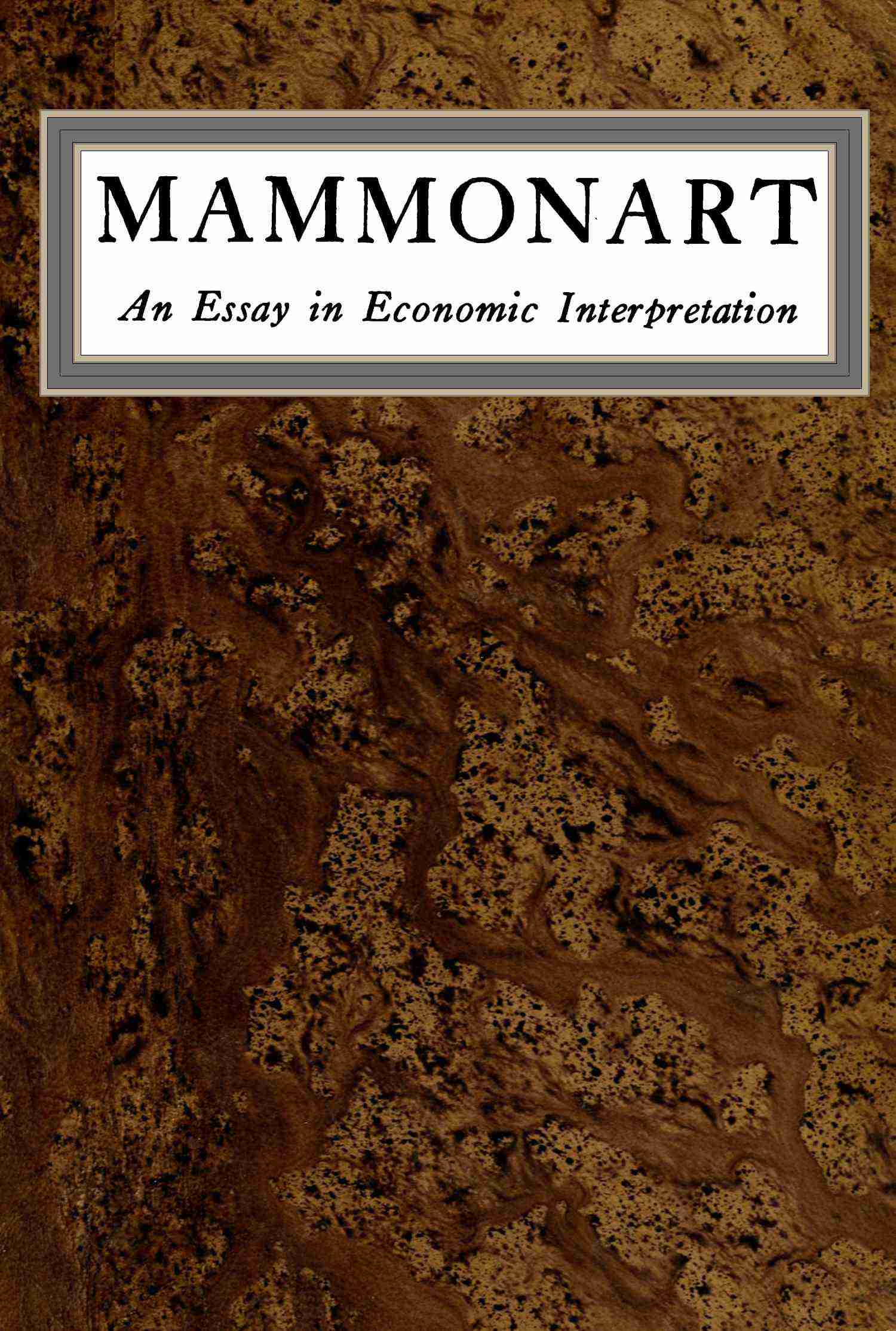
The Profits of Religion: An Essay in Economic Interpretation
The Profits of Religion: An Essay in Economic Interpretation
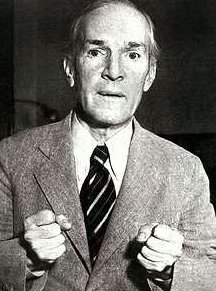
Upton Sinclair wrote this book with the same fury that made "The Jungle" explode onto American consciousness. Here, he turns his investigative wrath toward the intersection of faith and finance, arguing that religion functions as the perfect con: it promises elevation while systematically pickpocketing the desperate. The opening metaphor is devastating, thousands of people straining to lift themselves by their bootstraps, too distracted to notice the thief rifling through their pockets. That thief, Sinclair contends, is the institutionalized church itself. Written in 1917 as the optimism of early twentieth-century socialism still burned bright, this is neither a theological treatise nor a mere screed. It is a forensic examination of how religious institutions collude with capitalist power structures to keep the poor poor and the faithful docile. Sinclair dissects revival meetings, mega-churches, and spiritual hucksterism with the precision of a muckraker who has seen enough to know that the most dangerous lies are the ones that feel holy. His proposed alternative, a "new religion" grounded in reason, science, and human solidarity, dates the book to its moment, but its core provocation does not: What if the greatest spiritual scam isn't the faith itself, but the economic machinery humming beneath the altar?
Editions
X-Ray
“...the priests of all these cults, the singers, shouters, prayers and exhorters of Bootstrap-lifting have as their distinguishing characteristic that they do very little lifting at their own bootstraps, and less at any other man's. Now and then you may see one bend and give a delicate tug, of a purely symbolical character: as when the Supreme Pontiff of the Roman Bootstrap-lifters comes once a year to wash the feet of the poor; or when the Sunday-school Superintendent of the Baptist Bootstrap-lifters shakes the hand of one of his Colorado mine-slaves. But for the most part the priests and preachers of Bootstrap-lifting walk haughtily erect, many of them being so swollen with prosperity that they could not reach their bootstraps if they wanted to. Their role in life is to exhort other men to more vigorous efforts at self-elevation, that the agents of the Wholesale Pickpockets' Association may ply their immemorial role with less chance of interference.””
— Upton Sinclair
“In the year 1819 an act of Parliament was proposed limiting the labor of children nine years of age to four-teen hours a day. This would seem to have been a reasonable provision, likely to have won the approval of Christ; yet the bill was violently opposed by Christian employers, backed by Christian clergymen. It was interfering with freedom of contract, and therefore with the will of Providence; it was anathema to an established Church, whose function was in 1819, as it is in 1918, and was in 1918 B. C., to teach the divine origin and sanction of the prevailing economic order.””
— Upton Sinclair
“It is not the New Inquisition which is our enemy today; it is hereditary Privilege. It is not Superstition, but Big Business which makes use of Superstition as a wolf makes use of sheep's clothing.””
— Upton Sinclair
“Like all religious thinkers, he carries with his scholar's equipment a pair of metaphysical wings, wherewith at any moment he may soar into the empyrean, out of reach of vulgar materialists, like you and me.””
— Upton Sinclair
“What are we to say when we see asceticism preached to the poor by fat and comfortable retainers of the rich?””
— Upton Sinclair
“I have used the illustration of soap and hot water; one can imagine he is actually watching the scrubbing process, seeing the proletarian Founder emerging all new and respectable under the brush of this capitalist professor. The professor has a rule all his own for reading the scriptures; he tells us that when there are two conflicting sayings, the rule of interpretation is that "the more spiritual is to be preferred." Thus, one gospel makes Jesus say: "Blessed are ye poor." Another gospel makes Jesus say: "Blessed are ye poor in spirit." The first one is crude and literal; obviously the second must be what Jesus meant! In other words, the professor and his church have made for their economic masters a treacherous imitation virtue to be taught to wage-slaves, a quality of submissiveness, impotence, and futility, which they call by the name of "spirituality". This virtue they exalt above all others, and in its name they cut from the record of Jesus everything which has relation to the realities of life!””
— Upton Sinclair
“the state of California; state support for parish schools”
— Upton Sinclair
“Everywhere I turn I see it”
— Upton Sinclair
“In the second decade of this century of enlightenment and progress, in our free American democracy, whose constitution proclaims religious toleration, and forbids the establishment by the state of any form of worship, I was made to serve a sentence of eighteen hours in the state prison of Delaware for playing a game of tennis on the Sabbath. I””
— Upton Sinclair
Link to this book
Add a free, dofollow link to Lex on your blog, forum, syllabus, or reading list.

<a href="https://lex-books.com/book/the-profits-of-religion-an-essay-in-economic-interpretation-6119646b-7577-4f33-8eb6-d499c2970f5b"><img src="https://lex-books.com/badges/read-on-lex.svg" alt="Read The Profits of Religion: An Essay in Economic Interpretation by Upton Sinclair free on Lex" width="160" height="40"></a>[](https://lex-books.com/book/the-profits-of-religion-an-essay-in-economic-interpretation-6119646b-7577-4f33-8eb6-d499c2970f5b)[url=https://lex-books.com/book/the-profits-of-religion-an-essay-in-economic-interpretation-6119646b-7577-4f33-8eb6-d499c2970f5b][img]https://lex-books.com/badges/read-on-lex.svg[/img][/url]Read The Profits of Religion: An Essay in Economic Interpretation by Upton Sinclair free on Lex: https://lex-books.com/book/the-profits-of-religion-an-essay-in-economic-interpretation-6119646b-7577-4f33-8eb6-d499c2970f5bCite this book
Reading this edition for a paper or guide? Copy a citation.
Sinclair, Upton. The Profits of Religion: An Essay in Economic Interpretation. Lex, lex-books.com/book/the-profits-of-religion-an-essay-in-economic-interpretation-6119646b-7577-4f33-8eb6-d499c2970f5b.Sinclair, U. (n.d.). The Profits of Religion: An Essay in Economic Interpretation. Lex. https://lex-books.com/book/the-profits-of-religion-an-essay-in-economic-interpretation-6119646b-7577-4f33-8eb6-d499c2970f5bSinclair, Upton. The Profits of Religion: An Essay in Economic Interpretation. Lex. https://lex-books.com/book/the-profits-of-religion-an-essay-in-economic-interpretation-6119646b-7577-4f33-8eb6-d499c2970f5b.