The Goose-step: A Study of American Education
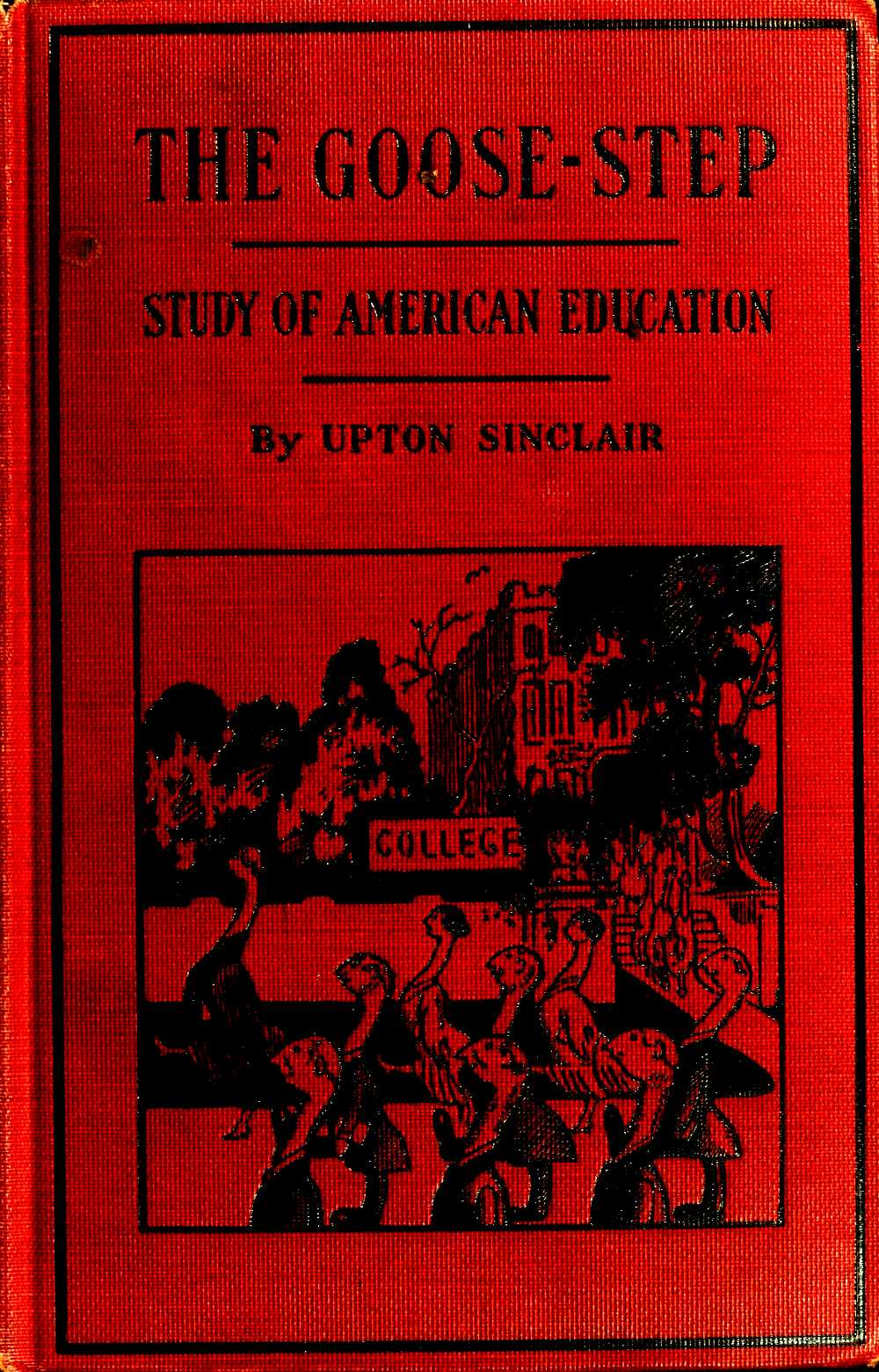
In 1923, Upton Sinclair turned his investigative fury on American higher education, and what he found still resonates. Drawing from over a thousand interviews, Sinclair argued that the nation's universities had become handmaidens to plutocratic interests, their boards of trustees populated by bankers and businessmen who shaped curricula to serve corporate needs rather than intellectual inquiry. Faculty who dared question the status quo faced dismissal; academic freedom was not merely compromised but systematically crushed. This is a polemic, certainly, but one built on meticulous reporting and a genuine fury at what education had become when money called the shots. Nearly a century later, The Goose Step reads less like a period piece than a warning. Sinclair's targets, endowment-driven priorities, trustee rubber-stamping, the quiet purging of radical scholars, have only grown more familiar. Whether you see him as prophet or polemicist, his central question remains urgent: who controls what we learn, and why? For anyone concerned with the state of American universities, this remains essential, provocative terrain.
Editions

Link to this book
Add a free, dofollow link to Lex on your blog, forum, syllabus, or reading list.

<a href="https://lex-books.com/book/the-goose-step-a-study-of-american-education-a2aaede5-2fe8-4374-8511-4752164e2635"><img src="https://lex-books.com/badges/read-on-lex.svg" alt="Read The Goose-step: A Study of American Education by Upton Sinclair free on Lex" width="160" height="40"></a>[](https://lex-books.com/book/the-goose-step-a-study-of-american-education-a2aaede5-2fe8-4374-8511-4752164e2635)[url=https://lex-books.com/book/the-goose-step-a-study-of-american-education-a2aaede5-2fe8-4374-8511-4752164e2635][img]https://lex-books.com/badges/read-on-lex.svg[/img][/url]Read The Goose-step: A Study of American Education by Upton Sinclair free on Lex: https://lex-books.com/book/the-goose-step-a-study-of-american-education-a2aaede5-2fe8-4374-8511-4752164e2635Cite this book
Reading this edition for a paper or guide? Copy a citation.
Sinclair, Upton. The Goose-step: A Study of American Education. Lex, lex-books.com/book/the-goose-step-a-study-of-american-education-a2aaede5-2fe8-4374-8511-4752164e2635.Sinclair, U. (n.d.). The Goose-step: A Study of American Education. Lex. https://lex-books.com/book/the-goose-step-a-study-of-american-education-a2aaede5-2fe8-4374-8511-4752164e2635Sinclair, Upton. The Goose-step: A Study of American Education. Lex. https://lex-books.com/book/the-goose-step-a-study-of-american-education-a2aaede5-2fe8-4374-8511-4752164e2635.