King Coal: A Novel
1917
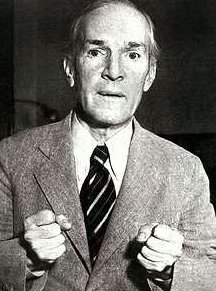
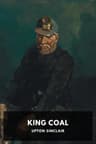
Published in 1917, 'King Coal' by Upton Sinclair is a novel that examines the harsh realities faced by coal miners in the United States. The story follows Hal Warner, a young man from an upper-class background who adopts the alias 'Joe Smith' to work in the mines and uncover the exploitation and suffering of the workers. Through his experiences, Sinclair highlights the struggles for labor rights and the challenges of unionization against a backdrop of violence and oppression from coal companies. This work is notable for its social commentary on class struggle and the labor movement in early 20th-century America.
Editions
X-Ray
“Was it a fact that every man had something in his life which palsied his arm, and struck him helpless in the battle for social justice? When””
— Upton Sinclair
“It lives and breathes in the light, because it has thousands of unfortunates toiling in the darkness. It lives and has its being in proud liberty because thousands are slaving for it, whose thraldom is the price of this liberty. This””
— Upton Sinclair
“He would help a little, he said; in his mind he was figuring how much he ought to do. How far shall a man go in relieving the starvation about him, before he can enjoy his meals in a well-appointed club? What casuist will work out this problem”
— Upton Sinclair
“The business of a coal-operator was to buy his labour cheap, to turn out the maximum product in the shortest time, and to sell the product at the market price to parties whose credit was satisfactory. If a concern was doing that, it was a successful concern; for any one to mention that it was making wrecks of the people who dug the coal, was to be guilty of sentimentality and impertinence.””
— Upton Sinclair
“Yes, this little mine chap was a cherub, now; but how about when he grew big? He would grow ugly and coarse-looking, in ten years one would not know him from any other of the rough and dirty men of the village. Jessie took the fact that common people grow ugly as they mature as a proof that they are, in some deep and permanent way, the inferiors of those above them.””
— Upton Sinclair
“Once he had lived in this world and taken it as a matter of course. He had known these people, gone about with them; they had seemed friendly, obliging, a good sort of people on the whole. And now, what a change! They seemed no longer friendly! Was the change in them? Or was it Hal who had become cynical”
— Upton Sinclair
“Hal told what so many had come to believe”
— Upton Sinclair
“Private Ownership of coal-mines! Private Ownership of sealed-up entrances and non-existent escape-ways! Private Ownership of fans which did not start, of sprinklers which did not sprinkle. Private Ownership of clubs and revolvers, and of thugs and ex-convicts to use them, driving away rescuers and shutting up agonised widows and orphans in their homes! Oh, the serene and well-fed priests of Private Ownership, chanting in academic halls the praises of the bloody Demon!””
— Upton Sinclair
“Eternal spirit of the chainless mind,” says Byron. “Greatest in dungeons Liberty thou art!” The poet goes on to add that “When thy sons to fetters are confined”
— Upton Sinclair
Link to this book
Add a free, dofollow link to Lex on your blog, forum, syllabus, or reading list.

<a href="https://lex-books.com/book/king-coal-a-novel-d9093310-af4f-46cf-99e9-c54399d8f010"><img src="https://lex-books.com/badges/read-on-lex.svg" alt="Read King Coal: A Novel by Upton Sinclair free on Lex" width="160" height="40"></a>[](https://lex-books.com/book/king-coal-a-novel-d9093310-af4f-46cf-99e9-c54399d8f010)[url=https://lex-books.com/book/king-coal-a-novel-d9093310-af4f-46cf-99e9-c54399d8f010][img]https://lex-books.com/badges/read-on-lex.svg[/img][/url]Read King Coal: A Novel by Upton Sinclair free on Lex: https://lex-books.com/book/king-coal-a-novel-d9093310-af4f-46cf-99e9-c54399d8f010Cite this book
Reading this edition for a paper or guide? Copy a citation.
Sinclair, Upton. King Coal: A Novel. Lex, lex-books.com/book/king-coal-a-novel-d9093310-af4f-46cf-99e9-c54399d8f010.Sinclair, U. (1917). King Coal: A Novel. Lex. https://lex-books.com/book/king-coal-a-novel-d9093310-af4f-46cf-99e9-c54399d8f010Sinclair, Upton. King Coal: A Novel. Lex. https://lex-books.com/book/king-coal-a-novel-d9093310-af4f-46cf-99e9-c54399d8f010.