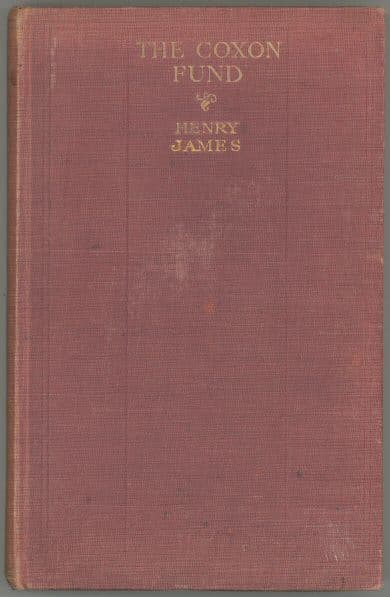
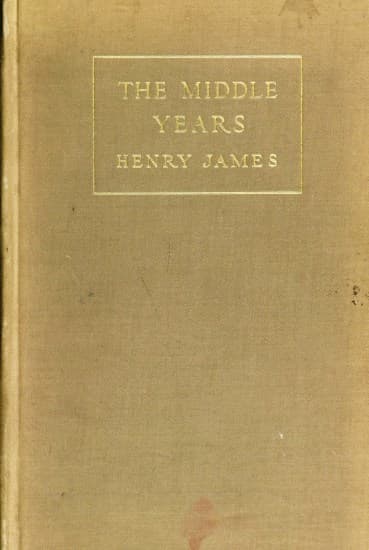
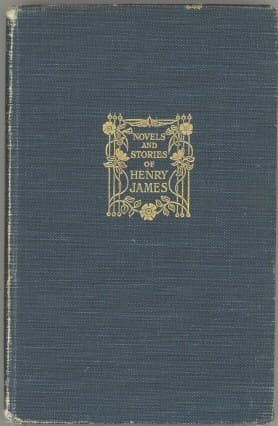
The Golden Bowl — Volume 1
1909
The Golden Bowl, first published in 1909 by Henry James, is a psychological and domestic fiction novel that explores complex relationships among wealthy characters in England. The story centers on Maggie Verver, a young American heiress, and her father Adam, who marries her best friend Charlotte Stant, unaware of the secret connection between Charlotte and Maggie's fiancé, Prince Amerigo. The novel delves into themes of adultery, class, and the clash of American and European cultures, highlighting the intricacies of love and societal expectations.
Editions
X-Ray
“My idea is this, that when you only love a little you’re naturally not jealous-or are only jealous also a little, so that it doesn’t matter. But when you love in a deeper and intenser way, then you’re in the very same proportion jealous; your jealousy has intensity and, no doubt, ferocity. When however you love in the most abysmal and unutterable way of all – whey then you’re beyond everything, and nothing can pull you down.””
— Henry James
“It is no wonder he wins every game. He has never done a thing in his life exept play games””
— Henry James
“It argued a special genius; he was clearly a case of that. The spark of fire, the point of light, sat somewhere in his inward vagueness as a lamp before a shrine twinkles in the dark perspective of a church; and while youth and early middle-age, while the stiff American breeze of example and opportunity were blowing upon it hard, had made the chamber of his brain a strange workshop of fortune. This establishment, mysterious and almost anonymous, the windows of which, at hours of highest pressure, never seemed, for starers and wonderers, perceptibly to glow, must in fact have been during certain years the scene of an unprecedented, a miraculous white-heat, the receipt for producing which it was practically felt that the master of the forge could not have communicated even with the best intentions.””
— Henry James
“Our relation, all round, exists--it's a reality, and a very good one; we're mixed up, so to speak, and it's too late to change it. We must live IN it and with it””
— Henry James
“My first impulse is always to behave, about everything, as if I feared complications. But I don't fear them”
— Henry James
“Ah darling, goodness, I think, never brought any one out. Goodness, when it's real, precisely, rather keeps people IN.””
— Henry James
“She was keeping her head for a reason, for a cause; and the labour of this detachment, with the labour of her forcing the pitch of it down, held them together in the steel hoop of an intimacy compared with which artless passion would have been but a beating of the air. Her””
— Henry James
“But if we may perish by cracks in things that we don't know.””
— Henry James
“...and with this reminder other things came to her -- how strange it was that, with all allowance for their merit, it should befall some people to be so inordinantly valued, quoted, as they said in the stock-market, so high, and how still stranger, perhaps, that there should be cases in which, for some reason, one didn't mind the so frequently marked absence in them of the purpose really to represent their price. ””
— Henry James
Link to this book
Add a free, dofollow link to Lex on your blog, forum, syllabus, or reading list.

<a href="https://lex-books.com/book/the-golden-bowl-volume-1-85b3d79e-c62a-4df0-831b-5ff92f3c78d9"><img src="https://lex-books.com/badges/read-on-lex.svg" alt="Read The Golden Bowl — Volume 1 by Henry James free on Lex" width="160" height="40"></a>[](https://lex-books.com/book/the-golden-bowl-volume-1-85b3d79e-c62a-4df0-831b-5ff92f3c78d9)[url=https://lex-books.com/book/the-golden-bowl-volume-1-85b3d79e-c62a-4df0-831b-5ff92f3c78d9][img]https://lex-books.com/badges/read-on-lex.svg[/img][/url]Read The Golden Bowl — Volume 1 by Henry James free on Lex: https://lex-books.com/book/the-golden-bowl-volume-1-85b3d79e-c62a-4df0-831b-5ff92f3c78d9Cite this book
Reading this edition for a paper or guide? Copy a citation.
James, Henry. The Golden Bowl — Volume 1. Lex, lex-books.com/book/the-golden-bowl-volume-1-85b3d79e-c62a-4df0-831b-5ff92f3c78d9.James, H. (1909). The Golden Bowl — Volume 1. Lex. https://lex-books.com/book/the-golden-bowl-volume-1-85b3d79e-c62a-4df0-831b-5ff92f3c78d9James, Henry. The Golden Bowl — Volume 1. Lex. https://lex-books.com/book/the-golden-bowl-volume-1-85b3d79e-c62a-4df0-831b-5ff92f3c78d9.