Sevastopol
1855
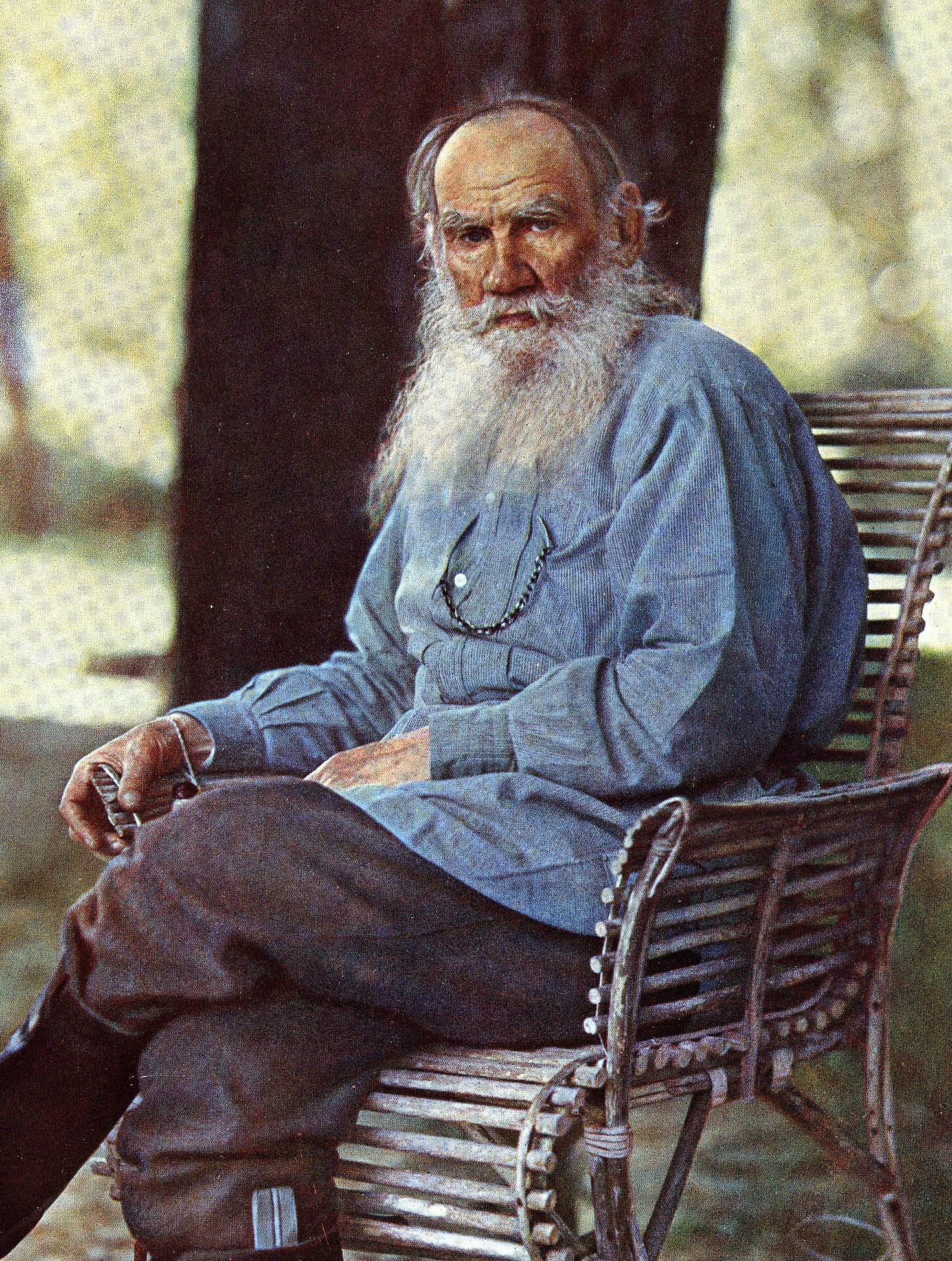
In 1854, a twenty-three-year-old Tolstoy arrived at Sevastopol as a junior artillery officer. What he witnessed there reshaped not just his writing, but the entire trajectory of war literature. These three stories, published to immediate acclaim when Tolstoy was still in his twenties, strip war of every romantic convention. There are no heroic speeches here, no glorious deaths on the battlefield. Instead: the crushing boredom between bombardments, the smell of gangrene in make-shift hospitals, a soldier's hands shaking as he loads his cannon, the strange beauty of a sunrise over a city in ruins. Tolstoy captures what official dispatches cannot: the chaos, the terror, the black humor, the small kindnesses that coexist with horrors. The result is a document of staggering honesty that reads less like literature than like testimony. Though Tolstoy would go on to write novels that redefined the novel, these early stories contain the raw seed of everything he would become. They remain the most uncompromising account of siege warfare written in the nineteenth century.
Editions

X-Ray
“You understand that the feeling which makes them work is not a feeling of pettiness, ambition, forgetfulness, which you have yourself experienced, but a different sentiment, one more powerful, and one which has made of them men who live with their ordinary composure under the fire of cannon, amid hundreds of chances of death, instead of the one to which all men are subject who live under these conditions amid incessant labor, poverty, and dirt. Men will not accept these frightful conditions for the sake of a cross or a title, nor because of threats ; there must be another lofty incentive as a cause, and this cause is the feeling which rarely appears, of which a Russian is ashamed, that which lies at the bottom of each man's soul”
— Leo Tolstoy
“Vanity ! vanity ! and vanity everywhere, even on the brink of the grave, and among men ready to die for the highest convictions. Vanity ! It must be that it is a characteristic trait, and a peculiar malady of our century. Why was nothing ever heard among the men of former days, of this passion, any more than of the small-pox or the cholera ? Why did Homer and Shakspeare talk of love, of glory, of suffering, while the literature of our age is nothing but an endless narrative of snobs and vanity ?””
— Leo Tolstoy
“... either the war is insanity, or the people, if they do this insanity, aren't not at all reasonable creatures, as some might , for some reason, think.””
— Leo Tolstoy
“... questions which weren't solved by diplomats, would be less solved with powder and blood.””
— Leo Tolstoy
“The doctors are busy with the repulsive but beneficent work of amputation. You see the sharp, curved knife enter the healthy, white body, you see the wounded man suddenly regain consciousness with a piercing cry and curses, you see the army surgeon fling the amputated arm into a corner, you see another wounded man, lying in a litter in the same apartment, shrink convulsively and groan as he gazes at the operation upon his comrade, not so much from physical pain as from the moral torture of anticipation.”
— Leo Tolstoy
“Cor, what a godawful stink!” That was all that remained of this man in the land of the living.””
— Leo Tolstoy
“At the moment when you know that the projectile is flying towards you, it will infallibly occur to you that this shot will kill you; but the feeling of self-love upholds you, and no one perceives the knife which is cutting your heart. But when the shot has flown past without touching you, you grow animated, and a certain cheerful, inexpressibly pleasant feeling overpowers you, but only for a moment, so that you discover a peculiar sort of charm in danger, in this game of life and death, you want cannon-balls or bombs to strike nearer to you.””
— Leo Tolstoy
“A little further on, you see an old soldier changing his linen. His face and body are of a sort of cinnamon-brown color, and gaunt as a skeleton. He has no arm at all; it has been cut off at the shoulder. He is sitting with a wideawake air, he puts himself to rights ; but you see, by his dull, corpse-like gaze, his frightful gaunt-ness, and the wrinkles on his face, that he is a being who has suffered for the best part of his life.””
— Leo Tolstoy
“He is a blond man with pale, swollen face. He is lying on his back, with his left arm thrown out, in a position which is expressive of cruel suffering. His parched, open mouth with difficulty emits his stertorous breathing ; his blue, leaden eyes are rolled up, and from beneath the wadded coverlet the remains of his right arm, enveloped in bandages, protrude. The oppressive odor of a corpse strikes you forcibly, and the consuming, internal fire which has penetrated every limb of the sufferer seems to penetrate you also.””
— Leo Tolstoy
Link to this book
Add a free, dofollow link to Lex on your blog, forum, syllabus, or reading list.

<a href="https://lex-books.com/book/sevastopol-bc4a8933-f974-4ed1-90a3-514885f5b08b"><img src="https://lex-books.com/badges/read-on-lex.svg" alt="Read Sevastopol by Leo Tolstoy free on Lex" width="160" height="40"></a>[](https://lex-books.com/book/sevastopol-bc4a8933-f974-4ed1-90a3-514885f5b08b)[url=https://lex-books.com/book/sevastopol-bc4a8933-f974-4ed1-90a3-514885f5b08b][img]https://lex-books.com/badges/read-on-lex.svg[/img][/url]Read Sevastopol by Leo Tolstoy free on Lex: https://lex-books.com/book/sevastopol-bc4a8933-f974-4ed1-90a3-514885f5b08bCite this book
Reading this edition for a paper or guide? Copy a citation.
Tolstoy, Leo. Sevastopol. Lex, lex-books.com/book/sevastopol-bc4a8933-f974-4ed1-90a3-514885f5b08b.Tolstoy, L. (1855). Sevastopol. Lex. https://lex-books.com/book/sevastopol-bc4a8933-f974-4ed1-90a3-514885f5b08bTolstoy, Leo. Sevastopol. Lex. https://lex-books.com/book/sevastopol-bc4a8933-f974-4ed1-90a3-514885f5b08b.