La Vie Et La Mort Du Roi Richard III
1623
La Vie Et La Mort Du Roi Richard III
1623
Translated by François Guizot
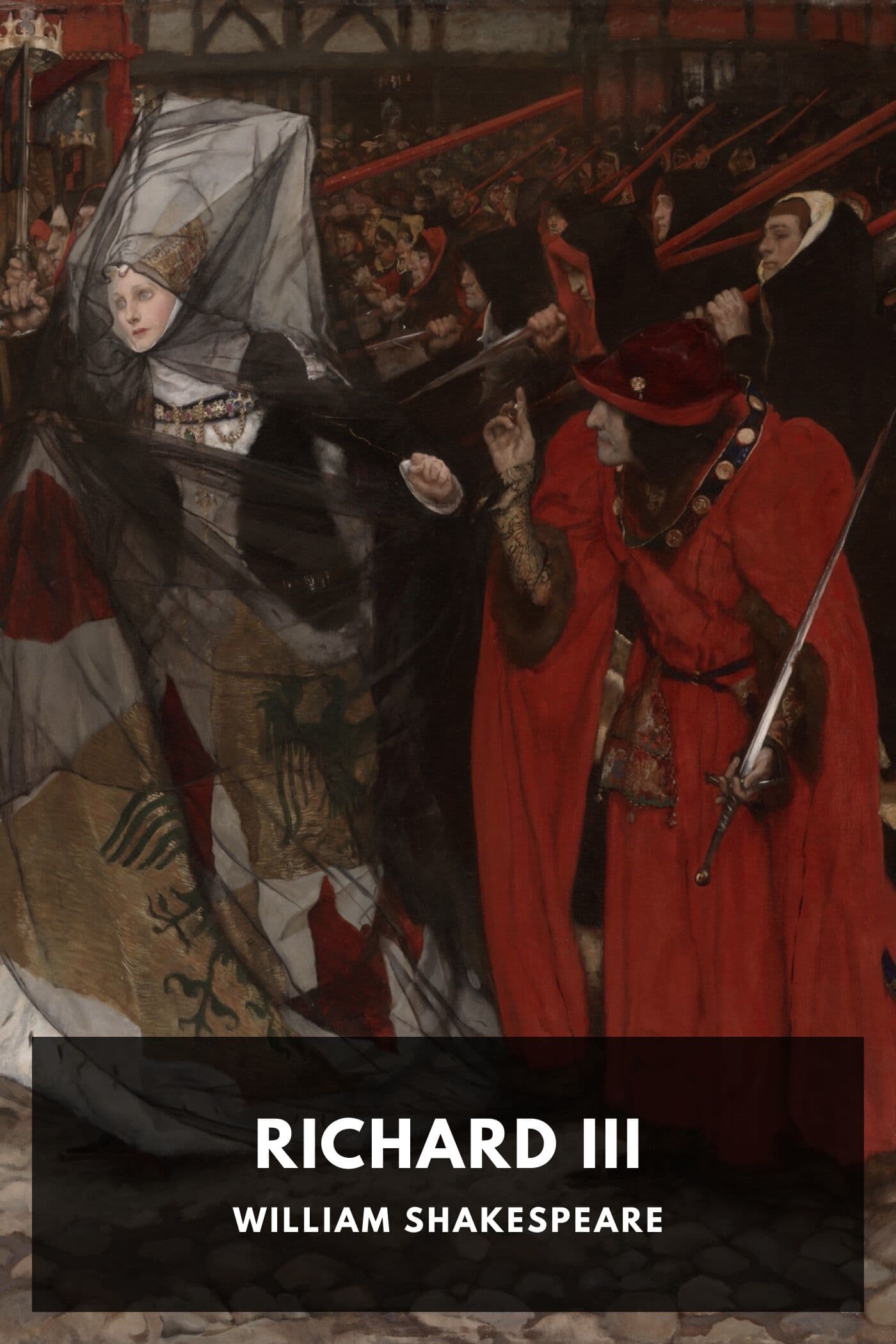
La Vie Et La Mort Du Roi Richard III, written by William Shakespeare and first published in 1623, is a historical tragedy that depicts the rise and fall of Richard III, the Duke of Gloucester. The play explores themes of ambition, betrayal, and moral decay as Richard manipulates those around him to seize the throne, ultimately leading to his downfall at the Battle of Bosworth. This work is notable for its complex character portrayal and its role as the final part of a tetralogy that includes the three parts of Henry VI, marking a significant moment in Shakespeare's early career.
Editions
X-Ray
“Dispute not with her: she is lunatic.””
— William Shakespeare
“So wise so young, they say, do never live long.””
— William Shakespeare
“And thus I clothe my naked villainyWith odd old ends stol'n out of holy writ;And seem a saint, when most I play the devil.””
— William Shakespeare
“Out of my sight! Thou dost infect mine eyes.””
— William Shakespeare
“And therefore,”
— William Shakespeare
“Now is the winter of our discontentMade glorious summer by this sun of York;And all the clouds that lour'd upon our houseIn the deep bosom of the ocean buried.””
— William Shakespeare
“What do I fear? Myself? There’s none else by.Richard loves Richard; that is, I and I.Is there a murderer here? No. Yes, I am.Then fly! What, from myself? Great reason why:Lest I revenge. What, myself upon myself?Alack, I love myself. Wherefore? For any goodThat I myself have done unto myself?O, no! Alas, I rather hate myselfFor hateful deeds committed by myself.I am a villain. Yet I lie. I am not.Fool, of thyself speak well. Fool, do not flatter:My conscience hath a thousand several tongues,And every tongue brings in a several tale,And every tale condemns me for a villain.Perjury, perjury, in the highest degree;Murder, stern murder, in the direst degree;All several sins, all used in each degree,Throng to the bar, crying all, “Guilty! guilty!”I shall despair. There is no creature loves me,And if I die no soul will pity me.And wherefore should they, since that I myselfFind in myself no pity to myself?””
— William Shakespeare
“I have set my life upon a cast,And I will stand the hazard of the die.””
— William Shakespeare
“Conscience is but a word that cowards use,Devis'd at first to keep the strong in awe:Our strong arms be our conscience, swords our law.March on, join bravely, let us to't pell-mell;If not to heaven, then hand in hand to hell.””
— William Shakespeare
Link to this book
Add a free, dofollow link to Lex on your blog, forum, syllabus, or reading list.

<a href="https://lex-books.com/book/la-vie-et-la-mort-du-roi-richard-iii-b3a6b075-9e9f-4812-89f0-3c767f9aaa38"><img src="https://lex-books.com/badges/read-on-lex.svg" alt="Read La Vie Et La Mort Du Roi Richard III by William Shakespeare free on Lex" width="160" height="40"></a>[](https://lex-books.com/book/la-vie-et-la-mort-du-roi-richard-iii-b3a6b075-9e9f-4812-89f0-3c767f9aaa38)[url=https://lex-books.com/book/la-vie-et-la-mort-du-roi-richard-iii-b3a6b075-9e9f-4812-89f0-3c767f9aaa38][img]https://lex-books.com/badges/read-on-lex.svg[/img][/url]Read La Vie Et La Mort Du Roi Richard III by William Shakespeare free on Lex: https://lex-books.com/book/la-vie-et-la-mort-du-roi-richard-iii-b3a6b075-9e9f-4812-89f0-3c767f9aaa38Cite this book
Reading this edition for a paper or guide? Copy a citation.
Shakespeare, William. La Vie Et La Mort Du Roi Richard III. Lex, lex-books.com/book/la-vie-et-la-mort-du-roi-richard-iii-b3a6b075-9e9f-4812-89f0-3c767f9aaa38.Shakespeare, W. (1623). La Vie Et La Mort Du Roi Richard III. Lex. https://lex-books.com/book/la-vie-et-la-mort-du-roi-richard-iii-b3a6b075-9e9f-4812-89f0-3c767f9aaa38Shakespeare, William. La Vie Et La Mort Du Roi Richard III. Lex. https://lex-books.com/book/la-vie-et-la-mort-du-roi-richard-iii-b3a6b075-9e9f-4812-89f0-3c767f9aaa38.