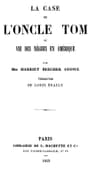
La Case De L'oncle Tom; Ou, Vie Des Nègres En Amérique
1852
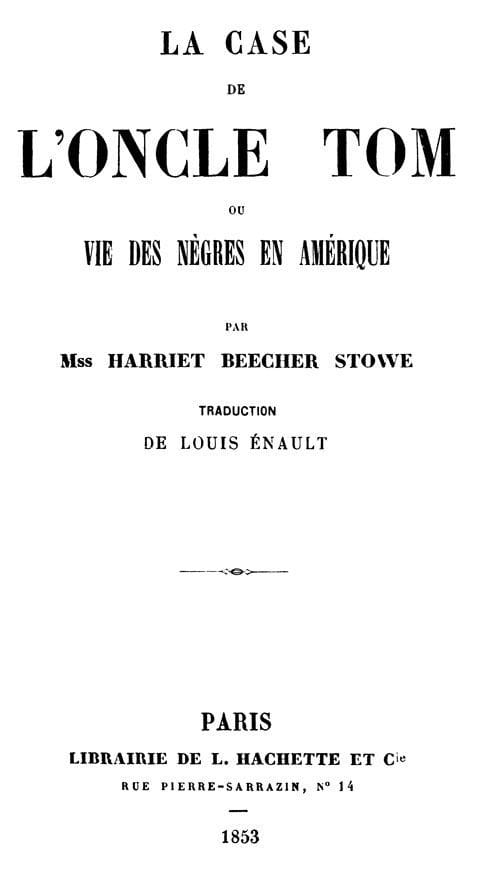
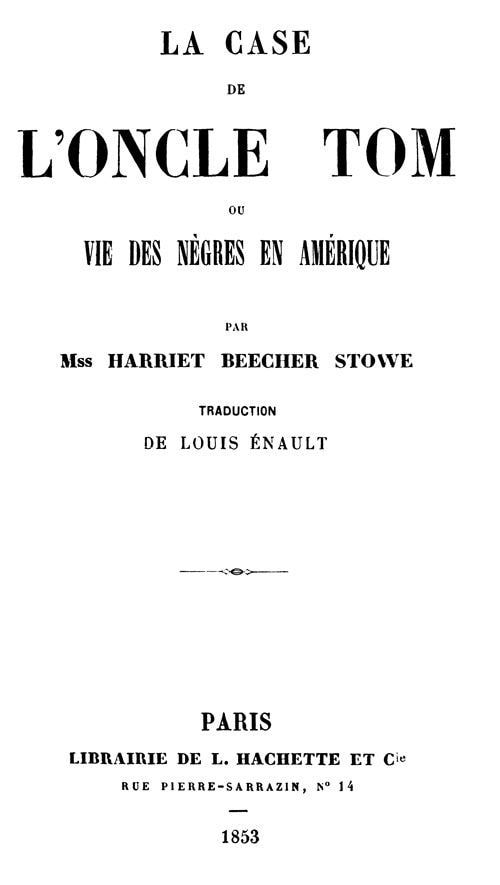
La Case De L'oncle Tom; Ou, Vie Des Nègres En Amérique
1852
Translated by Louis Enault
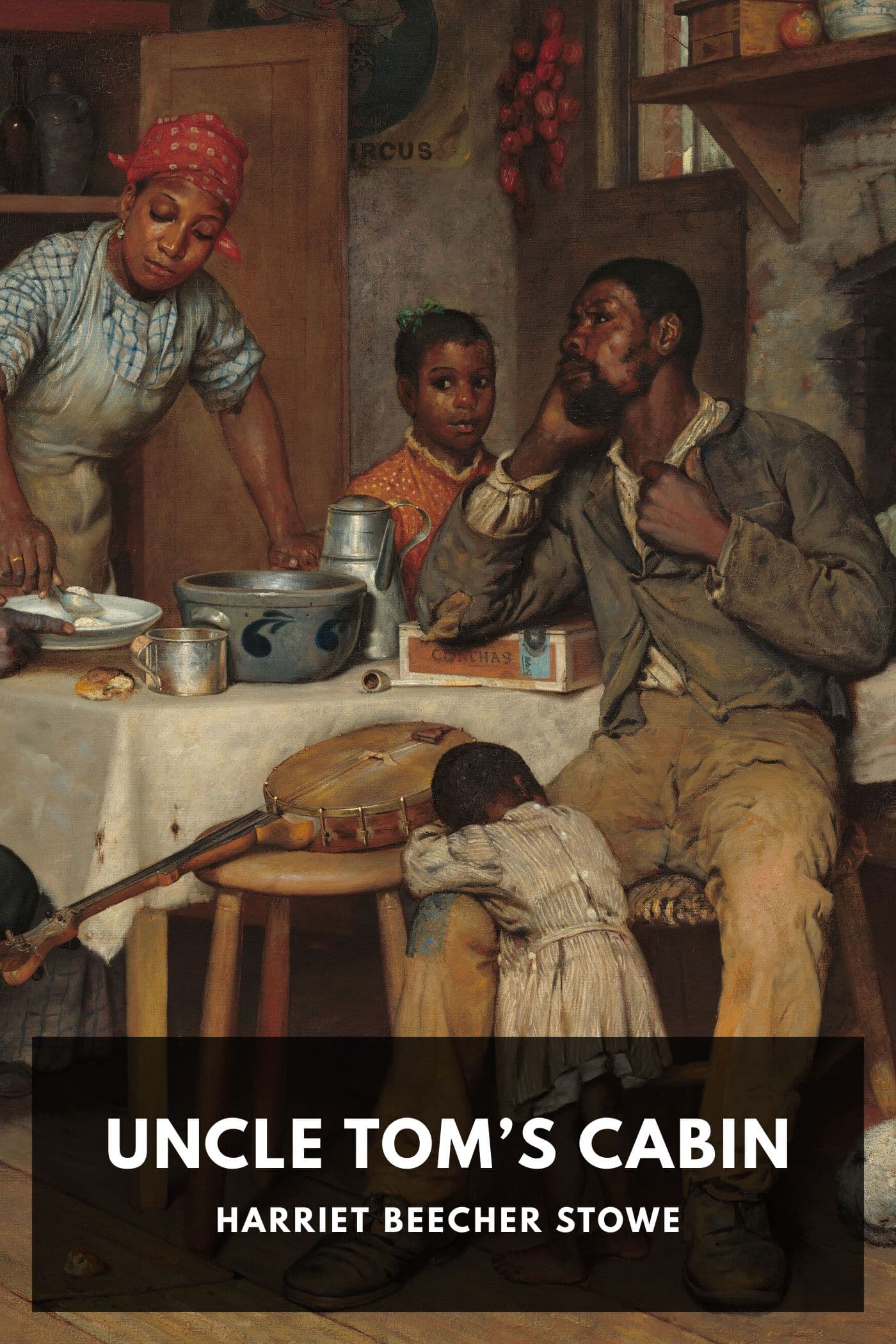
Published in 1852, this novel ignited a political firestorm and is widely credited with mobilizing Northern sentiment against slavery. Stowe crafted a devastating moral argument wrapped in the armor of Victorian sentimental fiction, a genre that wielded emotion as weapon and shield. Through interconnected narratives of enslaved people torn apart, brutalized, and dehumanized, she forced readers to confront the chasm between Christian profession and American practice. Uncle Tom, a man of profound faith and quiet dignity, becomes both symbol and individual, a character whose sufferingcatalogues the theological and ethical bankruptcy of slavery. The novel functions simultaneously as adventure, tragedy, and polemic, rich with complex figures: the fierce Eliza risking all for her child, the doomed Cassy, the tragic George Harris. Its power lies not in abstraction but in particular, devastating human moments, stolen families, sold bodies, extinguished hope. For all its criticisms (its ending, its sentimentalism, its portrayal of certain characters), the book remains essential: a literary earthquake that changed the course of a nation.
Editions
X-Ray
“The longest way must have its close - the gloomiest night will wear on to a morning.””
— Harriet Beecher Stowe
“Soon after the completion of his college course, his whole nature was kindled into one intense and passionate effervescence of romantic passion. His hour came,”
— Harriet Beecher Stowe
“...the heart has no tears to give,--it drops only blood, bleeding itself away in silence.””
— Harriet Beecher Stowe
“Of course, in a novel, people’s hearts break, and they die, and that is the end of it; and in a story this is very convenient. But in real life we do not die when all that makes life bright dies to us. There is a most busy and important round of eating, drinking, dressing, walking, visiting, buying, selling, talking, reading, and all that makes up what is commonly called living, yet to be gone through…””
— Harriet Beecher Stowe
“There are in this world blessed souls, whose sorrows all spring up into joys for others; whose earthly hopes, laid in the grave with many tears, are the seed from which spring healing flowers and balm for the desolate and the distressed.””
— Harriet Beecher Stowe
“Any mind that is capable of a real sorrow is capable of good.””
— Harriet Beecher Stowe
“Perhaps it is impossible for a person who does no good not to do harm.””
— Harriet Beecher Stowe
“For how imperiously, how coolly, in disregard of all one’s feelings, does the hard, cold, uninteresting course of daily realities move on! Still we must eat, and drink, and sleep, and wake again, - still bargain, buy, sell, ask and answer questions, - pursue, in short, a thousand shadows, though all interest in them be over; the cold, mechanical habit of living remaining, after all vital interest in it has fled.””
— Harriet Beecher Stowe
“Treat 'em like dogs, and you'll have dogs' works and dogs' actions. Treat 'em like men, and you'll have men's works.””
— Harriet Beecher Stowe
Link to this book
Add a free, dofollow link to Lex on your blog, forum, syllabus, or reading list.

<a href="https://lex-books.com/book/la-case-de-l-oncle-tom-ou-vie-des-n-gres-en-am-rique-9033f4a4-6d3a-4fb2-bec1-87b6245fb114"><img src="https://lex-books.com/badges/read-on-lex.svg" alt="Read La Case De L'oncle Tom; Ou, Vie Des Nègres En Amérique by Harriet Beecher Stowe free on Lex" width="160" height="40"></a>[](https://lex-books.com/book/la-case-de-l-oncle-tom-ou-vie-des-n-gres-en-am-rique-9033f4a4-6d3a-4fb2-bec1-87b6245fb114)[url=https://lex-books.com/book/la-case-de-l-oncle-tom-ou-vie-des-n-gres-en-am-rique-9033f4a4-6d3a-4fb2-bec1-87b6245fb114][img]https://lex-books.com/badges/read-on-lex.svg[/img][/url]Read La Case De L'oncle Tom; Ou, Vie Des Nègres En Amérique by Harriet Beecher Stowe free on Lex: https://lex-books.com/book/la-case-de-l-oncle-tom-ou-vie-des-n-gres-en-am-rique-9033f4a4-6d3a-4fb2-bec1-87b6245fb114Cite this book
Reading this edition for a paper or guide? Copy a citation.
Stowe, Harriet Beecher. La Case De L'oncle Tom; Ou, Vie Des Nègres En Amérique. Lex, lex-books.com/book/la-case-de-l-oncle-tom-ou-vie-des-n-gres-en-am-rique-9033f4a4-6d3a-4fb2-bec1-87b6245fb114.Stowe, H. B. (1852). La Case De L'oncle Tom; Ou, Vie Des Nègres En Amérique. Lex. https://lex-books.com/book/la-case-de-l-oncle-tom-ou-vie-des-n-gres-en-am-rique-9033f4a4-6d3a-4fb2-bec1-87b6245fb114Stowe, Harriet Beecher. La Case De L'oncle Tom; Ou, Vie Des Nègres En Amérique. Lex. https://lex-books.com/book/la-case-de-l-oncle-tom-ou-vie-des-n-gres-en-am-rique-9033f4a4-6d3a-4fb2-bec1-87b6245fb114.