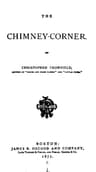
The Chimney-Corner
1868
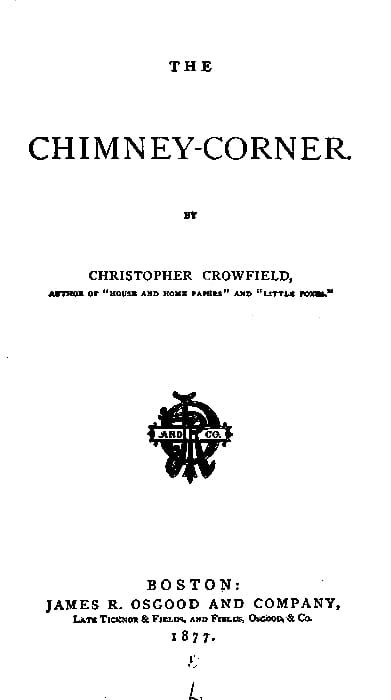
Harriet Beecher Stowe turns her keen eye from the plantation to the parlor in this overlooked 1868 novel about the women America left behind after the Civil War. When a young woman loses her fiancé and must suddenly provide for her family, she finds herself trapped by rigid social conventions that offer women no respectable path to independence. Christopher Crowfield and his wife grapple with how to help her, their conversation unfolding into a broader reckoning with what society owes the women it demands be both virtuous and self-sufficient. Stowe, writing just three years after emancipation, extends her moral vision to encompass another oppressed class: the women bound by expectations of domesticity yet denied the economic means to fulfill them. The novel pulses with urgency, its dialogue crackling as characters confront the uncomfortable truth that society's demands on women far outpace its willingness to support them. A vital work for anyone who believes literature should hold a mirror to injustice, this is Stowe at her most radical, arguing that dignity cannot exist without opportunity.
Editions
Link to this book
Add a free, dofollow link to Lex on your blog, forum, syllabus, or reading list.

<a href="https://lex-books.com/book/the-chimney-corner-4d0a3cb1-ca67-4bc3-a4b9-3d8b66d4eff1"><img src="https://lex-books.com/badges/read-on-lex.svg" alt="Read The Chimney-Corner by Harriet Beecher Stowe free on Lex" width="160" height="40"></a>[](https://lex-books.com/book/the-chimney-corner-4d0a3cb1-ca67-4bc3-a4b9-3d8b66d4eff1)[url=https://lex-books.com/book/the-chimney-corner-4d0a3cb1-ca67-4bc3-a4b9-3d8b66d4eff1][img]https://lex-books.com/badges/read-on-lex.svg[/img][/url]Read The Chimney-Corner by Harriet Beecher Stowe free on Lex: https://lex-books.com/book/the-chimney-corner-4d0a3cb1-ca67-4bc3-a4b9-3d8b66d4eff1Cite this book
Reading this edition for a paper or guide? Copy a citation.
Stowe, Harriet Beecher. The Chimney-Corner. Lex, lex-books.com/book/the-chimney-corner-4d0a3cb1-ca67-4bc3-a4b9-3d8b66d4eff1.Stowe, H. B. (1868). The Chimney-Corner. Lex. https://lex-books.com/book/the-chimney-corner-4d0a3cb1-ca67-4bc3-a4b9-3d8b66d4eff1Stowe, Harriet Beecher. The Chimney-Corner. Lex. https://lex-books.com/book/the-chimney-corner-4d0a3cb1-ca67-4bc3-a4b9-3d8b66d4eff1.