Onkel Tom's Hütte: Oder Die Geschichte Eines Christlichen Sklaven. Band 3 (von 3).
1852
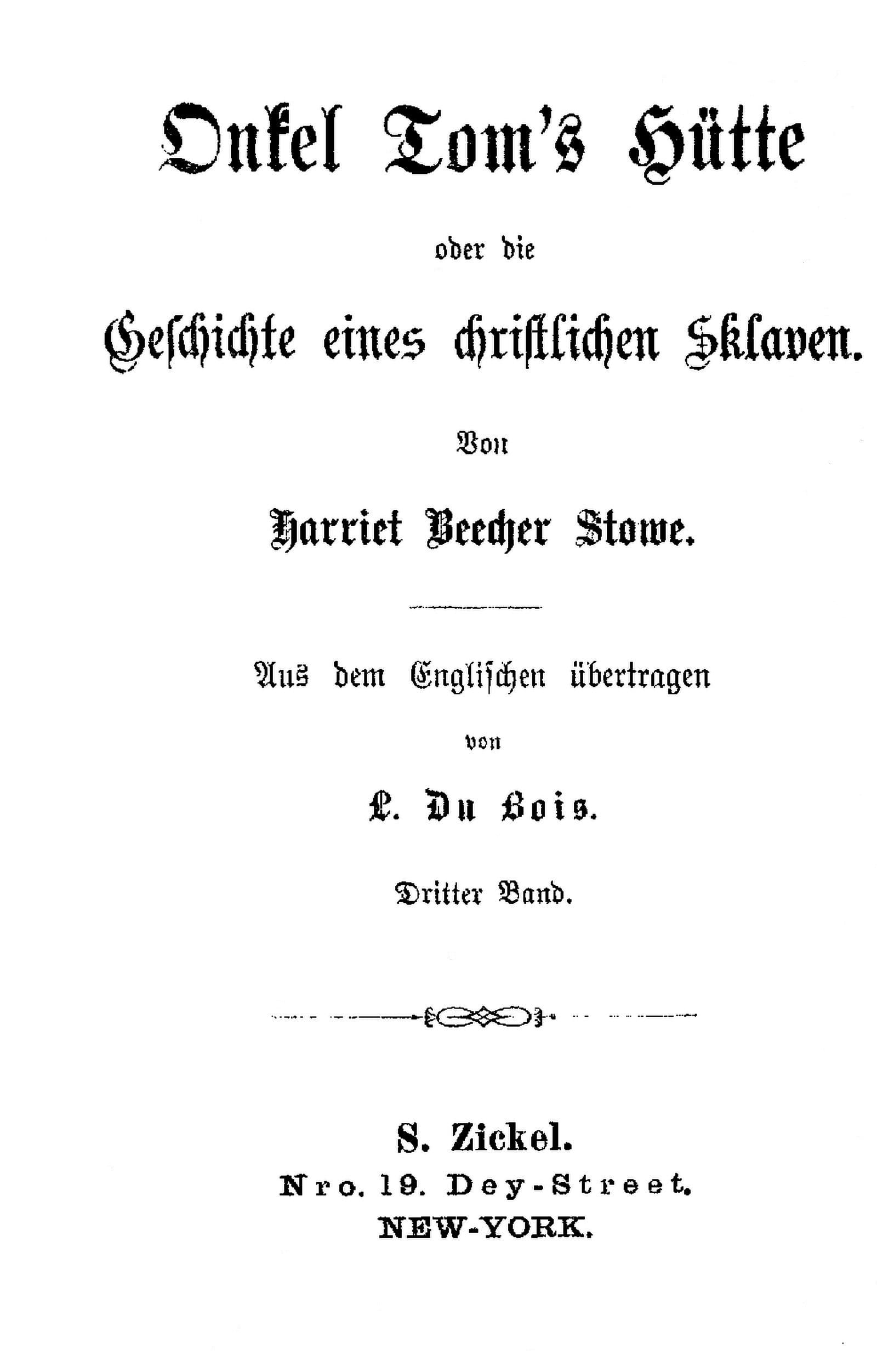
Onkel Tom's Hütte: Oder Die Geschichte Eines Christlichen Sklaven. Band 3 (von 3).
1852
Translated by Du Bois L.
Onkel Toms Hütte ist mehr als ein Roman. Es ist ein flammendes Plädoyer für die Menschlichkeit, geschrieben zu einer Zeit, als Millionen von Menschen in Amerika als Eigentum betrachtet wurden. Harriet Beecher Stowe webt mehrere Schicksale zu einem Netz des Leidens und der Widerstandskraft zusammen: den frommen Onkel Tom, der trotz unvorstellbarer Grausamkeit an seinem Glauben festhält, die mutige Eliza, die für ihre Freiheit und die ihres Kindes kämpft, und den zerrissenen Herrn St. Clare, der zwischen seinem Gewissen und der Sklavenhaltergesellschaft seiner Zeit gefangen ist. Der Roman entfaltet sich wie ein moralisches Drama, das die institutionelle Brutalität der Sklaverei schonungslos offenlegt. Die Trennung von Familien, die perverse Logik des Eigentums an Menschen, die zerstörerische Kraft auf Unterdrücker und Unterdrückte - Stowes Werk war kein milder Appell. Es war eine Provokation, die 1852 die amerikanische Nation spaltete und Leser zwang, sich mit der Frage zu konfrontieren: Wie kann ein christliches Land Menschen in Ketten halten?
Editions
X-Ray
“The longest way must have its close - the gloomiest night will wear on to a morning.””
— Harriet Beecher Stowe
“Soon after the completion of his college course, his whole nature was kindled into one intense and passionate effervescence of romantic passion. His hour came,”
— Harriet Beecher Stowe
“...the heart has no tears to give,--it drops only blood, bleeding itself away in silence.””
— Harriet Beecher Stowe
“Of course, in a novel, people’s hearts break, and they die, and that is the end of it; and in a story this is very convenient. But in real life we do not die when all that makes life bright dies to us. There is a most busy and important round of eating, drinking, dressing, walking, visiting, buying, selling, talking, reading, and all that makes up what is commonly called living, yet to be gone through…””
— Harriet Beecher Stowe
“There are in this world blessed souls, whose sorrows all spring up into joys for others; whose earthly hopes, laid in the grave with many tears, are the seed from which spring healing flowers and balm for the desolate and the distressed.””
— Harriet Beecher Stowe
“Any mind that is capable of a real sorrow is capable of good.””
— Harriet Beecher Stowe
“Perhaps it is impossible for a person who does no good not to do harm.””
— Harriet Beecher Stowe
“For how imperiously, how coolly, in disregard of all one’s feelings, does the hard, cold, uninteresting course of daily realities move on! Still we must eat, and drink, and sleep, and wake again, - still bargain, buy, sell, ask and answer questions, - pursue, in short, a thousand shadows, though all interest in them be over; the cold, mechanical habit of living remaining, after all vital interest in it has fled.””
— Harriet Beecher Stowe
“Treat 'em like dogs, and you'll have dogs' works and dogs' actions. Treat 'em like men, and you'll have men's works.””
— Harriet Beecher Stowe
Link to this book
Add a free, dofollow link to Lex on your blog, forum, syllabus, or reading list.

<a href="https://lex-books.com/book/onkel-tom-s-h-tte-oder-die-geschichte-eines-christlichen-sklaven-band-3-von-3-67802587-7d92-4c3d-af28-0d9b0e2211d4"><img src="https://lex-books.com/badges/read-on-lex.svg" alt="Read Onkel Tom's Hütte: Oder Die Geschichte Eines Christlichen Sklaven. Band 3 (von 3). by Harriet Beecher Stowe free on Lex" width="160" height="40"></a>[](https://lex-books.com/book/onkel-tom-s-h-tte-oder-die-geschichte-eines-christlichen-sklaven-band-3-von-3-67802587-7d92-4c3d-af28-0d9b0e2211d4)[url=https://lex-books.com/book/onkel-tom-s-h-tte-oder-die-geschichte-eines-christlichen-sklaven-band-3-von-3-67802587-7d92-4c3d-af28-0d9b0e2211d4][img]https://lex-books.com/badges/read-on-lex.svg[/img][/url]Read Onkel Tom's Hütte: Oder Die Geschichte Eines Christlichen Sklaven. Band 3 (von 3). by Harriet Beecher Stowe free on Lex: https://lex-books.com/book/onkel-tom-s-h-tte-oder-die-geschichte-eines-christlichen-sklaven-band-3-von-3-67802587-7d92-4c3d-af28-0d9b0e2211d4Cite this book
Reading this edition for a paper or guide? Copy a citation.
Stowe, Harriet Beecher. Onkel Tom's Hütte: Oder Die Geschichte Eines Christlichen Sklaven. Band 3 (von 3).. Lex, lex-books.com/book/onkel-tom-s-h-tte-oder-die-geschichte-eines-christlichen-sklaven-band-3-von-3-67802587-7d92-4c3d-af28-0d9b0e2211d4.Stowe, H. B. (1852). Onkel Tom's Hütte: Oder Die Geschichte Eines Christlichen Sklaven. Band 3 (von 3).. Lex. https://lex-books.com/book/onkel-tom-s-h-tte-oder-die-geschichte-eines-christlichen-sklaven-band-3-von-3-67802587-7d92-4c3d-af28-0d9b0e2211d4Stowe, Harriet Beecher. Onkel Tom's Hütte: Oder Die Geschichte Eines Christlichen Sklaven. Band 3 (von 3).. Lex. https://lex-books.com/book/onkel-tom-s-h-tte-oder-die-geschichte-eines-christlichen-sklaven-band-3-von-3-67802587-7d92-4c3d-af28-0d9b0e2211d4.