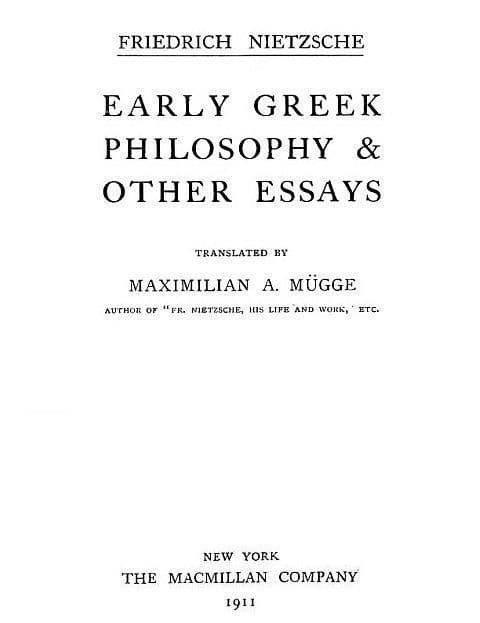
Early Greek Philosophy and Other Essays

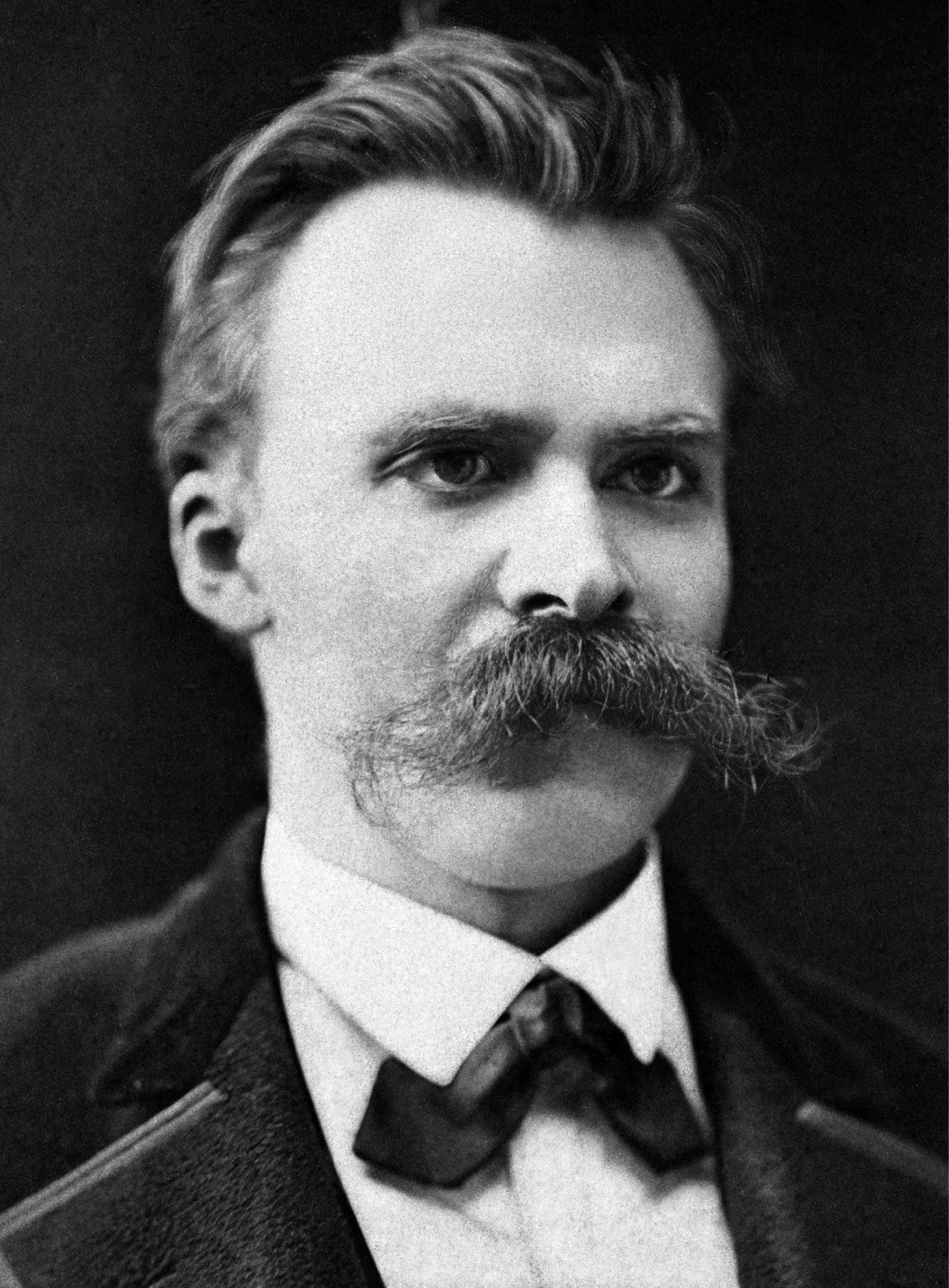
Nietzsche as a young philosopher, barely thirty, already wielding ideas that would shatter European thought. These fragmentary essays from the early 1870s reveal the crucible from which his later masterpieces emerged. Here we find the first stirrings of master-slave morality, the Übermensch, the critique of truth itself, all still raw, unformed, dangerous. "Truth and Falsity" interrogates whether truth is anything more than a linguistic trick we play on ourselves. "The Greek Woman" examines antiquity's attitudes toward women with characteristic provocation. These are not finished declarations but exploratory fragments, the philosophical laboratory of a mind that would later declare "God is dead." For readers who want to understand where one of history's most radical thinkers began his assault on conventional wisdom, these essays offer an essential window into his intellectual genesis.
Editions

Link to this book
Add a free, dofollow link to Lex on your blog, forum, syllabus, or reading list.

<a href="https://lex-books.com/book/early-greek-philosophy-and-other-essays-5b90506c-a4f4-4312-acc3-8392f6e0b5ae"><img src="https://lex-books.com/badges/read-on-lex.svg" alt="Read Early Greek Philosophy and Other Essays by Friedrich Wilhelm Nietzsche free on Lex" width="160" height="40"></a>[](https://lex-books.com/book/early-greek-philosophy-and-other-essays-5b90506c-a4f4-4312-acc3-8392f6e0b5ae)[url=https://lex-books.com/book/early-greek-philosophy-and-other-essays-5b90506c-a4f4-4312-acc3-8392f6e0b5ae][img]https://lex-books.com/badges/read-on-lex.svg[/img][/url]Read Early Greek Philosophy and Other Essays by Friedrich Wilhelm Nietzsche free on Lex: https://lex-books.com/book/early-greek-philosophy-and-other-essays-5b90506c-a4f4-4312-acc3-8392f6e0b5aeCite this book
Reading this edition for a paper or guide? Copy a citation.
Nietzsche, Friedrich Wilhelm. Early Greek Philosophy and Other Essays. Lex, lex-books.com/book/early-greek-philosophy-and-other-essays-5b90506c-a4f4-4312-acc3-8392f6e0b5ae.Nietzsche, F. W. (n.d.). Early Greek Philosophy and Other Essays. Lex. https://lex-books.com/book/early-greek-philosophy-and-other-essays-5b90506c-a4f4-4312-acc3-8392f6e0b5aeNietzsche, Friedrich Wilhelm. Early Greek Philosophy and Other Essays. Lex. https://lex-books.com/book/early-greek-philosophy-and-other-essays-5b90506c-a4f4-4312-acc3-8392f6e0b5ae.