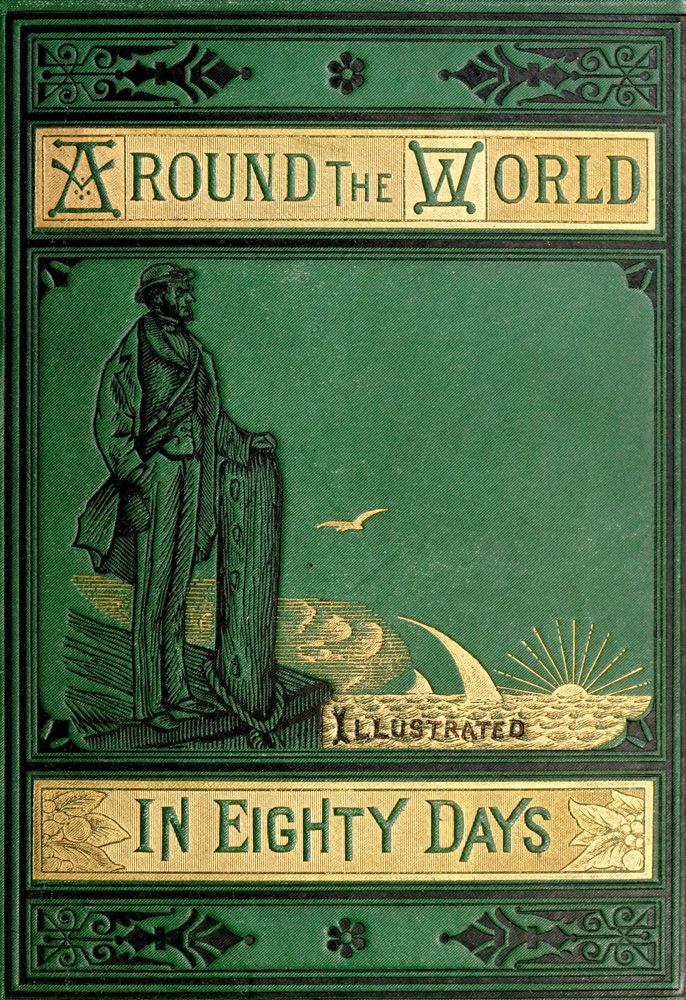
Around the World in Eighty Days
1873
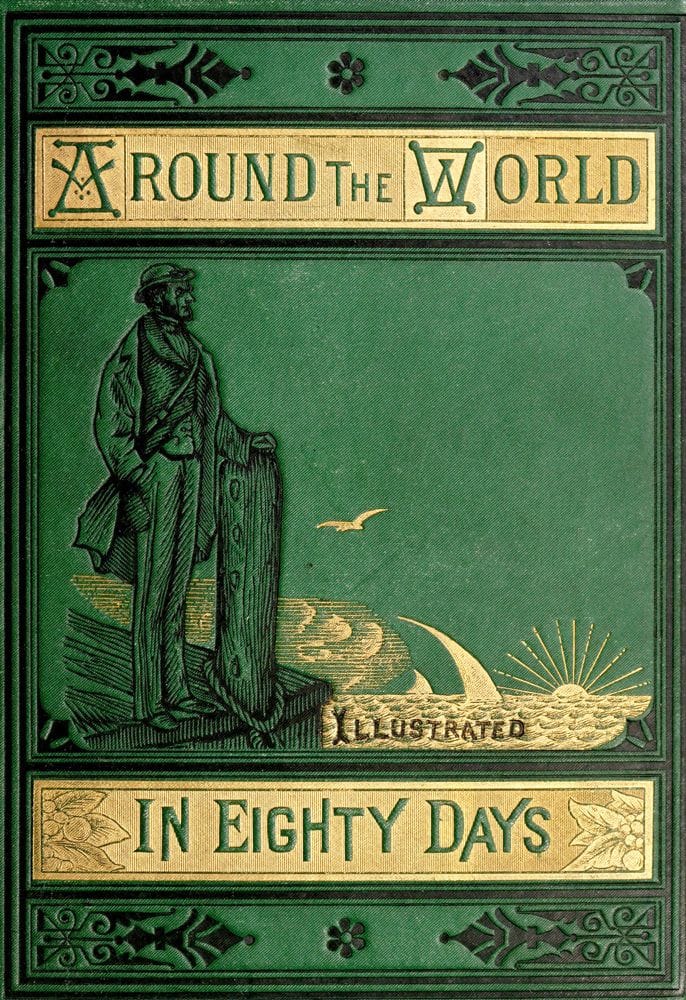
Around the World in Eighty Days
1873
The greatest wager in Victorian literature. Phileas Fogg, a man whose life runs with clockwork precision, stakes his entire fortune on a seemingly impossible claim: he can circle the globe in eighty days. With his resourceful valet Passepartout in tow, he abandons his cushioned London townhouse for the chaos of trains, steamships, elephants, and the unpredictable whims of the world itself. What begins as a test of mechanical efficiency becomes something far richer. As the duo hurtles through exotic landscapes and narrowly escapes disaster at every turn, Fogg's icy composure begins to crack. His wager was about proving modernity triumphant over distance, but the journey teaches him something his orderly existence never could: that the world is vast, unpredictable, and worth experiencing rather than merely conquering. Written in 1873, when the globe still held mysteries and circumnavigation seemed almost miraculous, Verne's masterpiece captures the reckless optimism of an age when technology promised to shrink the world.
Editions


X-Ray
“Anything one man can imagine, other men can make real.””
— Jules Verne
“One could mention many lovable traits in Smee. For instance, after killing, it was his spectacles he wiped instead of his weapon.””
— Jules Verne
“The chance which now seems lost may present itself at the last moment.””
— Jules Verne
“I don't want to go to school and learn solemn things.””
— Jules Verne
“I see that it is by no means useless to travel, if a man wants to see something new””
— Jules Verne
“But what then? What had he really gained by all this trouble? What had he brought back from this long and weary journey?Nothing, you say? Perhaps so; nothing but a charming woman, who, strange as it may appear, made him the happiest of men!Truly, would you not for less than that make the tour around the world?””
— Jules Verne
“Two is the beginning of the end.””
— Jules Verne
“Peter was not with them for the moment, and they felt rather lonely up there by themselves. He could go so much faster than they that he would suddenly shoot out of sight, to have some adventure in which they had no share. He would come down laughing over something fearfully funny he had been saying to a star, but he had already forgotten what it was, or he would come up with mermaid scales still sticking to him, and yet not be able to to say for certain what had been happening. It was really rather irritating to children who had never seen a mermaid.””
— Jules Verne
“Why, you are a man of heart!""Sometimes," replied Phileas Fogg, quietly. "When I have the time.””
— Jules Verne
Link to this book
Add a free, dofollow link to Lex on your blog, forum, syllabus, or reading list.

<a href="https://lex-books.com/book/around-the-world-in-eighty-days-91f85955-494b-4227-a34e-f07f9925141c"><img src="https://lex-books.com/badges/read-on-lex.svg" alt="Read Around the World in Eighty Days by Jules Verne free on Lex" width="160" height="40"></a>[](https://lex-books.com/book/around-the-world-in-eighty-days-91f85955-494b-4227-a34e-f07f9925141c)[url=https://lex-books.com/book/around-the-world-in-eighty-days-91f85955-494b-4227-a34e-f07f9925141c][img]https://lex-books.com/badges/read-on-lex.svg[/img][/url]Read Around the World in Eighty Days by Jules Verne free on Lex: https://lex-books.com/book/around-the-world-in-eighty-days-91f85955-494b-4227-a34e-f07f9925141cCite this book
Reading this edition for a paper or guide? Copy a citation.
Verne, Jules. Around the World in Eighty Days. Lex, lex-books.com/book/around-the-world-in-eighty-days-91f85955-494b-4227-a34e-f07f9925141c.Verne, J. (1873). Around the World in Eighty Days. Lex. https://lex-books.com/book/around-the-world-in-eighty-days-91f85955-494b-4227-a34e-f07f9925141cVerne, Jules. Around the World in Eighty Days. Lex. https://lex-books.com/book/around-the-world-in-eighty-days-91f85955-494b-4227-a34e-f07f9925141c.