A Journey into the Interior of the Earth
1948
A Journey into the Interior of the Earth
1948
Translated by F. A. (Frederick Amadeus) Malleson
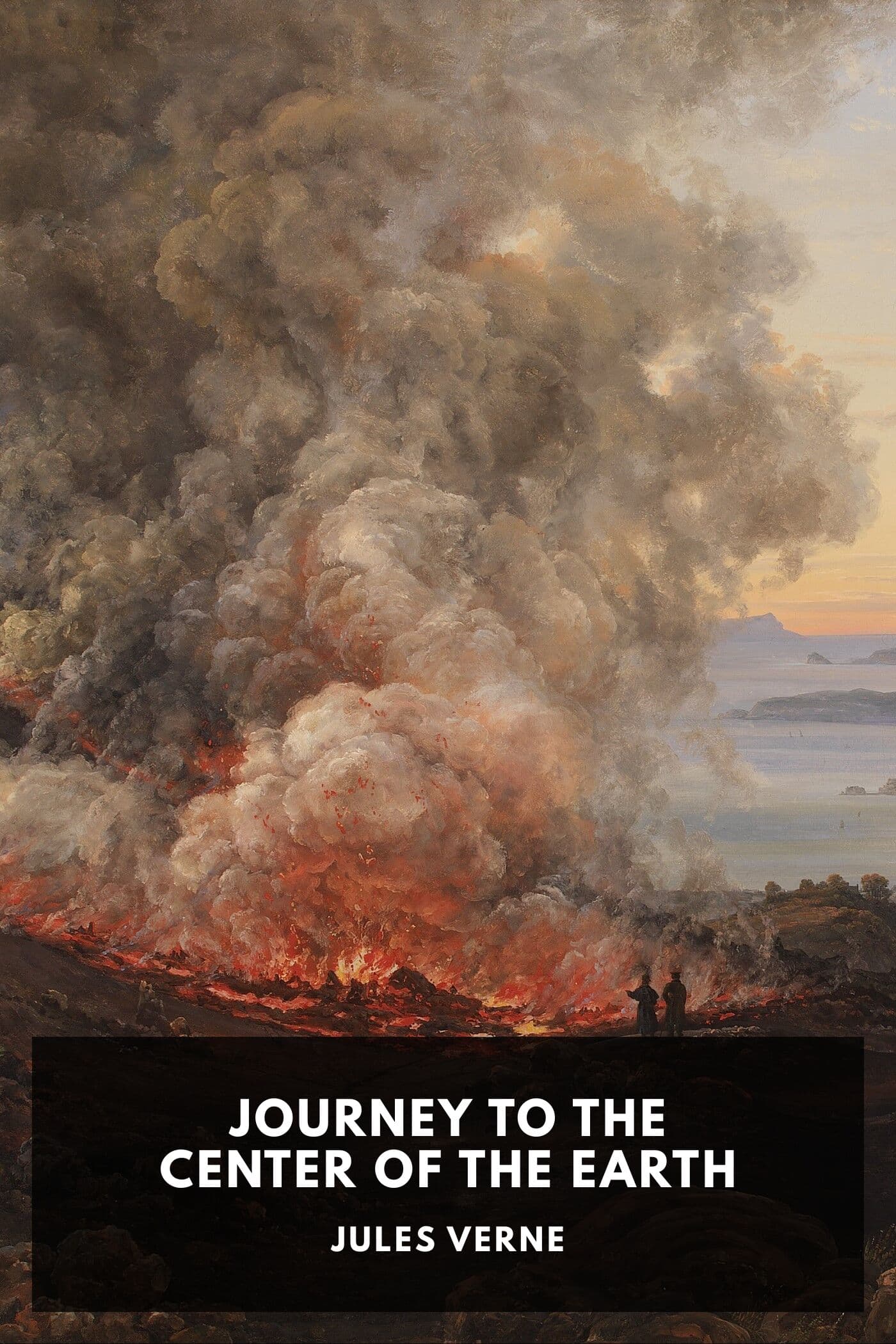
The book that invented science fiction. When Professor Otto Liedenbrock deciphers a 16th-century Runic manuscript describing a journey to Earth's center, his obsessive scientific curiosity sends him racing toward Iceland. He drags his reluctant nephew Axel along for the descent into a dormant volcano, accompanied only by the stoic guide Hans Bjelke. What awaits beneath the surface is a world beyond imagination: caverns of luminous crystals, forests of titanic prehistoric vegetation, an underground ocean where ancient marine creatures still swim. Verne transforms hard science into pure wonder, imagining a living Earth with the same romantic awe others reserved for distant planets. The relationship between the volcanic-tempered professor and his anxious, doubting nephew gives the adventure its emotional core. This is Verne at his most imaginative, when the scientific speculation of one century became the adventure literature for all time.
Editions
X-Ray
“We are of opinion that instead of letting books grow moldy behind an iron grating, far from the vulgar gaze, it is better to let them wear out by being read.””
— Jules Verne
“Science, my boy, is made up of mistakes, but they are mistakes which it is useful to make, because they lead little by little to the truth.””
— Jules Verne
“While there is life there is hope. I beg to assert...that as long as a man's heart beats, as long as a man's flesh quivers, I do not allow that a being gifted with thought and will can allow himself to despair.””
— Jules Verne
“I dream with my eyes open.””
— Jules Verne
“I looked on, I thought, I reflected, I admired, in a state of stupefaction not altogether unmingled with fear!””
— Jules Verne
“Science, my lad, has been built upon many errors; but they are errors which it was good to fall into, for they led to the truth.””
— Jules Verne
“There is no more sagacious animal than the Icelandic horse. He is stopped by neither snow, nor storm, nor impassable roads, nor rocks, glaciers, or anything. He is courageous, sober, and surefooted. He never makes a false step, never shies. If there is a river or fjord to cross (and we shall meet with many) you will see him plunge in at once, just as if he were amphibious, and gain the opposite bank.””
— Jules Verne
“And whichsoever way thou goest, may fortune follow.””
— Jules Verne
“If at every instant we may perish, so at every instant we may be saved.””
— Jules Verne
Link to this book
Add a free, dofollow link to Lex on your blog, forum, syllabus, or reading list.

<a href="https://lex-books.com/book/a-journey-into-the-interior-of-the-earth-82bf0053-e927-431f-9642-b2b6972814b2"><img src="https://lex-books.com/badges/read-on-lex.svg" alt="Read A Journey into the Interior of the Earth by Jules Verne free on Lex" width="160" height="40"></a>[](https://lex-books.com/book/a-journey-into-the-interior-of-the-earth-82bf0053-e927-431f-9642-b2b6972814b2)[url=https://lex-books.com/book/a-journey-into-the-interior-of-the-earth-82bf0053-e927-431f-9642-b2b6972814b2][img]https://lex-books.com/badges/read-on-lex.svg[/img][/url]Read A Journey into the Interior of the Earth by Jules Verne free on Lex: https://lex-books.com/book/a-journey-into-the-interior-of-the-earth-82bf0053-e927-431f-9642-b2b6972814b2Cite this book
Reading this edition for a paper or guide? Copy a citation.
Verne, Jules. A Journey into the Interior of the Earth. Lex, lex-books.com/book/a-journey-into-the-interior-of-the-earth-82bf0053-e927-431f-9642-b2b6972814b2.Verne, J. (1948). A Journey into the Interior of the Earth. Lex. https://lex-books.com/book/a-journey-into-the-interior-of-the-earth-82bf0053-e927-431f-9642-b2b6972814b2Verne, Jules. A Journey into the Interior of the Earth. Lex. https://lex-books.com/book/a-journey-into-the-interior-of-the-earth-82bf0053-e927-431f-9642-b2b6972814b2.