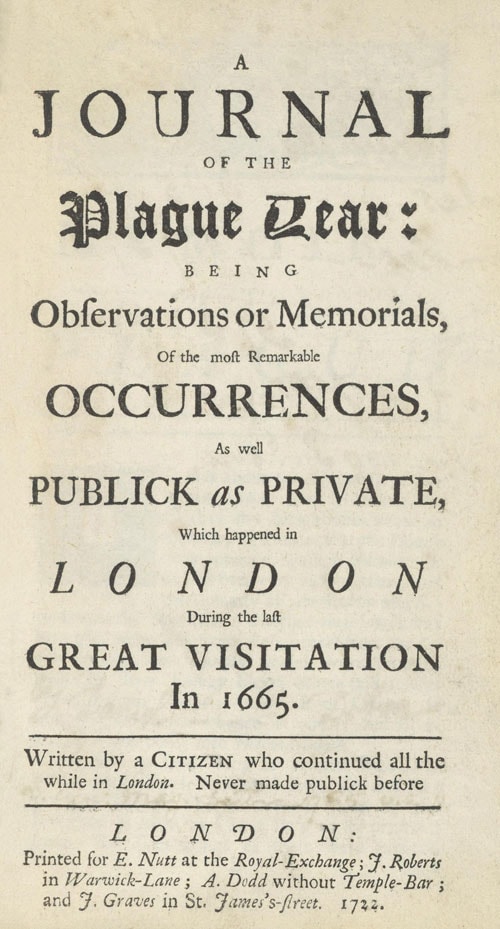
A Journal of the Plague Year: Being Observations or Memorials of the Most Remarkable Occurrences, as Well Public as Private, Which Happened in London During the Last Great Visitation in 1665. Written by a Citizen Who Continued All the While in London
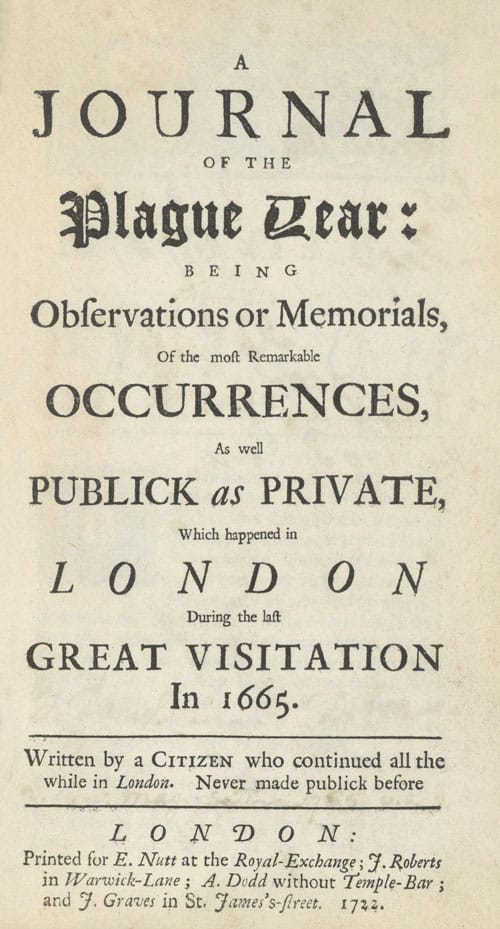
A Journal of the Plague Year: Being Observations or Memorials of the Most Remarkable Occurrences, as Well Public as Private, Which Happened in London During the Last Great Visitation in 1665. Written by a Citizen Who Continued All the While in London
A Journal of the Plague Year is Daniel Defoe's extraordinary act of imaginative resurrection: a meticulously detailed account of the Great Plague of 1665, written by a man who was only five years old when London burned with pestilence. The narrator, H.F., is a saddler in Whitechapel who refuses to flee the city, choosing instead to document the apocalypse unfolding around him with relentless, almost unbearable precision. He counts the dead. He names the streets. He notes which houses bear the red cross of plague and which have been silently abandoned. The result is neither novel nor history, but something more unsettling than either: a false memoir so convincing it feels like holding a survivor's final testimony. Defoe captures the strange calculus of fear - how neighbors become vectors, how rumor spreads faster than disease, how the city transforms into a landscape of empty streets, ringing bells, and death carts with their grim cry of 'Bring out your dead.' The book's power lies in its restraint. There is no melodrama, only the flat recitation of catastrophe, which makes every detail land like a blow. It is impossible to read without thinking of every pandemic since, without recognizing the same desperate human behavior: the flight, the denial, the hoarding, the prayers, the silence of empty neighborhoods. Defoe wrote this in 1722, fifty-seven years after the plague, yet the book pulses with the immediacy of someone still breathing the poisoned air.
Editions

Link to this book
Add a free, dofollow link to Lex on your blog, forum, syllabus, or reading list.

<a href="https://lex-books.com/book/a-journal-of-the-plague-year-being-observations-or-memorials-of-the-most-remarka-8627f092-9a77-47df-b918-57a253ea32cc"><img src="https://lex-books.com/badges/read-on-lex.svg" alt="Read A Journal of the Plague Year: Being Observations or Memorials of the Most Remarkable Occurrences, as Well Public as Private, Which Happened in London During the Last Great Visitation in 1665. Written by a Citizen Who Continued All the While in London by Daniel Defoe free on Lex" width="160" height="40"></a>[](https://lex-books.com/book/a-journal-of-the-plague-year-being-observations-or-memorials-of-the-most-remarka-8627f092-9a77-47df-b918-57a253ea32cc)[url=https://lex-books.com/book/a-journal-of-the-plague-year-being-observations-or-memorials-of-the-most-remarka-8627f092-9a77-47df-b918-57a253ea32cc][img]https://lex-books.com/badges/read-on-lex.svg[/img][/url]Read A Journal of the Plague Year: Being Observations or Memorials of the Most Remarkable Occurrences, as Well Public as Private, Which Happened in London During the Last Great Visitation in 1665. Written by a Citizen Who Continued All the While in London by Daniel Defoe free on Lex: https://lex-books.com/book/a-journal-of-the-plague-year-being-observations-or-memorials-of-the-most-remarka-8627f092-9a77-47df-b918-57a253ea32ccCite this book
Reading this edition for a paper or guide? Copy a citation.
Defoe, Daniel. A Journal of the Plague Year: Being Observations or Memorials of the Most Remarkable Occurrences, as Well Public as Private, Which Happened in London During the Last Great Visitation in 1665. Written by a Citizen Who Continued All the While in London. Lex, lex-books.com/book/a-journal-of-the-plague-year-being-observations-or-memorials-of-the-most-remarka-8627f092-9a77-47df-b918-57a253ea32cc.Defoe, D. (n.d.). A Journal of the Plague Year: Being Observations or Memorials of the Most Remarkable Occurrences, as Well Public as Private, Which Happened in London During the Last Great Visitation in 1665. Written by a Citizen Who Continued All the While in London. Lex. https://lex-books.com/book/a-journal-of-the-plague-year-being-observations-or-memorials-of-the-most-remarka-8627f092-9a77-47df-b918-57a253ea32ccDefoe, Daniel. A Journal of the Plague Year: Being Observations or Memorials of the Most Remarkable Occurrences, as Well Public as Private, Which Happened in London During the Last Great Visitation in 1665. Written by a Citizen Who Continued All the While in London. Lex. https://lex-books.com/book/a-journal-of-the-plague-year-being-observations-or-memorials-of-the-most-remarka-8627f092-9a77-47df-b918-57a253ea32cc.