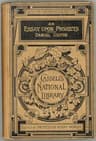
An Essay upon Projects
1697
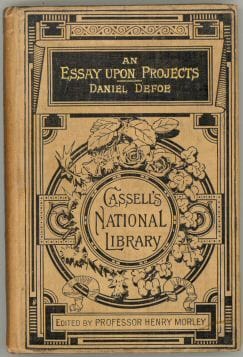
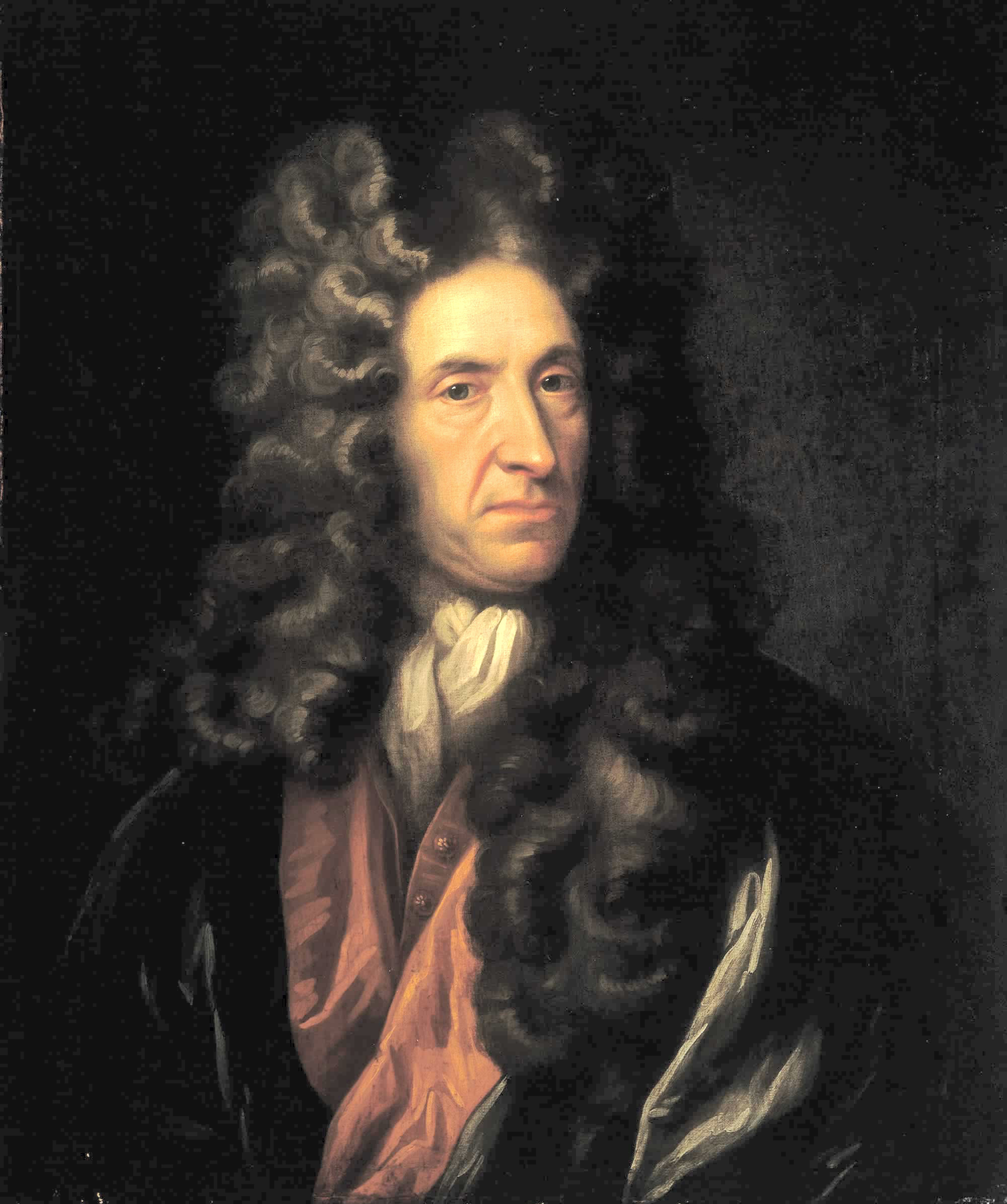
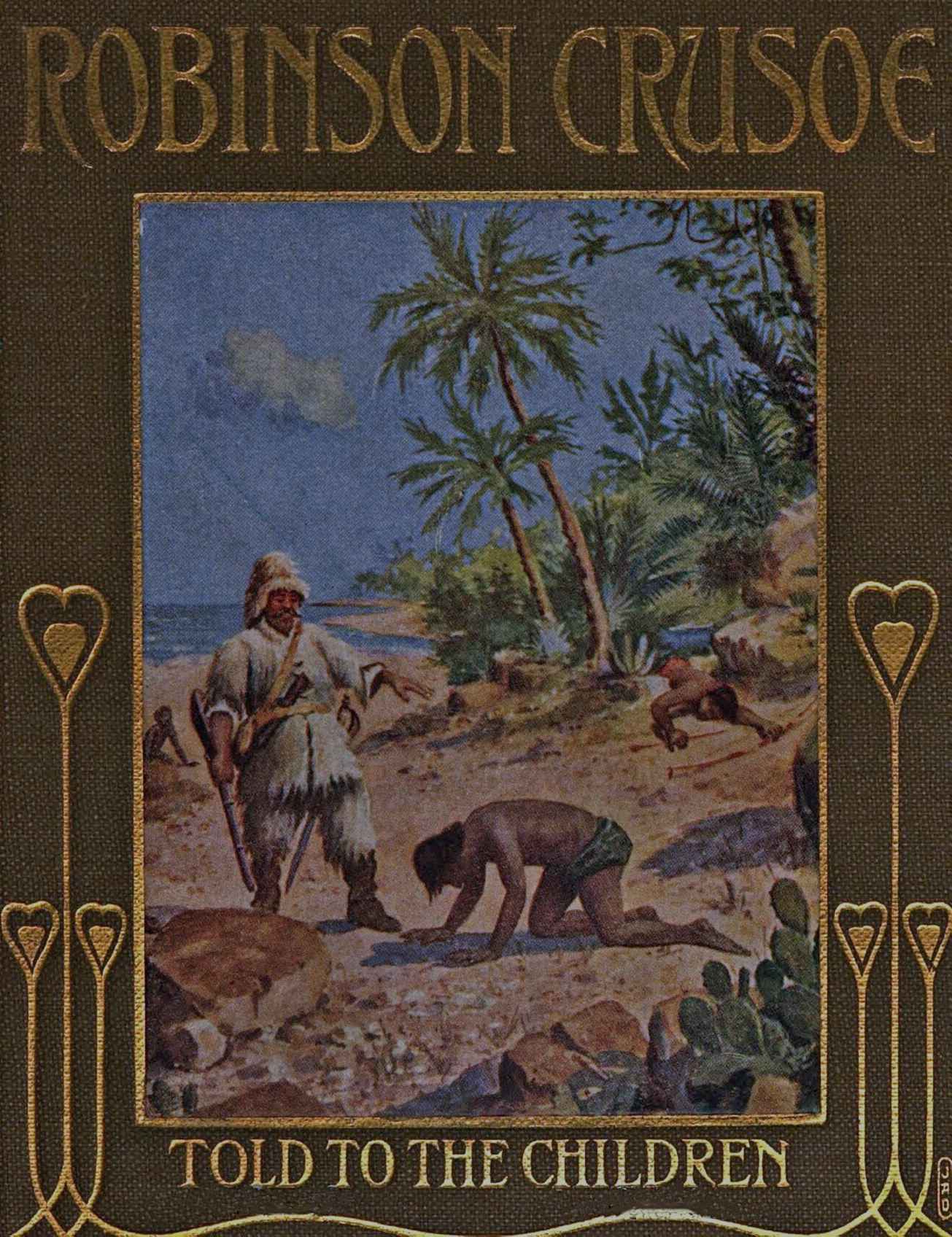
Before he shipwrecked Robinson Crusoe on a deserted island, Daniel Defoe shipwrecked himself into the mind of a reformer. Written in the early 1690s when Defoe was just thirty, An Essay Upon Projects is a whirlwind of bold, often bizarre proposals to fix a nation at war with itself and its finances. Here Defoe argues for national insurance decades before Bismarck, advocates for women's education when it was considered radical, redesigns the tax code, reimagines banking, and diagnoses poverty not as moral failing but as a structural problem requiring structural solutions. The book crackles with Defoe's signature energy: practical detail laced with speculative flair, good humor deployed in service of serious ideas. He calls his age the "Projecting Age" and wears the label proudly, arguing that innovators and schemers, properly channeled, might save England from economic collapse. Some suggestions took two hundred years to be implemented. Others we're still catching up to. This is Defoe before the novel, revealing a mind already restless, brilliant, and deeply concerned with how society might be made better.
Editions
X-Ray
“Necessity, which is allowed to be the mother of invention, has so violently agitated the wits of men at this time that it seems not at all improper, by way of distinction, to call it the Projecting Age.””
— Daniel Defoe
“Nothing’s so partial as the laws of fate,Erecting blockheads to suppress the great.Sir Francis Drake the Spanish plate-fleet won;He had been a pirate if he had got none.Sir Walter Raleigh strove, but missed the plate,And therefore died a traitor to the State.Endeavour bears a value more or less,Just as ’tis recommended by success:The lucky coxcomb ev’ry man will prize,And prosp’rous actions always pass for wise.””
— Daniel Defoe
“The building of Babel was a right project; for indeed the true definition of a project, according to modern acceptation, is [...]a vast undertaking, too big to be managed, and therefore likely enough to come to nothing. And yet, as great as they are, it is certainly true of them all, even as the projectors propose: that, according to the old tale, if so many eggs are hatched, there will be so many chickens, and those chickens may lay so many eggs more, and those eggs produce so many chickens more, and so on. Thus it was most certainly true that if the people of the Old World could have built a house up to heaven, they should never be drowned again on earth, and they only had forgot to measure the height; that is, as in other projects, it only miscarried, or else it would have succeeded.””
— Daniel Defoe
Link to this book
Add a free, dofollow link to Lex on your blog, forum, syllabus, or reading list.

<a href="https://lex-books.com/book/an-essay-upon-projects-e2f9ed03-0a57-433b-b3da-e04f71e091ec"><img src="https://lex-books.com/badges/read-on-lex.svg" alt="Read An Essay upon Projects by Daniel Defoe free on Lex" width="160" height="40"></a>[](https://lex-books.com/book/an-essay-upon-projects-e2f9ed03-0a57-433b-b3da-e04f71e091ec)[url=https://lex-books.com/book/an-essay-upon-projects-e2f9ed03-0a57-433b-b3da-e04f71e091ec][img]https://lex-books.com/badges/read-on-lex.svg[/img][/url]Read An Essay upon Projects by Daniel Defoe free on Lex: https://lex-books.com/book/an-essay-upon-projects-e2f9ed03-0a57-433b-b3da-e04f71e091ecCite this book
Reading this edition for a paper or guide? Copy a citation.
Defoe, Daniel. An Essay upon Projects. Lex, lex-books.com/book/an-essay-upon-projects-e2f9ed03-0a57-433b-b3da-e04f71e091ec.Defoe, D. (1697). An Essay upon Projects. Lex. https://lex-books.com/book/an-essay-upon-projects-e2f9ed03-0a57-433b-b3da-e04f71e091ecDefoe, Daniel. An Essay upon Projects. Lex. https://lex-books.com/book/an-essay-upon-projects-e2f9ed03-0a57-433b-b3da-e04f71e091ec.