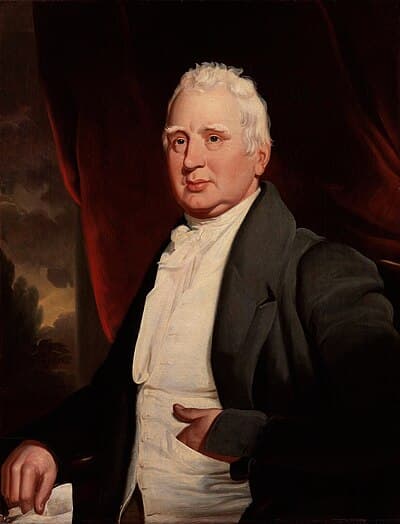
William Cobbett
William Cobbett was an influential English pamphleteer, journalist, politician, and farmer, born in Farnham, Surrey. He emerged as a prominent voice in the agrarian movement, advocating for parliamentary reform and the abolition of 'rotten boroughs' while striving to alleviate the hardships faced by farm laborers and small landholders. Cobbett's political philosophy emphasized lower taxes, the reversal of commons enclosures, and a return to the gold standard, positioning him as a radical reformer of his time. His passionate critiques targeted the bureaucratic elite, whom he referred to as 'tax-eaters,' and he was a vocal opponent of Malthusianism, arguing that economic progress could sustain population growth rather than hinder it. Cobbett's literary contributions, particularly his best-known work, *Rural Rides* (1830), showcased his observations of rural England and his advocacy for the agrarian community. His writings spanned a range of topics, including political reform and religious issues, notably supporting Catholic emancipation. His efforts significantly influenced the Reform Act of 1832, leading to his election as one of the first representatives for the newly created seat in Parliament for Oldham. Cobbett's legacy as a champion of the working class and a critic of the status quo cemented his place in the history of English political thought and journalism.
Famous Quotes
View all 3 quotes“You can tell a lot about a country which refers to the Royal Mint and the National Debt.”
“Sit down to write what you have thought, and not to think about what you shall write.”
“He who can deliberately inflict torture upon an animal, in order to heighten the pleasure his palate is to receive in eating it, is an abuser of the authority which God has given him, and is, indeed, a tyrant in his heart.”
Books from the author




Link to this page
Add a free, dofollow link to Lex on your blog, forum, syllabus, or reading list.

<a href="https://lex-books.com/author/william-cobbett"><img src="https://lex-books.com/badges/read-on-lex.svg" alt="William Cobbett on Lex" width="160" height="40"></a>[](https://lex-books.com/author/william-cobbett)[url=https://lex-books.com/author/william-cobbett][img]https://lex-books.com/badges/read-on-lex.svg[/img][/url]William Cobbett on Lex: https://lex-books.com/author/william-cobbett