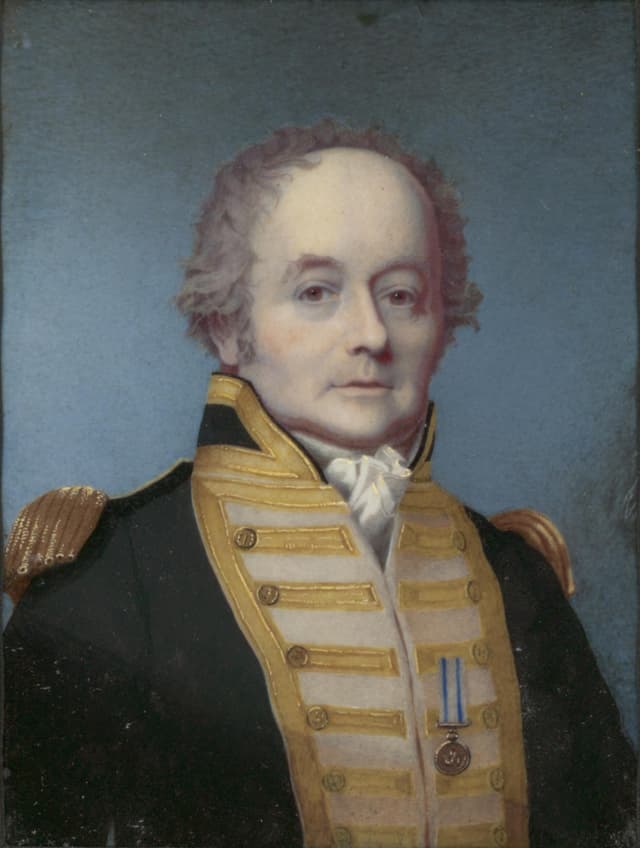
William Bligh
William Bligh was a Royal Navy vice-admiral and colonial administrator, most famously known for his tumultuous command of HMS Bounty during the infamous mutiny in 1789. The reasons behind the mutiny, which saw Bligh and his loyal crew cast adrift, remain a topic of historical debate. Despite the dire circumstances, Bligh demonstrated remarkable navigation skills, leading his men on a perilous journey of over 3,600 nautical miles to safety in Timor. His experiences aboard the Bounty became emblematic of the challenges faced by naval officers of the era, highlighting themes of leadership and authority in extreme conditions. In 1806, Bligh was appointed governor of New South Wales, where he aimed to reform the corrupt rum trade that had taken hold of the colony. His efforts to impose order led to the Rum Rebellion of 1808, during which he was arrested and deposed by the New South Wales Corps, an act later deemed illegal by the British government. Bligh's legacy is complex; while he is often remembered for the mutiny, his administrative challenges in Australia reveal a man grappling with the intricacies of colonial governance and the limits of his authority. He passed away in London in 1817, leaving behind a controversial yet significant mark on naval and colonial history.
Famous Quotes
View all 1 quotes“seen as soon as the reefs, from a ship’s mast”
Books from the author







Link to this page
Add a free, dofollow link to Lex on your blog, forum, syllabus, or reading list.

<a href="https://lex-books.com/author/william-bligh"><img src="https://lex-books.com/badges/read-on-lex.svg" alt="William Bligh on Lex" width="160" height="40"></a>[](https://lex-books.com/author/william-bligh)[url=https://lex-books.com/author/william-bligh][img]https://lex-books.com/badges/read-on-lex.svg[/img][/url]William Bligh on Lex: https://lex-books.com/author/william-bligh