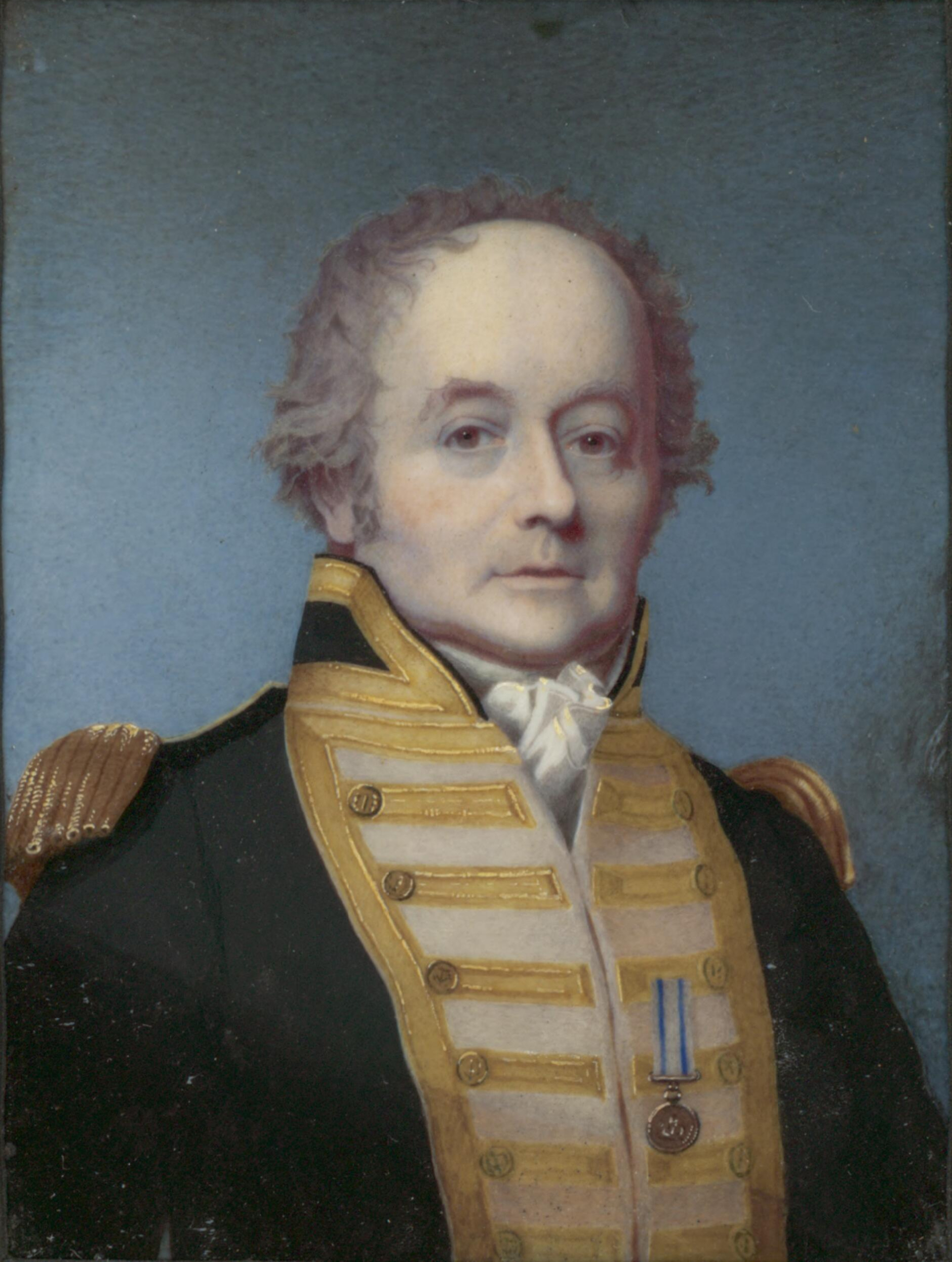
A Voyage to the South Sea: Undertaken by Command of His Majesty for the Purpose of Conveying the Bread-Fruit Tree to the West Indies in His Majesty's Ship the Bounty Commanded by Lieutenant William Bligh; Including an Account of the Mutiny on Board the Said Ship and the Subsequent Voyage of Part of the Crew in the Ship's Boat from Tofoa, One of the Friendly Islands, to Timor, a Dutch Settlement in the East Indies
1792
A Voyage to the South Sea: Undertaken by Command of His Majesty for the Purpose of Conveying the Bread-Fruit Tree to the West Indies in His Majesty's Ship the Bounty Commanded by Lieutenant William Bligh; Including an Account of the Mutiny on Board the Said Ship and the Subsequent Voyage of Part of the Crew in the Ship's Boat from Tofoa, One of the Friendly Islands, to Timor, a Dutch Settlement in the East Indies
1792
In 1787, Lieutenant William Bligh embarked on what should have been a straightforward colonial mission: transport 1,000 breadfruit plants from Tahiti to the West Indies, providing cheap food for enslaved laborers on sugar plantations. Instead, he returned three years later having survived one of history's most extraordinary open-boat voyages. This 1792 account, written just three years after the events it describes, is the definitive primary source on the infamous mutiny that made the Bounty a legend. Bligh's narrative captures the grinding tedium of months at sea, the complex dynamics between sailors and islanders during five months in Tahiti, and the precise moment when Fletcher Christian led twenty-five men to seize the ship. What emerges is a portrait of a man utterly convinced of his own correctness, defending his command style while documenting the unprecedented 3,600-nautical-mile journey in an open boat from Tofua to Timor, a feat of navigation and endurance that remains astonishing. For readers fascinated by the true story behind the legend, this is Bligh himself, in his own words, at the moment of maximum historical relevance.
Editions
X-Ray
Link to this book
Add a free, dofollow link to Lex on your blog, forum, syllabus, or reading list.

<a href="https://lex-books.com/book/a-voyage-to-the-south-sea-undertaken-by-command-of-his-majesty-for-the-purpose-o-68e7a206-162e-4961-a72b-2d240f1c0120"><img src="https://lex-books.com/badges/read-on-lex.svg" alt="Read A Voyage to the South Sea: Undertaken by Command of His Majesty for the Purpose of Conveying the Bread-Fruit Tree to the West Indies in His Majesty's Ship the Bounty Commanded by Lieutenant William Bligh; Including an Account of the Mutiny on Board the Said Ship and the Subsequent Voyage of Part of the Crew in the Ship's Boat from Tofoa, One of the Friendly Islands, to Timor, a Dutch Settlement in the East Indies by William Bligh free on Lex" width="160" height="40"></a>[](https://lex-books.com/book/a-voyage-to-the-south-sea-undertaken-by-command-of-his-majesty-for-the-purpose-o-68e7a206-162e-4961-a72b-2d240f1c0120)[url=https://lex-books.com/book/a-voyage-to-the-south-sea-undertaken-by-command-of-his-majesty-for-the-purpose-o-68e7a206-162e-4961-a72b-2d240f1c0120][img]https://lex-books.com/badges/read-on-lex.svg[/img][/url]Read A Voyage to the South Sea: Undertaken by Command of His Majesty for the Purpose of Conveying the Bread-Fruit Tree to the West Indies in His Majesty's Ship the Bounty Commanded by Lieutenant William Bligh; Including an Account of the Mutiny on Board the Said Ship and the Subsequent Voyage of Part of the Crew in the Ship's Boat from Tofoa, One of the Friendly Islands, to Timor, a Dutch Settlement in the East Indies by William Bligh free on Lex: https://lex-books.com/book/a-voyage-to-the-south-sea-undertaken-by-command-of-his-majesty-for-the-purpose-o-68e7a206-162e-4961-a72b-2d240f1c0120Cite this book
Reading this edition for a paper or guide? Copy a citation.
Bligh, William. A Voyage to the South Sea: Undertaken by Command of His Majesty for the Purpose of Conveying the Bread-Fruit Tree to the West Indies in His Majesty's Ship the Bounty Commanded by Lieutenant William Bligh; Including an Account of the Mutiny on Board the Said Ship and the Subsequent Voyage of Part of the Crew in the Ship's Boat from Tofoa, One of the Friendly Islands, to Timor, a Dutch Settlement in the East Indies. Lex, lex-books.com/book/a-voyage-to-the-south-sea-undertaken-by-command-of-his-majesty-for-the-purpose-o-68e7a206-162e-4961-a72b-2d240f1c0120.Bligh, W. (1792). A Voyage to the South Sea: Undertaken by Command of His Majesty for the Purpose of Conveying the Bread-Fruit Tree to the West Indies in His Majesty's Ship the Bounty Commanded by Lieutenant William Bligh; Including an Account of the Mutiny on Board the Said Ship and the Subsequent Voyage of Part of the Crew in the Ship's Boat from Tofoa, One of the Friendly Islands, to Timor, a Dutch Settlement in the East Indies. Lex. https://lex-books.com/book/a-voyage-to-the-south-sea-undertaken-by-command-of-his-majesty-for-the-purpose-o-68e7a206-162e-4961-a72b-2d240f1c0120Bligh, William. A Voyage to the South Sea: Undertaken by Command of His Majesty for the Purpose of Conveying the Bread-Fruit Tree to the West Indies in His Majesty's Ship the Bounty Commanded by Lieutenant William Bligh; Including an Account of the Mutiny on Board the Said Ship and the Subsequent Voyage of Part of the Crew in the Ship's Boat from Tofoa, One of the Friendly Islands, to Timor, a Dutch Settlement in the East Indies. Lex. https://lex-books.com/book/a-voyage-to-the-south-sea-undertaken-by-command-of-his-majesty-for-the-purpose-o-68e7a206-162e-4961-a72b-2d240f1c0120.