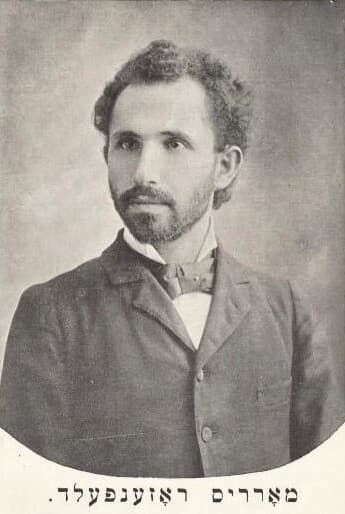
Morris Rosenfeld
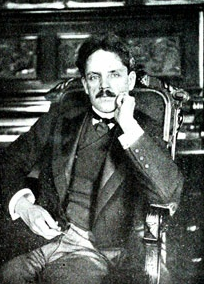
Morris Rosenfeld was a prominent Yiddish poet whose work illuminated the struggles of Eastern European emigrants in New York's tailoring workshops. Born Moshe Yankev Chmielowski in Russian Poland, he faced personal tragedy early in life, losing most of his siblings to a cholera epidemic. After emigrating to the United States in 1886, he adopted the surname Rosenfeld and became deeply involved in the Jewish literary community, contributing to various newspapers and publishing his own works. His poetry often reflected the harsh realities of immigrant life, capturing both the despair and resilience of his fellow workers. Rosenfeld's literary contributions extended beyond poetry; he wrote song parodies and served as editor for several publications, including the New Yorker Morgenblatt and Jewish Annals. His works, such as 'Nokhn ball' and 'Di pawnshop,' resonated with audiences and showcased his ability to blend humor with poignant social commentary. As a delegate to the Fourth Zionist Congress and a speaker at prestigious universities, Rosenfeld played a significant role in the cultural and political discourse of his time, leaving a lasting legacy in Yiddish literature and immigrant advocacy.
Books from the author



Link to this page
Add a free, dofollow link to Lex on your blog, forum, syllabus, or reading list.

<a href="https://lex-books.com/author/morris-rosenfeld"><img src="https://lex-books.com/badges/read-on-lex.svg" alt="Morris Rosenfeld on Lex" width="160" height="40"></a>[](https://lex-books.com/author/morris-rosenfeld)[url=https://lex-books.com/author/morris-rosenfeld][img]https://lex-books.com/badges/read-on-lex.svg[/img][/url]Morris Rosenfeld on Lex: https://lex-books.com/author/morris-rosenfeld