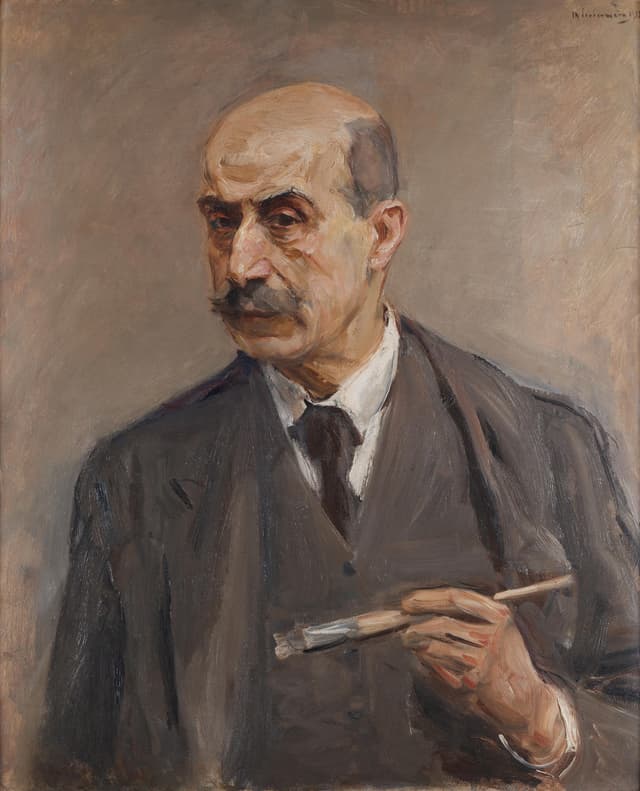
Max Liebermann
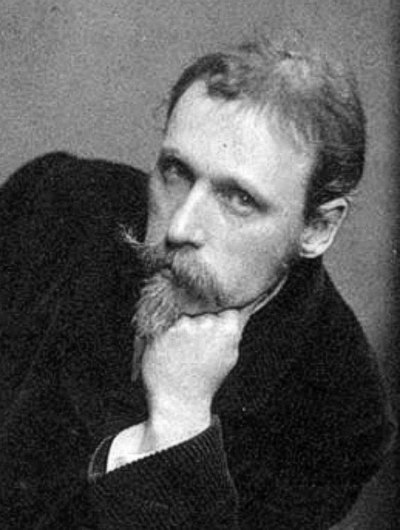
Max Liebermann was a prominent German painter and printmaker, recognized as one of the leading figures of Impressionism in Germany and continental Europe. Born into a Jewish banking family, he pursued his artistic education in Weimar, Paris, and the Netherlands, ultimately settling in Berlin in 1884. Liebermann's work often depicted scenes of the bourgeoisie and the tranquil beauty of his garden near Lake Wannsee. He was particularly renowned for his portraits, completing over 200 commissioned works, including notable figures such as Albert Einstein and Paul von Hindenburg. A pivotal figure in the art community, Liebermann played a significant role in the Berlin Secession, leading this avant-garde movement from 1899 to 1911. His influence extended to his leadership of the Prussian Academy of Arts, where he served as president starting in 1920. Despite his accolades, including a major exhibition on his 80th birthday and recognition as an honorary citizen of Berlin, Liebermann faced the harsh realities of the Nazi regime. In 1933, he resigned from the academy in protest against its decision to exclude Jewish artists, a move that marked a tragic turning point in his legacy. Following his death, his valuable art collection was looted by the Nazis, further underscoring the cultural losses inflicted during this dark period in history.
Famous Quotes
View all 1 quotes“Ich kann nicht so viel fressen, wie ich kotzen möchte.”
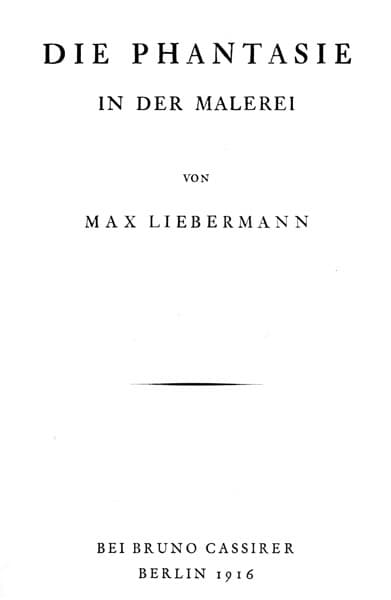
Books from the author

Link to this page
Add a free, dofollow link to Lex on your blog, forum, syllabus, or reading list.

<a href="https://lex-books.com/author/max-liebermann"><img src="https://lex-books.com/badges/read-on-lex.svg" alt="Max Liebermann on Lex" width="160" height="40"></a>[](https://lex-books.com/author/max-liebermann)[url=https://lex-books.com/author/max-liebermann][img]https://lex-books.com/badges/read-on-lex.svg[/img][/url]Max Liebermann on Lex: https://lex-books.com/author/max-liebermann