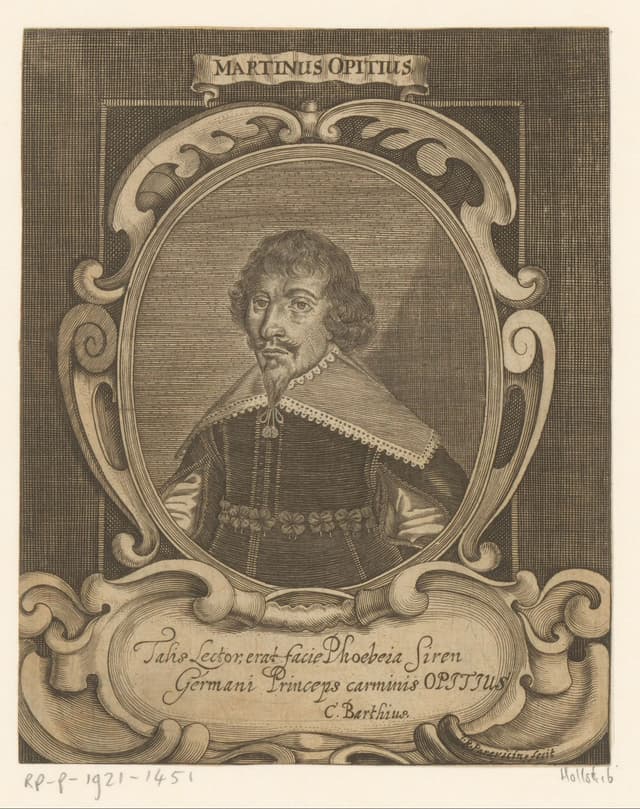
Martin Opitz
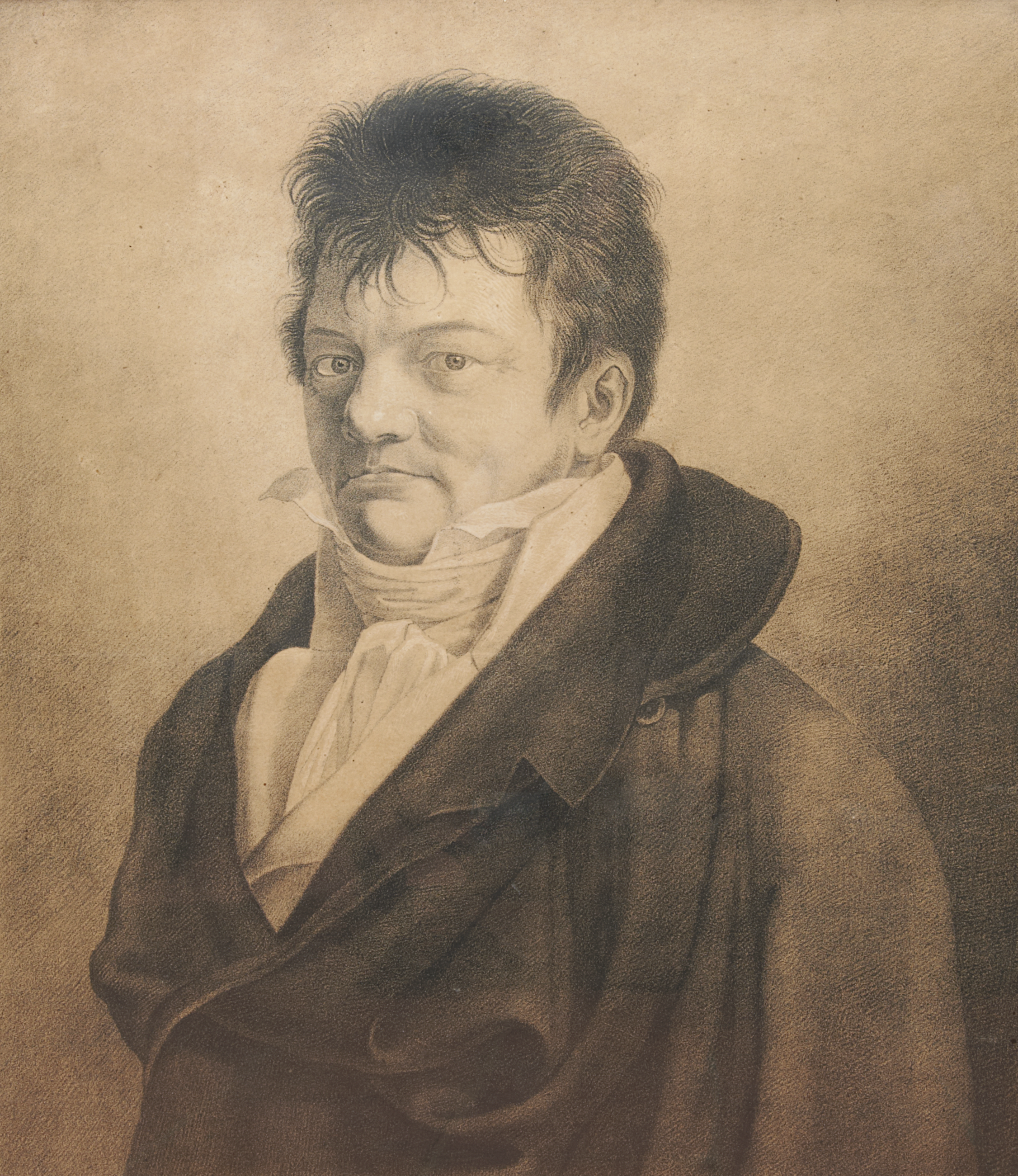
Martin Opitz von Boberfeld was a prominent German poet of the early 17th century, celebrated for his significant contributions to German literature. Born in 1597, he emerged as a leading figure in the literary scene, known for his advocacy of a distinct German poetic language and form. Opitz's most notable work, 'Der vollkommene German' (The Perfect German), published in 1624, was groundbreaking in its promotion of the German language and its poetic potential, establishing standards for future generations of poets. His influence extended beyond his own writings, as he played a crucial role in the development of the Baroque literary style in Germany. Opitz's poetry often reflected the tumultuous times in which he lived, marked by the Thirty Years' War. His works combined classical influences with a deep appreciation for the German folk tradition, bridging the gap between the past and the emerging modernity of his era. He is also remembered for his critical essays on poetics, which laid the groundwork for German literary theory. Opitz's legacy endures, as he is often credited with elevating the status of German literature and inspiring subsequent generations of poets and writers.
Books from the author




Link to this page
Add a free, dofollow link to Lex on your blog, forum, syllabus, or reading list.

<a href="https://lex-books.com/author/martin-opitz"><img src="https://lex-books.com/badges/read-on-lex.svg" alt="Martin Opitz on Lex" width="160" height="40"></a>[](https://lex-books.com/author/martin-opitz)[url=https://lex-books.com/author/martin-opitz][img]https://lex-books.com/badges/read-on-lex.svg[/img][/url]Martin Opitz on Lex: https://lex-books.com/author/martin-opitz