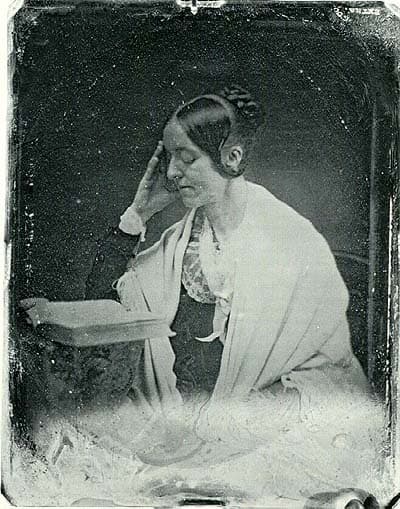
Margaret Fuller
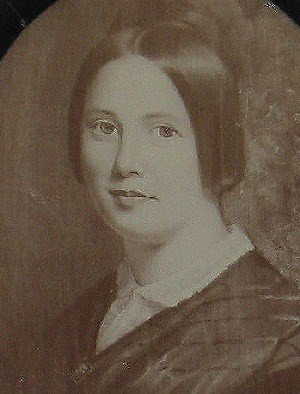
Sarah Margaret Fuller was an influential American journalist, editor, and advocate for women's rights, closely associated with the transcendentalist movement. Born in Cambridge, Massachusetts, she received a rigorous education from her father, Timothy Fuller, and later became a teacher. In 1839, she initiated her Conversations series, providing women with access to education that was often denied to them. Fuller became the first editor of the transcendentalist journal The Dial in 1840, marking the beginning of her successful writing career. She gained recognition as one of the best-read individuals in New England and was the first woman permitted to use the Harvard College library. Her groundbreaking work, Woman in the Nineteenth Century, published in 1845, is regarded as the first major feminist text in the United States, advocating for women's education and employment rights. In 1844, Fuller joined the New-York Tribune as its first female staff member and became the first American female war correspondent when she reported from Europe during the revolutions of 1848. Her involvement with the Italian revolutionary Giuseppe Mazzini and her relationship with Giovanni Ossoli, with whom she had a child, were significant aspects of her life. Tragically, Fuller, Ossoli, and their child perished in a shipwreck off Fire Island in 1850, and her body was never recovered. Despite her initial influence waning after her death, Fuller’s legacy as a pioneer of feminist thought and a champion for social reforms, including prison reform and the abolition of slavery, continued to inspire future generations of women's rights advocates, such as Susan B. Anthony. Her work, though sometimes censored by contemporaries, remains a critical part of American literary and feminist history.
Famous Quotes
View all 3 quotes“Today a reader, tomorrow a leader.”
“If you have knowledge , let others light their candles in it.”
“Men for the sake of getting a living forget to live.”
Books from the author



Link to this page
Add a free, dofollow link to Lex on your blog, forum, syllabus, or reading list.

<a href="https://lex-books.com/author/margaret-fuller"><img src="https://lex-books.com/badges/read-on-lex.svg" alt="Margaret Fuller on Lex" width="160" height="40"></a>[](https://lex-books.com/author/margaret-fuller)[url=https://lex-books.com/author/margaret-fuller][img]https://lex-books.com/badges/read-on-lex.svg[/img][/url]Margaret Fuller on Lex: https://lex-books.com/author/margaret-fuller