Woman in the Nineteenth Century: And Kindred Papers Relating to the Sphere, Condition and Duties, of Woman.
Woman in the Nineteenth Century: And Kindred Papers Relating to the Sphere, Condition and Duties, of Woman.
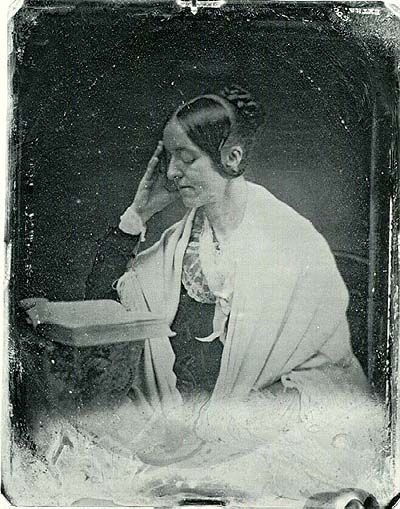
Margaret Fuller's 1845 masterwork is the foundational text of American feminism, a book that predated the Seneca Falls Convention by three years and directly inspired Elizabeth Cady Stanton and Susan B. Anthony. Written by the brilliant Transcendentalist who edited The Dial alongside Emerson, this is no mere petition for rights but a philosophically daring examination of woman's essence, her relationship to the divine, and her rightful place in intellectual and spiritual life. Fuller argues that emancipation means more than access to education or property: it demands a revolution in how both men and women conceive of feminine possibility. The prose alternates between soaring transcendentalist rhetoric and incisive social critique, making the case that half of humanity cannot truly flourish while artificially confined. What makes this book endure is its insistence that women's liberation is not about competing with men but about achieving full humanity. It remains essential for anyone who wants to understand where modern feminism came from, and how radically optimistic its origins really were.
Editions
X-Ray
“Let every woman, who has once begun to think, examine herself””
— Margaret Fuller
“Beware of over-great pleasure in being popular or even beloved. As far as an amiable disposition and powers of entertainment make you so, it is a happiness; but if there is one grain of plausibility, it is poison.””
— Margaret Fuller
“...above all things; to remember that hypocrisy is the most hopeless as well as the meanest of crimes...””
— Margaret Fuller
“But her eye, that torch or the soul, is untamed, and in the intensity of her reading, we see a soul invincibly young in faith and hope.””
— Margaret Fuller
“Yet, by men in this country, as by the Jews, when Moses was leading them to the promised land, everything has been done that inherited depravity could do, to hinder the promise of Heaven from its fulfilment. The cross, here as elsewhere, has been planted only to be blasphemed by cruelty and fraud.””
— Margaret Fuller
“Accursed be he who willingly saddens an immortal spirit---doomed to infamy in later, wiser ages, doomed in future stages of his own being to deadly penance, only short of death.””
— Margaret Fuller
“We have waited here long in the dust; we are tired and hungry; but the triumphal procession must appear at last.””
— Margaret Fuller
“But the intellect, cold, is ever more masculine than feminine; warmed by emotion, it rushes towards mother earth, and puts on the forms of beauty.””
— Margaret Fuller
“Here, as elsewhere, the gain of creation consists always in the growth of individual minds, which live and aspire, as flowers bloom and birds sing, in the midst of morasses; and in the continual development of that thought, the thought of human destiny, which is given to eternity adequately to express, and which ages of failure only seemingly impede.””
— Margaret Fuller
Link to this book
Add a free, dofollow link to Lex on your blog, forum, syllabus, or reading list.

<a href="https://lex-books.com/book/woman-in-the-nineteenth-century-and-kindred-papers-relating-to-the-sphere-condit-d3aa84bb-7525-4a4d-b093-613c4de20c6d"><img src="https://lex-books.com/badges/read-on-lex.svg" alt="Read Woman in the Nineteenth Century: And Kindred Papers Relating to the Sphere, Condition and Duties, of Woman. by Margaret Fuller free on Lex" width="160" height="40"></a>[](https://lex-books.com/book/woman-in-the-nineteenth-century-and-kindred-papers-relating-to-the-sphere-condit-d3aa84bb-7525-4a4d-b093-613c4de20c6d)[url=https://lex-books.com/book/woman-in-the-nineteenth-century-and-kindred-papers-relating-to-the-sphere-condit-d3aa84bb-7525-4a4d-b093-613c4de20c6d][img]https://lex-books.com/badges/read-on-lex.svg[/img][/url]Read Woman in the Nineteenth Century: And Kindred Papers Relating to the Sphere, Condition and Duties, of Woman. by Margaret Fuller free on Lex: https://lex-books.com/book/woman-in-the-nineteenth-century-and-kindred-papers-relating-to-the-sphere-condit-d3aa84bb-7525-4a4d-b093-613c4de20c6dCite this book
Reading this edition for a paper or guide? Copy a citation.
Fuller, Margaret. Woman in the Nineteenth Century: And Kindred Papers Relating to the Sphere, Condition and Duties, of Woman.. Lex, lex-books.com/book/woman-in-the-nineteenth-century-and-kindred-papers-relating-to-the-sphere-condit-d3aa84bb-7525-4a4d-b093-613c4de20c6d.Fuller, M. (n.d.). Woman in the Nineteenth Century: And Kindred Papers Relating to the Sphere, Condition and Duties, of Woman.. Lex. https://lex-books.com/book/woman-in-the-nineteenth-century-and-kindred-papers-relating-to-the-sphere-condit-d3aa84bb-7525-4a4d-b093-613c4de20c6dFuller, Margaret. Woman in the Nineteenth Century: And Kindred Papers Relating to the Sphere, Condition and Duties, of Woman.. Lex. https://lex-books.com/book/woman-in-the-nineteenth-century-and-kindred-papers-relating-to-the-sphere-condit-d3aa84bb-7525-4a4d-b093-613c4de20c6d.