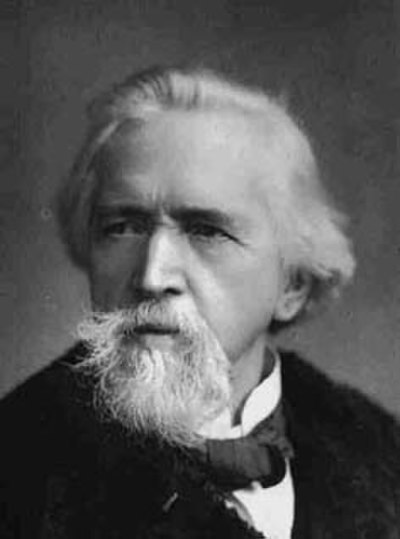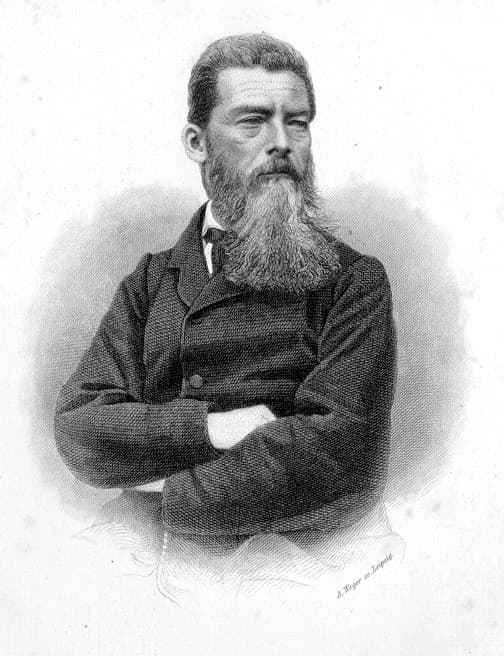
Ludwig Feuerbach
Ludwig Feuerbach was a prominent German philosopher and anthropologist, recognized as a leading figure among the Young Hegelians. His most influential work, The Essence of Christianity, published in 1841, presented a radical critique of religion, positing that God is merely a projection of humanity's essential attributes. This groundbreaking idea laid the groundwork for his advocacy of atheism, materialism, and sensualism, challenging the prevailing theological notions of his time. Feuerbach's philosophical journey began with theological studies at Heidelberg and later under Hegel in Berlin, but his academic career was abruptly halted after the scandal surrounding his first book, Thoughts on Death and Immortality, which criticized the concept of personal immortality. Living in relative isolation for much of his life, supported by his wife's work in a porcelain factory, Feuerbach continued to develop his ideas, which served as a critical bridge between Hegel's speculative idealism and the materialist philosophy of Karl Marx. He argued that idealism distorted the true relationship between thought and existence, asserting that philosophy should focus on concrete human experience rather than abstract concepts. In his later works, such as the Lectures on the Essence of Religion, he expanded his critique of religion, proposing a 'bipolar' theory where religious beliefs emerge from humanity's confrontation with nature, driven by the pursuit of happiness and the fear of death. Feuerbach's legacy endures as a pivotal figure in the development of modern atheistic thought and the critique of religion.
Famous Quotes
View all 19 quotes“As we expand our knowledge of good books, we shrink the circle of men whose company we appreciate.””
“I would rather be a devil in alliance with truth, than an angel in alliance with falsehood.””
“Wherever morality is based on theology, wherever right is made dependent on divine authority, the most immoral, unjust, infamous things can be justified and established.””