Lewis Melville
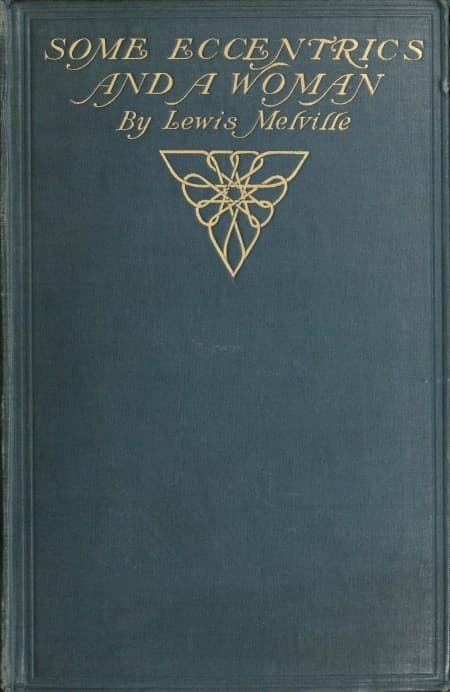
Lewis Melville, born Lewis Saul Benjamin, was an English author whose literary contributions spanned the late 19th and early 20th centuries. Raised in a Jewish family in London, he received a private education in both England and Germany, which influenced his diverse literary style. Before fully committing to writing, Melville pursued a career in acting from 1896 to 1901, during which he began to cultivate his literary voice. His experiences in the theater enriched his writing, allowing him to explore character and dialogue with depth and nuance. Melville is best known for his biographies and novels, including notable works such as 'The Life of Sir John Tenniel' and 'The Life of Sir Arthur Conan Doyle.' His biographical writings are particularly significant for their detailed and engaging portrayals of their subjects, showcasing his ability to blend narrative flair with factual rigor. Melville's literary legacy lies in his contributions to biographical literature, where he brought to life the stories of prominent figures, thereby influencing the genre and inspiring future biographers. His work remains a testament to the vibrant literary culture of his time and the enduring appeal of well-crafted biography.
Famous Quotes
View all 3 quotes“Symbolically, at the entrance to the new pyramid complexes stands the nuclear reactor, which first manifested its powers to the multitude by a typical trick of Bronze Age deities: the instant extermination of all the inhabitants of a populous city. Of this early display of nuclear power, as of all the vastly augmented potentialities for destruction that so rapidly followed, one can say what Melville's mad captain in 'Moby Dick' said of himself: "All my means and methods are sane: my purpose is mad." For the splitting of the atom was the beautiful consummation-and the confirmation-of the experimental and mathematical modes of thinking that since the seventeenth century have inordinately increased the human command of physical forces.””
“In Ahab and in his beatnik, quasi-criminal prototype, Jackson (in 'Redburn'), Melville gave expression both to the megatechnic 'Khans' of the global Pentagon and to the counter-forces they had brought into being. And the fact that Ahab's torment and hatred had gone so far that he had lost control of himself and, through his own mad reliance upon power, had become dominated completely by the creature that had disabled him, only makes Melville's story a central parable in the interpretation of modern man's destiny. In Ahab's throwing away compass and sextant at the height of the chase, Melville even anticipated the casting out of the orderly instruments of intelligence, so characteristic of the counter-culture and anti-life happenings of today. Similarly, by his maniacal concentration, Ahab rejects the inner change that might have saved the ship and the crew, when he turns a deaf ear to the pleas of love uttered by sober Starbuck in words and by Pip, a fright-shocked child and an African primitive, in dumb gesture.Outwardly mankind is still committed tot he grim chase Melville described, lured by the adventure, the prospect of oil and whalebone, the promptings of pride, an above all by a love-rejecting pursuit of power. But it has also begun consciously to face the prospect of total annihilation, which may be brought about by the captains who now have command of the ship.””
“We hear more about dignity and “pensive luster” from cultures where the patina of age is highly valued, from the shutaku (soil from handling) in Chinese culture or the Japanese concept of nare that garners a reverence over “shallow brilliance,” objects with too much finish. 12 In France, low radiance, the mere shine off a coin, was once enough to mark the start and end of the workday in winter, it was “the moment when there was not enough light to distinguish a denier [a small coin] of Tours from a denier of Paris.” 13 The light that begins and ends these uncommon journeys requires a similar sensitivity to their sheen. It often takes a blaze to see things anew. So age upon age has had its icons who went unsung during their lifetime. When Herman Melville died as a customs agent at the Port of New York in 1891, his widow complained that the copyright of White Jacket (1850) and Moby-Dick (1851) had no worth; they “give no income and have no market value.” 14 It took nearly seventy years for Moby-Dick to receive its critical acclaim. In the final months of writing the book, Melville suspected as much, and acrimoniously foretold his fate: “though I wrote the Gospels in this century, I should die in the gutter.” 15 Our lodestars often shine a few foot-candles below the level we are prepared to see.””
Books from the author






Link to this page
Add a free, dofollow link to Lex on your blog, forum, syllabus, or reading list.

<a href="https://lex-books.com/author/lewis-melville"><img src="https://lex-books.com/badges/read-on-lex.svg" alt="Lewis Melville on Lex" width="160" height="40"></a>[](https://lex-books.com/author/lewis-melville)[url=https://lex-books.com/author/lewis-melville][img]https://lex-books.com/badges/read-on-lex.svg[/img][/url]Lewis Melville on Lex: https://lex-books.com/author/lewis-melville