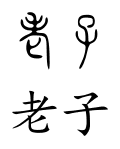
Laozi
Laozi, also known as Lao Tzu, was an ancient Chinese philosopher and writer, best known as the founder of Taoism. His most significant work, the 'Tao Te Ching,' is a foundational text of Taoist philosophy, offering insights into the nature of existence, the importance of harmony, and the concept of 'wu wei' or effortless action. The text is composed of poetic verses that emphasize simplicity, humility, and the interconnectedness of all things, making it a profound influence on both Eastern and Western thought. Laozi's teachings have transcended time and culture, shaping not only religious practices but also influencing various fields such as art, politics, and medicine. His ideas on naturalism and the balance of opposites have been pivotal in the development of Chinese culture and philosophy. Despite the uncertainty surrounding his life and the historical accuracy of his existence, Laozi's legacy endures through the continued study and reverence of his work, which remains a vital part of philosophical discourse today.
Famous Quotes
View all 19 quotes“LoveEmbracing Tao, you become embraced.Supple, breathing gently, you become reborn.Clearing your vision, you become clear.Nurturing your beloved, you become impartial.Opening your heart, you become accepted.Accepting the World, you embrace Tao.Bearing and nurturing,Creating but not owning,Giving without demanding,Controlling without authority,This is love.””
“A good traveler has no fixed plansand is not intent upon arriving.A good artist lets his intuitionlead him wherever it wants.A good scientist has freed himself of conceptsand keeps his mind open to what is.Thus the Master is available to all peopleand doesn't reject anyone.He is ready to use all situationsand doesn't waste anything.This is called embodying the light.What is a good man but a bad man's teacher?What is a bad man but a good man's job?If you don't understand this, you will get lost,however intelligent you are.It is the great secret.””
“If you correct your mind, the rest of your life will fall into place.””
Books from the author





Link to this page
Add a free, dofollow link to Lex on your blog, forum, syllabus, or reading list.

<a href="https://lex-books.com/author/laozi"><img src="https://lex-books.com/badges/read-on-lex.svg" alt="Laozi on Lex" width="160" height="40"></a>[](https://lex-books.com/author/laozi)[url=https://lex-books.com/author/laozi][img]https://lex-books.com/badges/read-on-lex.svg[/img][/url]Laozi on Lex: https://lex-books.com/author/laozi