Tao Te Ching

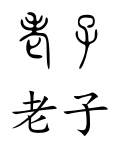
Attributed to the enigmatic sage Laozi, the *Tao Te Ching* is an ancient Chinese text, a foundational pillar of Taoism and a work of profound, enduring influence. Comprising 81 terse, poetic sections, it offers a labyrinthine tapestry of wisdom, from counsel for rulers to maxims for everyday life. Its hallmark is a deliberate ambiguity, a fluidity of language that invites — indeed, demands — deeply personal interpretation, ensuring no two readings (or translations) are ever quite the same. It is less a prescriptive doctrine and more a resonant echo chamber for contemplation.
Editions
Ebooks

Tao Te ChingCurrent
Standard Ebooks · 160 pages
Link to this book
Add a free, dofollow link to Lex on your blog, forum, syllabus, or reading list.

HTML
<a href="https://lex-books.com/book/tao-te-ching-34957b2c-e621-4891-8dc7-6112745200a4"><img src="https://lex-books.com/badges/read-on-lex.svg" alt="Read Tao Te Ching by Laozi free on Lex" width="160" height="40"></a>Markdown
[](https://lex-books.com/book/tao-te-ching-34957b2c-e621-4891-8dc7-6112745200a4)BBCode
[url=https://lex-books.com/book/tao-te-ching-34957b2c-e621-4891-8dc7-6112745200a4][img]https://lex-books.com/badges/read-on-lex.svg[/img][/url]Plain link
Read Tao Te Ching by Laozi free on Lex: https://lex-books.com/book/tao-te-ching-34957b2c-e621-4891-8dc7-6112745200a4Cite this book
Reading this edition for a paper or guide? Copy a citation.
MLA
Laozi. Tao Te Ching. Lex, lex-books.com/book/tao-te-ching-34957b2c-e621-4891-8dc7-6112745200a4.APA
Laozi (n.d.). Tao Te Ching. Lex. https://lex-books.com/book/tao-te-ching-34957b2c-e621-4891-8dc7-6112745200a4Chicago
Laozi. Tao Te Ching. Lex. https://lex-books.com/book/tao-te-ching-34957b2c-e621-4891-8dc7-6112745200a4.