
Juvenal
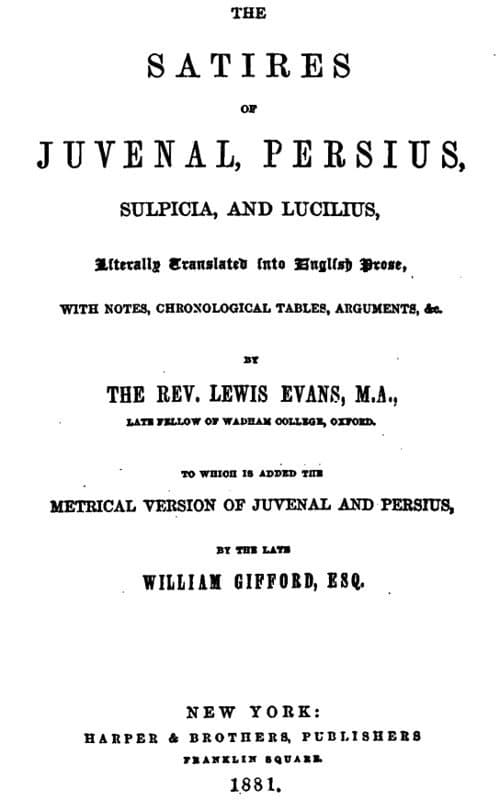
Juvenal was a prominent Roman poet known for his sharp and incisive satirical works during the late 1st and early 2nd centuries AD. His most significant contributions, 'The Satires,' offer a scathing critique of Roman society, politics, and moral decay, reflecting the complexities and contradictions of life in ancient Rome. Through his vivid imagery and biting wit, Juvenal addressed issues such as corruption, social injustice, and the excesses of the elite, making his work both a reflection of his time and a timeless commentary on human nature. Juvenal's influence extended far beyond his own era, inspiring countless writers and satirists throughout history. His style and themes can be seen echoed in the works of later literary figures, including Jonathan Swift and George Orwell, who similarly employed satire to critique societal norms. The enduring relevance of Juvenal's observations on human folly and vice has secured his place as a foundational figure in the genre of satire. His works continue to be studied and translated, ensuring that his sharp insights into human behavior remain accessible to contemporary audiences.
Famous Quotes
View all 3 quotes“Quis custodiet ipsos custodes? - Who will watch the watchers?”
“Never does Nature say one thing and Wisdom another.”
“Many commit the same crime with a very different result. One bears a cross for his crime; another a crown.”
Books from the author












Link to this page
Add a free, dofollow link to Lex on your blog, forum, syllabus, or reading list.

<a href="https://lex-books.com/author/juvenal"><img src="https://lex-books.com/badges/read-on-lex.svg" alt="Juvenal on Lex" width="160" height="40"></a>[](https://lex-books.com/author/juvenal)[url=https://lex-books.com/author/juvenal][img]https://lex-books.com/badges/read-on-lex.svg[/img][/url]Juvenal on Lex: https://lex-books.com/author/juvenal