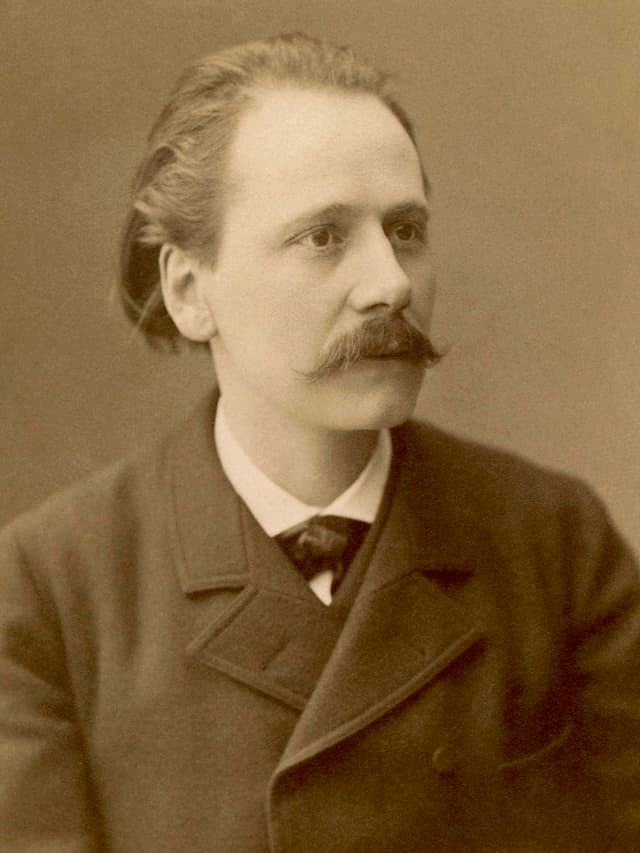
Jules Massenet
Jules Émile Frédéric Massenet was a prominent French composer of the Romantic era, celebrated primarily for his operas. Born in 1842, he demonstrated musical talent early on, gaining admission to the prestigious Paris Conservatoire, where he studied under Ambroise Thomas. Massenet's career took off after winning the Prix de Rome in 1863, leading him to compose over thirty operas, with 'Manon' (1884) and 'Werther' (1892) being his most frequently performed works. His operas showcased a keen understanding of theatricality and audience appeal, establishing him as a leading figure in French opera during the late 19th and early 20th centuries. Beyond opera, Massenet's prolific output included oratorios, ballets, orchestral pieces, and songs, reflecting his versatility as a composer. His ability to blend various styles—from opéra-comique to grand lyrical dramas—demonstrated his innovative spirit. Massenet also contributed to the education of future composers as a professor at the Conservatoire, where he taught from 1878 until 1896. His influence extended through his students, including notable figures like Gustave Charpentier and Ernest Chausson. Massenet's legacy endures as a key architect of French operatic tradition, whose works continue to be performed and appreciated worldwide.
Famous Quotes
View all 1 quotes“Ah! Pauvre ami, comme il m'aimait!”
Books from the author


Link to this page
Add a free, dofollow link to Lex on your blog, forum, syllabus, or reading list.

<a href="https://lex-books.com/author/jules-massenet"><img src="https://lex-books.com/badges/read-on-lex.svg" alt="Jules Massenet on Lex" width="160" height="40"></a>[](https://lex-books.com/author/jules-massenet)[url=https://lex-books.com/author/jules-massenet][img]https://lex-books.com/badges/read-on-lex.svg[/img][/url]Jules Massenet on Lex: https://lex-books.com/author/jules-massenet