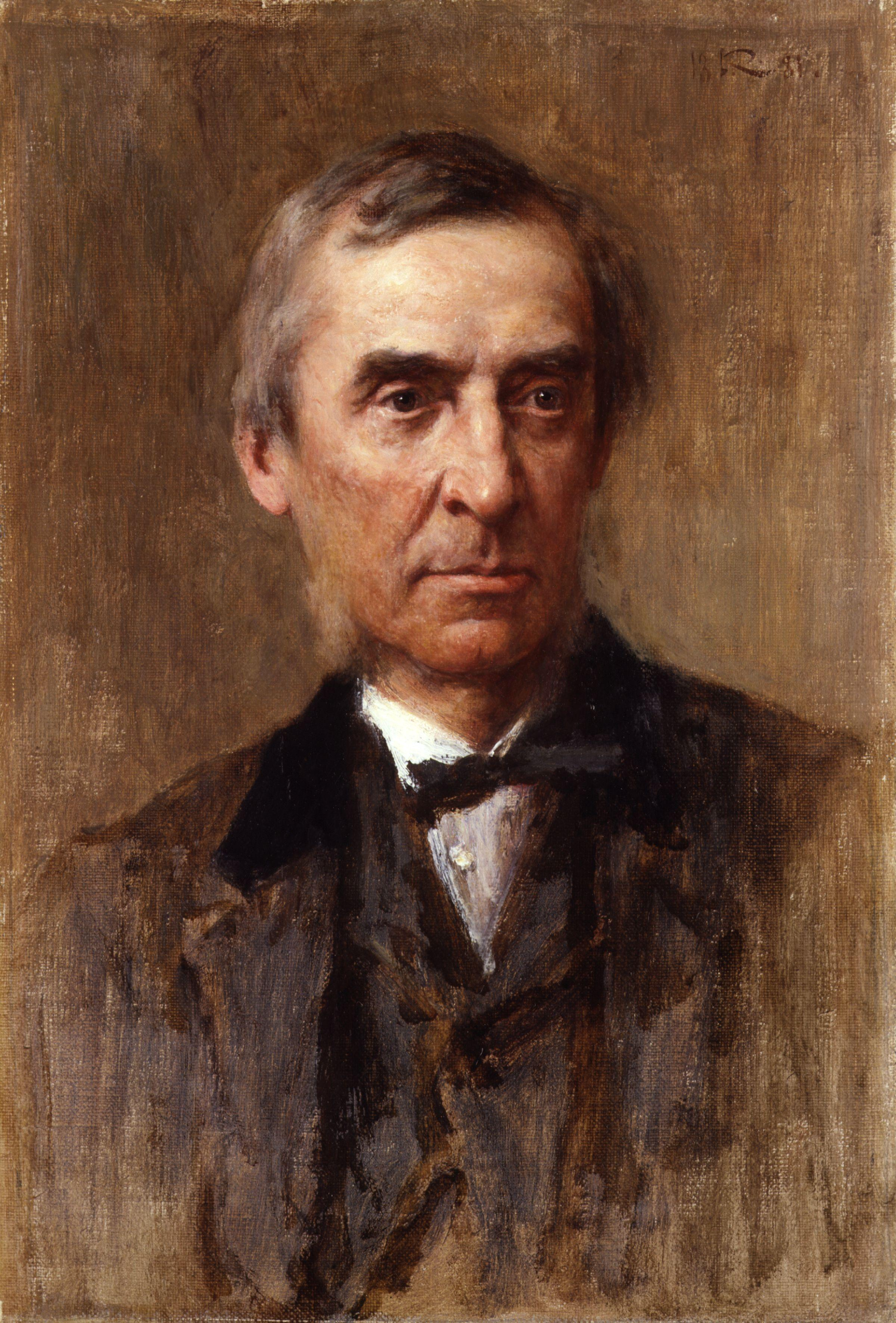
Joseph Rogers
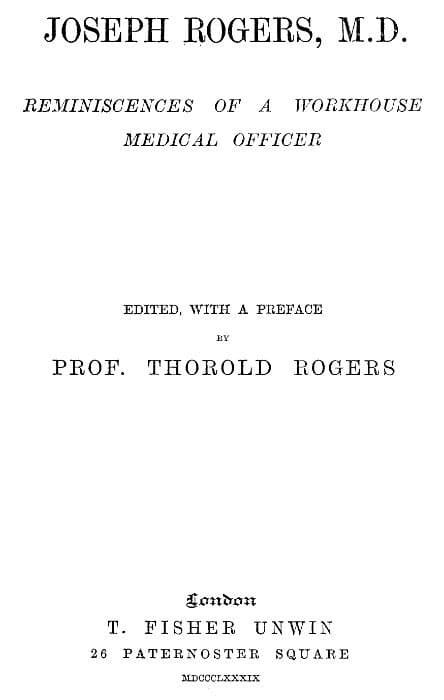
Joseph Rogers was a notable figure in the field of medicine during the 19th century, particularly recognized for his work as a medical officer in workhouses. His experiences and observations during this time were chronicled in his significant work, 'Reminiscences of a Workhouse Medical Officer,' where he provided a candid account of the conditions faced by the impoverished and the challenges of providing medical care in such environments. Rogers's writings not only shed light on the dire circumstances of the poor but also offered insights into the medical practices of the era, highlighting the social issues surrounding public health and welfare. Rogers's contributions are particularly significant as they reflect the intersection of medicine and social reform during a period marked by rapid industrialization and urbanization in Britain. His firsthand accounts serve as a historical document, illustrating the struggles of both patients and medical practitioners within the workhouse system. Through his work, Rogers advocated for better treatment and conditions for the underprivileged, making his writings an important part of the discourse on public health and social justice in Victorian England. His legacy endures as a reminder of the importance of compassion in medicine and the need for systemic change in healthcare for the disadvantaged.
Famous Quotes
View all 4 quotes“But if some mind very different from ours were to look upon some property of some curved line as we do on the evenness of a straight line, he would not recognize as such the evenness of a straight line; nor would he arrange the elements of his geometry according to that very different system, and would investigate quite other relationships as I have suggested in my notes. We fashion our geometry on the properties of a straight line because that seems to us to be the simplest of all. But really all lines that are continuous and of a uniform nature are just as simple as one another. Another kind of mind which might form an equally clear mental perception of some property of any one of these curves, as we do of the congruence of a straight line, might believe these curves to be the simplest of all, and from that property of these curves build up the elements of a very different geometry, referring all other curves to that one, just as we compare them to a straight line. Indeed, these minds, if they noticed and formed an extremely clear perception of some property of, say, the parabola, would not seek, as our geometers do, to rectify the parabola, they would endeavor, if one may coin the expression, to parabolify the straight line.””
“My thoughts were still careening, still trying to make sense of Roger’s strange and cryptic e-mail. If you get this, that means they finally succeeded, he’d written. So he was expecting to be killed. I’ve taken precautions to protect you and Gabe, he’d said. The means to hold them off. What could that be? Would Lauren know? And what was that bizarre postscript”
“He afterwards fell into an account of the diversions which had passed in his house during the holidays, for Sir Roger, after the laudable custom of his ancestors, always keeps open house at Christmas. I learned from him, that he had killed eight fat hogs for this season, that he had dealt about his chines very liberally amongst his neighbors, and that in particular he had sent a string of hog's puddings with a pack of cards to every poor family in the parish. "I have often thought," says Sir Roger, " it happens very well that Christmas should fall out in the middle of the winter. It is the most dead, uncomfortable time of the year, when the poor people would suffer very much from their poverty and cold, if they had not good cheer, warm fires, and Christmas gambols to support them.””
Books from the author


Link to this page
Add a free, dofollow link to Lex on your blog, forum, syllabus, or reading list.

<a href="https://lex-books.com/author/joseph-rogers"><img src="https://lex-books.com/badges/read-on-lex.svg" alt="Joseph Rogers on Lex" width="160" height="40"></a>[](https://lex-books.com/author/joseph-rogers)[url=https://lex-books.com/author/joseph-rogers][img]https://lex-books.com/badges/read-on-lex.svg[/img][/url]Joseph Rogers on Lex: https://lex-books.com/author/joseph-rogers