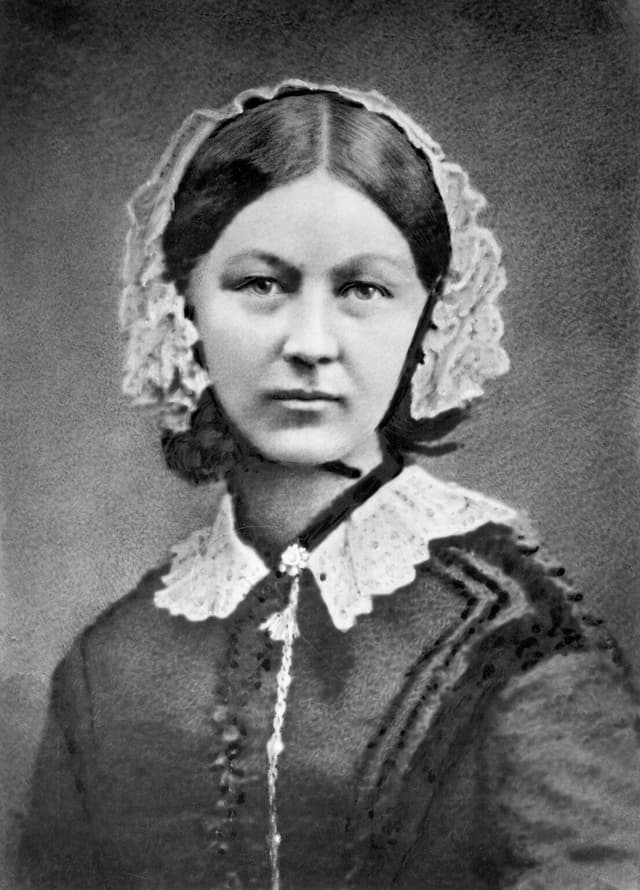
Florence Nightingale
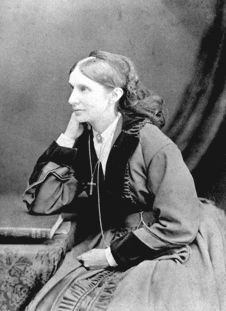
Florence Nightingale was an English social reformer, statistician, and the founder of modern nursing, whose work transformed healthcare practices in the 19th century. She gained prominence during the Crimean War, where she managed and trained nurses, significantly improving the care of wounded soldiers in Constantinople. Her efforts in enhancing hygiene and living conditions led to a dramatic reduction in death rates, earning her the moniker 'The Lady with the Lamp' as she made her nightly rounds to tend to the injured. While some of the acclaim surrounding her wartime achievements has been debated, her lasting impact on the nursing profession is universally acknowledged. In 1860, Nightingale established the first secular nursing school at St Thomas' Hospital in London, laying the groundwork for professional nursing and elevating the status of women in the workforce. Her contributions extended beyond nursing; she advocated for social reforms, including improved healthcare access, better hunger relief in India, and the abolition of oppressive laws against women. An innovator in statistics, Nightingale utilized graphical representations of data, notably the polar area diagram, to communicate her findings effectively. Her legacy endures through the Nightingale Pledge for nurses, the Florence Nightingale Medal, and the celebration of International Nurses Day on her birthday, marking her as a pivotal figure in both nursing and social reform.
Famous Quotes
View all 3 quotes“I attribute my success to this:—I never gave or took an excuse.”
“I am of certain convinced that the greatest heroes are those who do their duty in the daily grind of domestic affairs whilst the world whirls as a maddening dreidel.”
“If I could give you information of my life it would be to show how a woman of very ordinary ability has been led by God in strange and unaccustomed paths to do in His service what He has done in her. And if I could tell you all, you would see how God has done all, and I nothing. I have worked hard, very hard, that is all; and I have never refused God anything.”
Books from the author
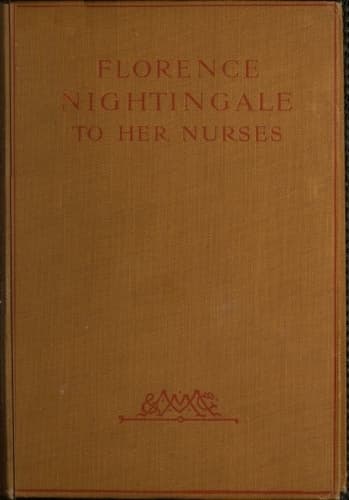
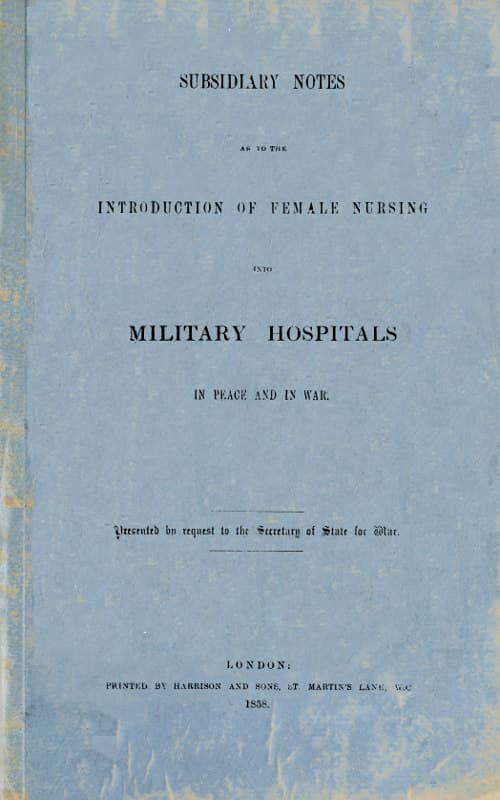
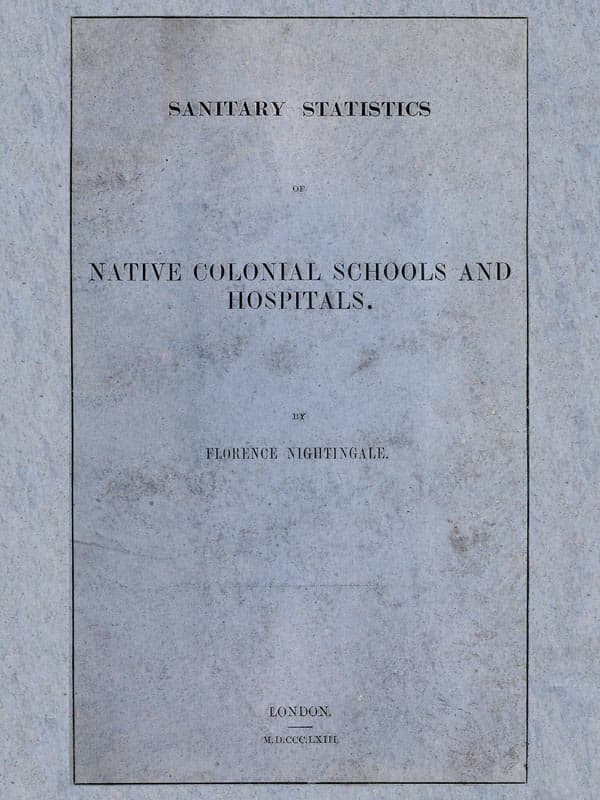

Link to this page
Add a free, dofollow link to Lex on your blog, forum, syllabus, or reading list.

<a href="https://lex-books.com/author/florence-nightingale"><img src="https://lex-books.com/badges/read-on-lex.svg" alt="Florence Nightingale on Lex" width="160" height="40"></a>[](https://lex-books.com/author/florence-nightingale)[url=https://lex-books.com/author/florence-nightingale][img]https://lex-books.com/badges/read-on-lex.svg[/img][/url]Florence Nightingale on Lex: https://lex-books.com/author/florence-nightingale