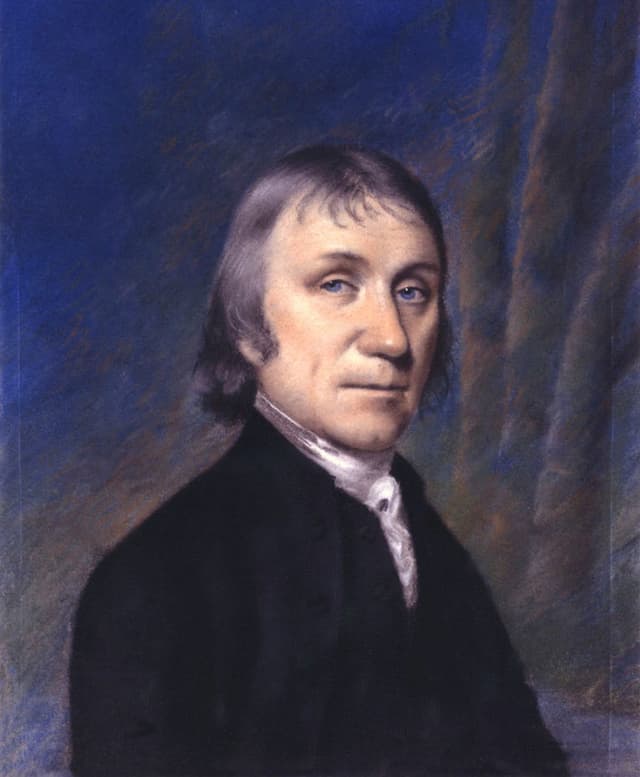
Joseph Priestley
Joseph Priestley was an English chemist, theologian, and political theorist known for his groundbreaking contributions to science and philosophy. He independently discovered oxygen in 1774 through the thermal decomposition of mercuric oxide, and his invention of carbonated water marked a significant advancement in chemistry. Priestley published over 150 works, exploring various scientific fields, including electricity and gases, which he referred to as 'airs.' Despite his notable discoveries, his adherence to phlogiston theory and resistance to the emerging chemical revolution led to his marginalization within the scientific community. Priestley's intellectual pursuits were deeply intertwined with his theological beliefs. He sought to reconcile Enlightenment rationalism with Christian theism, producing metaphysical texts that combined elements of theism, materialism, and determinism. His advocacy for religious tolerance and equal rights for Dissenters contributed to the founding of Unitarianism in England. However, his outspoken support for the American and French Revolutions drew public ire, culminating in a violent attack on his home in Birmingham. This prompted his emigration to the United States, where he spent his final years in Pennsylvania, continuing his work and promoting the free exchange of ideas. Priestley's legacy endures through his scientific discoveries and his role in shaping modern Unitarian thought.
Famous Quotes
View all 3 quotes“To different minds, the same world is a hell, and a heaven.”
“It is no use speaking in soft, gentle tones if everyone else is shouting.”
“Many a man is praised for his reserve and so-called shyness when he is simply too proud to risk making a fool of himself.”
Books from the author
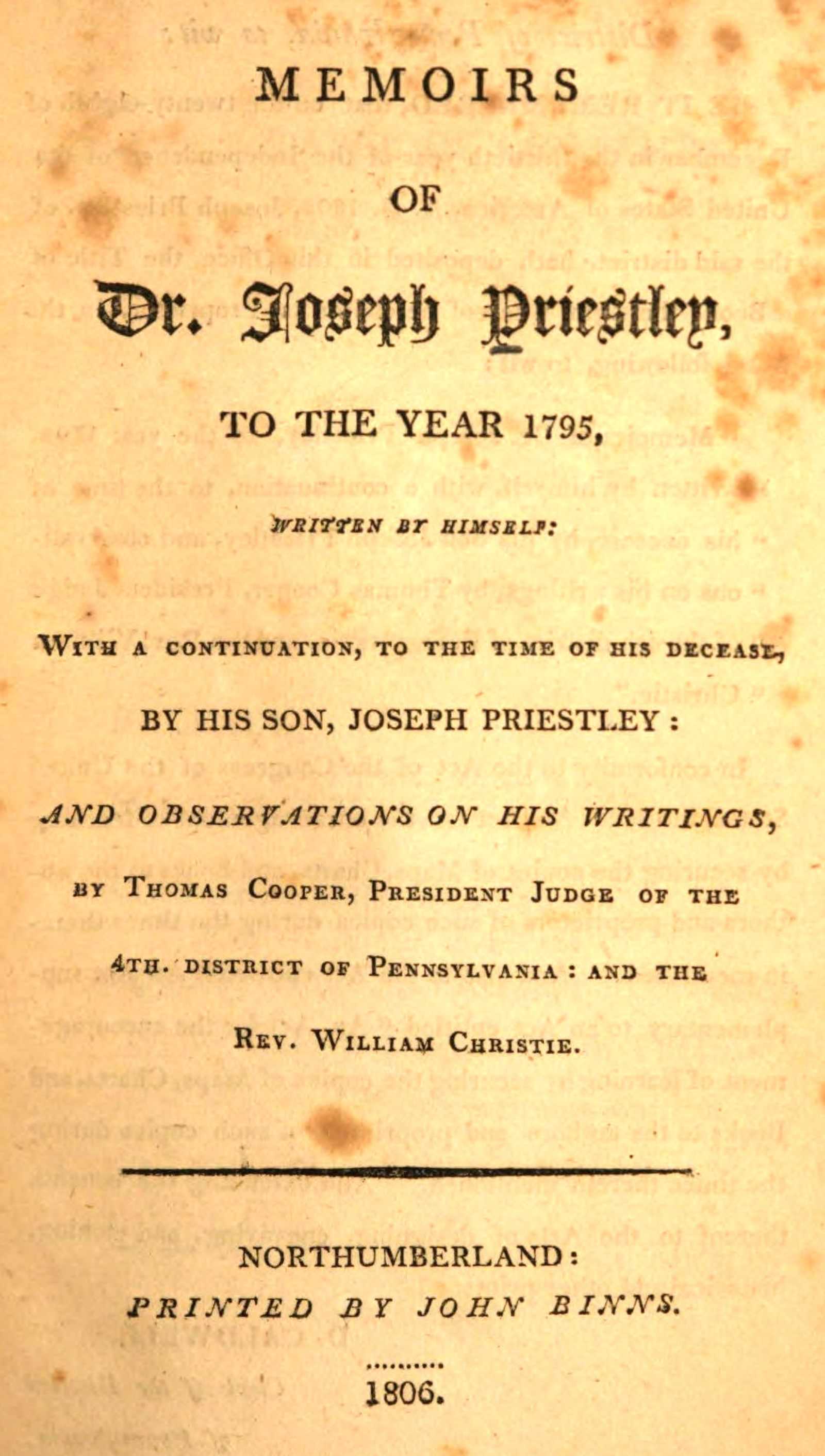



Link to this page
Add a free, dofollow link to Lex on your blog, forum, syllabus, or reading list.

<a href="https://lex-books.com/author/joseph-priestley"><img src="https://lex-books.com/badges/read-on-lex.svg" alt="Joseph Priestley on Lex" width="160" height="40"></a>[](https://lex-books.com/author/joseph-priestley)[url=https://lex-books.com/author/joseph-priestley][img]https://lex-books.com/badges/read-on-lex.svg[/img][/url]Joseph Priestley on Lex: https://lex-books.com/author/joseph-priestley