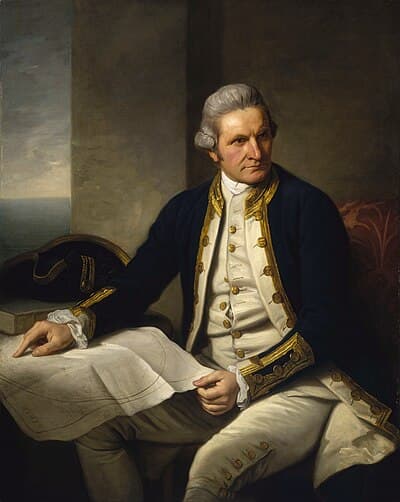
James Cook
Captain James Cook was a British Royal Navy officer, explorer, and cartographer renowned for his groundbreaking voyages of exploration in the Pacific and Southern Oceans during the 18th century. Beginning his career in the British merchant navy, he joined the Royal Navy in 1755 and gained valuable experience during the Seven Years' War, where he not only fought but also conducted significant surveys, including mapping the St. Lawrence River. His exceptional skills in navigation and cartography caught the attention of the Admiralty, leading to his command of HMS Endeavour in 1768 for his first major voyage. Cook's expeditions resulted in the first recorded circumnavigation of New Zealand and the first European contact with the east coast of Australia and the Hawaiian Islands, significantly expanding European knowledge of the Pacific region. Cook's voyages were marked by meticulous mapping of previously uncharted territories, including Easter Island and Alaska, and his interactions with various indigenous peoples. His contributions to maritime health, particularly in preventing scurvy among sailors, earned him the Copley Gold Medal from the Royal Society. Despite his achievements, Cook's legacy is complex, as his claims of territory for Great Britain often came at the expense of indigenous populations. His explorations laid the groundwork for future British colonization, and he remains a pivotal figure in the history of exploration, known for his courage, leadership, and navigational prowess.
Famous Quotes
View all 3 quotes“The man who wants to lead the orchestra must turn his back on the crowd.”
“Ambition leads me not only farther than any other man has been before me, but as far as I think it possible for man to go.”
“From what I have said of the Natives of New-Holland they may appear to some to be the most wretched people upon Earth, but in reality they are far more happier than we Europeans; being wholly unacquainted not only with the superfluous but the necessary Conveniences so much sought after in Europe, they are happy in not knowing the use of them. They live in a Tranquillity which is not disturb’d by the Inequality of Condition: The Earth and sea of their own accord furnishes them with all things necessary for life, they covet not Magnificent Houses, Household-stuff &c., they live in a warm and fine Climate and enjoy a very wholesome Air. . . . In short they seem’d to set no Value upon any thing we gave them, nor would they ever part with any thing of their own for any one article we could offer them; this in my opinion argues that they think themselves provided with all the necessarys of Life and that they have no superfluities.”
Books from the author
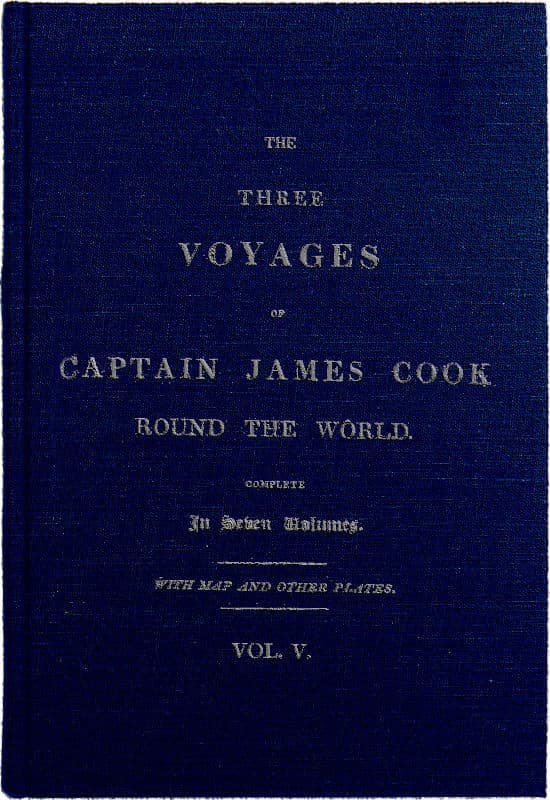
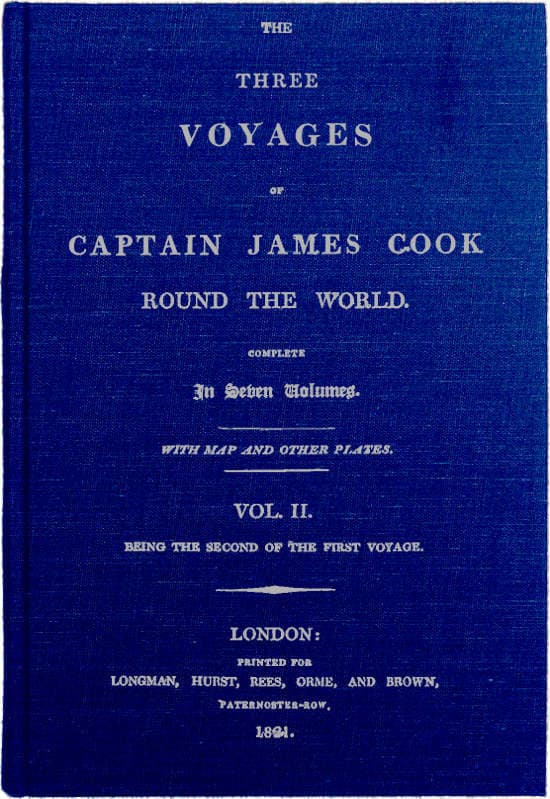
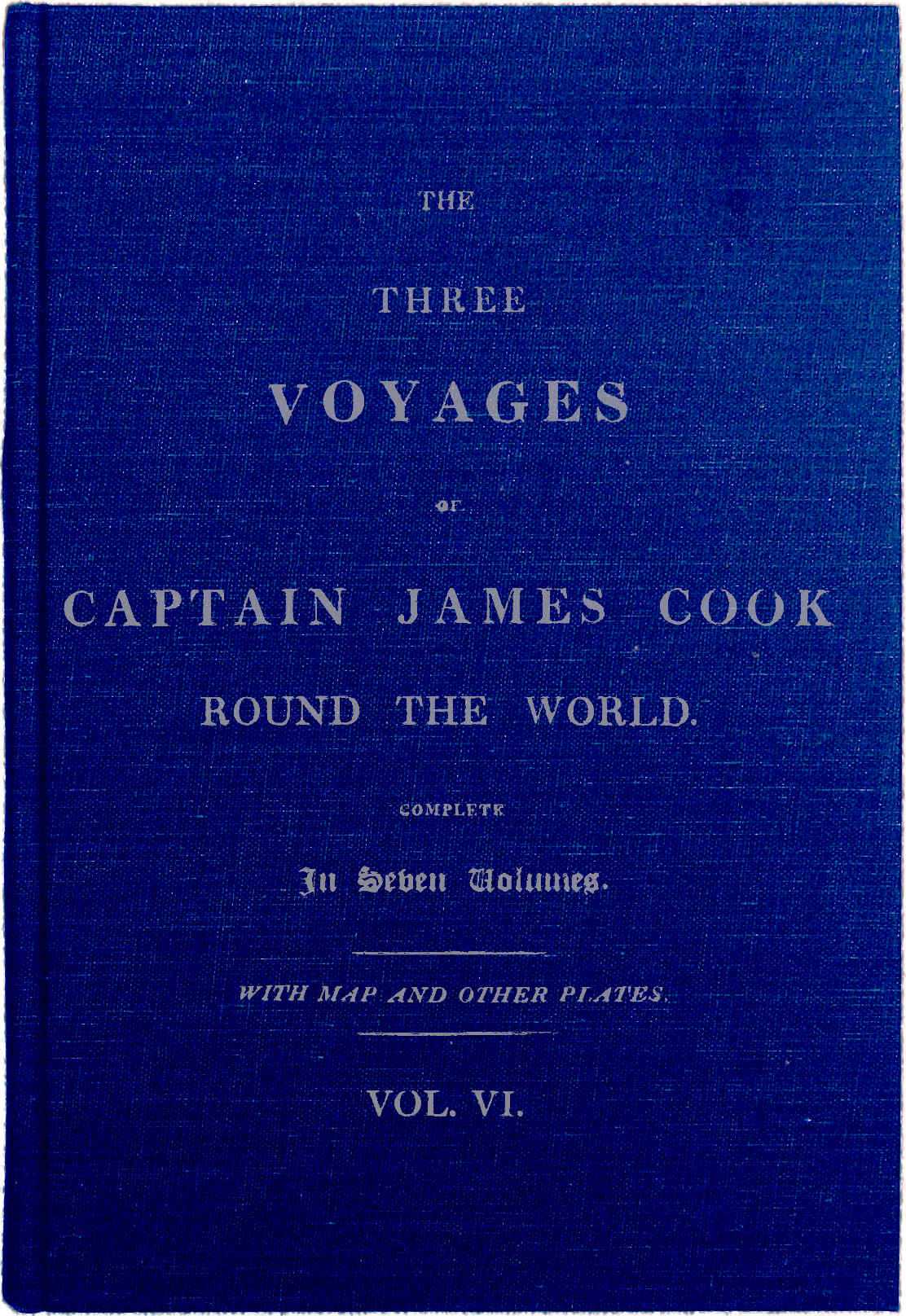


Link to this page
Add a free, dofollow link to Lex on your blog, forum, syllabus, or reading list.

<a href="https://lex-books.com/author/james-cook"><img src="https://lex-books.com/badges/read-on-lex.svg" alt="James Cook on Lex" width="160" height="40"></a>[](https://lex-books.com/author/james-cook)[url=https://lex-books.com/author/james-cook][img]https://lex-books.com/badges/read-on-lex.svg[/img][/url]James Cook on Lex: https://lex-books.com/author/james-cook