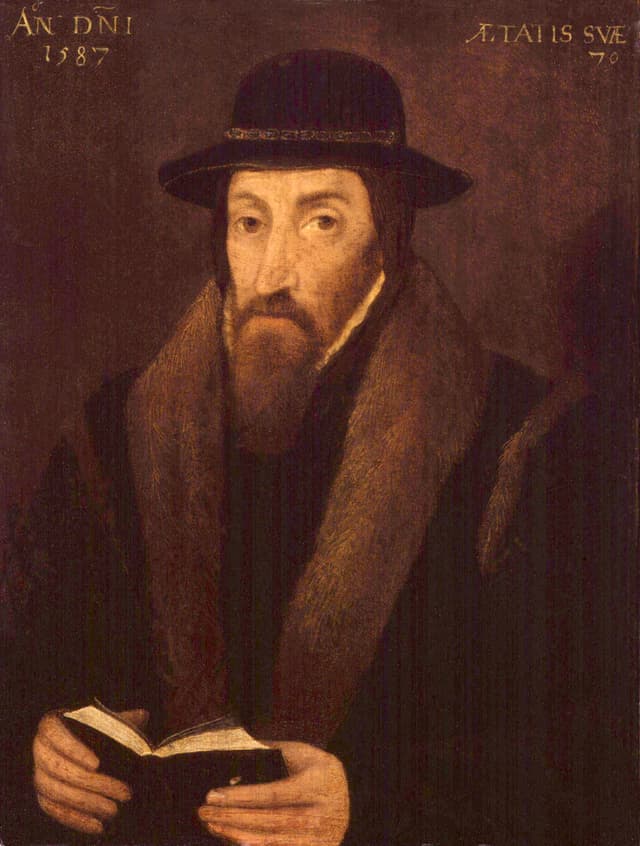
John Foxe
John Foxe was an English clergyman, theologian, and historian best known for his seminal work, *Foxe's Book of Martyrs*. This influential text chronicled the lives and sufferings of Christian martyrs, particularly focusing on English Protestants and proto-Protestants from the 14th century through the reign of Mary I. Foxe's vivid accounts of persecution played a crucial role in shaping public perception of the Catholic Church and the Protestant Reformation in England. His work not only served as a historical record but also as a source of inspiration for those facing religious oppression. Published in 1563, *Foxe's Book of Martyrs* became a foundational text for English Puritans and was widely circulated, contributing to the development of Protestant identity in Britain. Foxe's portrayal of martyrdom emphasized the virtues of faith and resilience, reinforcing the narrative of Protestant suffering and triumph. His legacy endures as a pivotal figure in the history of English religious thought, influencing both contemporary and later views on martyrdom and religious freedom, while also igniting debates on the nature of faith and persecution that resonate to this day.
Famous Quotes
View all 3 quotes“Mr. Latimer to say: "Be of good cheer, Ridley; and play the man. We shall this day, by God's grace, light up such a candle in England, as I trust, will never be put out.”
“The blessed Gospel of Christ is what I hold; that do I believe, that have I taught, and that will I never revoke!”
“And as for the Pope, I refuse him as Christ's enemy, and antichrist, with all his false doctrine.”
Books from the author

Link to this page
Add a free, dofollow link to Lex on your blog, forum, syllabus, or reading list.

<a href="https://lex-books.com/author/john-foxe"><img src="https://lex-books.com/badges/read-on-lex.svg" alt="John Foxe on Lex" width="160" height="40"></a>[](https://lex-books.com/author/john-foxe)[url=https://lex-books.com/author/john-foxe][img]https://lex-books.com/badges/read-on-lex.svg[/img][/url]John Foxe on Lex: https://lex-books.com/author/john-foxe