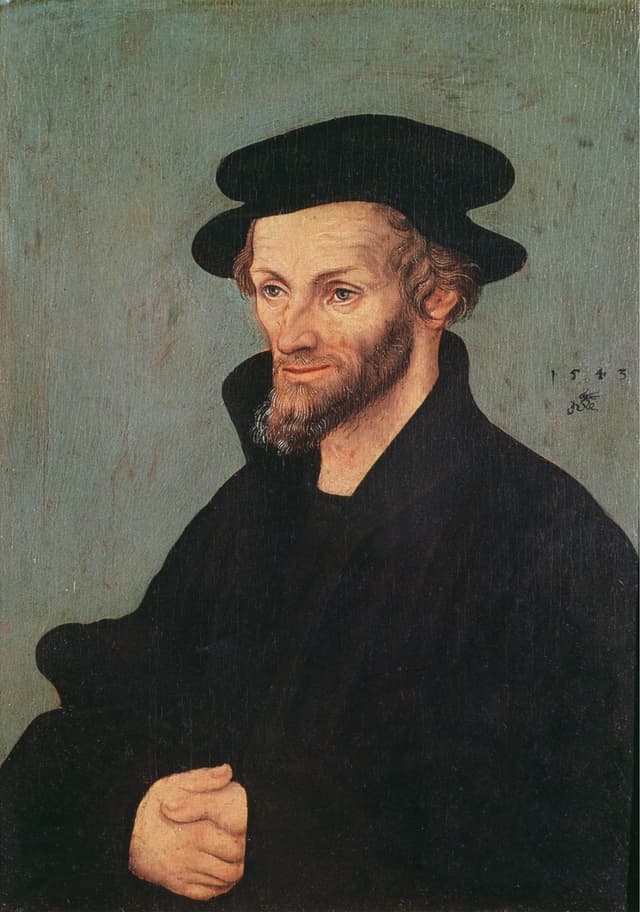
Philipp Melanchthon
Philipp Melanchthon was a pivotal figure in the Protestant Reformation, known for his collaboration with Martin Luther and his role as the first systematic theologian of the movement. Born Philipp Schwartzerdt in Germany, he emerged as an intellectual leader who significantly shaped Lutheran theology and education. Melanchthon's most notable work, the 'Augsburg Confession,' served as a foundational document for Lutheran beliefs and was instrumental in defining the principles of Protestantism. His emphasis on education led to the establishment of schools that promoted humanist ideals and theological study, influencing the educational landscape in Europe. Melanchthon's contributions extended beyond theology; he was a key figure in the development of the Lutheran Church's structure and practices. His writings and teachings helped articulate the core tenets of Protestantism, making complex theological concepts accessible to a broader audience. As a reformer, he advocated for a balance between faith and reason, which resonated with the humanist ideals of his time. Melanchthon's legacy endures in the continued relevance of his theological insights and educational reforms, marking him as a cornerstone of the Reformation alongside Luther and Calvin.
Famous Quotes
View all 3 quotes“We must seek the truth, love it, defend it, and hand it down uncorrupted to our posterity.”
“But faith is not belief in the history of Christ, as the godless think, but belief in the purpose of Christ’s incarnation, crucifixion, and resurrection. For he took on flesh, was crucified, and rose from the dead in order to justify all who would believe in him.”
“You love wealth and money not because it is a good thing in itself, but because it seems to be of service to your life’s enjoyment. So no matter how good God is, you do not love him unless you think that he is useful to you and your plans. Consequently, if you loved God in this way—with an eye to your own advantage—you would be affecting a servile love, and in your perverse and corrupt natural affection you would clearly be sinning. But never do you love even to this extent. For we never sense the benefits of God unless our heart has already been purified through the Holy Spirit and God’s kindness has been imprinted on a pure and pious heart.”
Books from the author


Link to this page
Add a free, dofollow link to Lex on your blog, forum, syllabus, or reading list.

<a href="https://lex-books.com/author/philipp-melanchthon"><img src="https://lex-books.com/badges/read-on-lex.svg" alt="Philipp Melanchthon on Lex" width="160" height="40"></a>[](https://lex-books.com/author/philipp-melanchthon)[url=https://lex-books.com/author/philipp-melanchthon][img]https://lex-books.com/badges/read-on-lex.svg[/img][/url]Philipp Melanchthon on Lex: https://lex-books.com/author/philipp-melanchthon