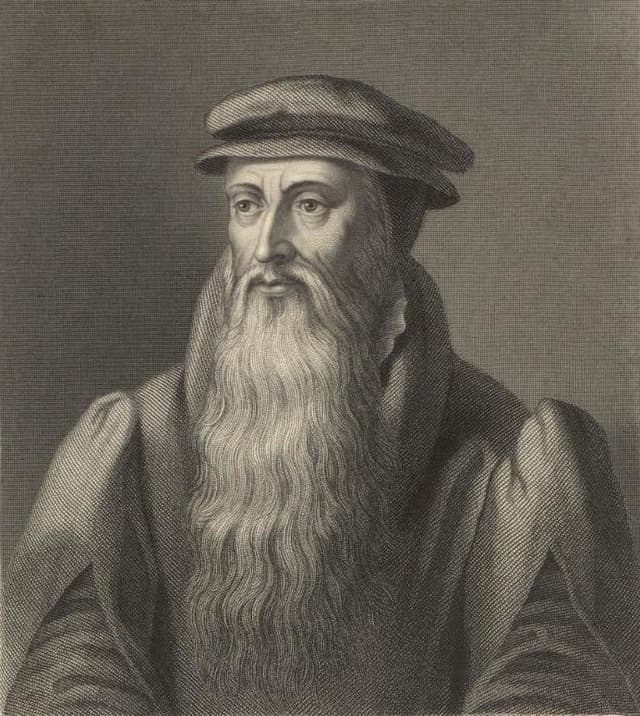
John Knox
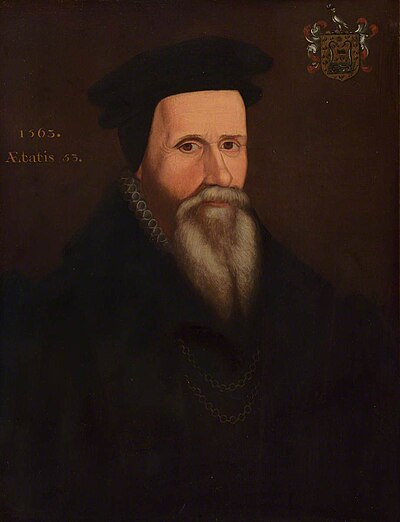
John Knox was a pivotal figure in the Scottish Reformation and the founder of the Church of Scotland. Born in Haddington, East Lothian, he was likely educated at the University of St Andrews and began his career as a notary-priest. Influenced by reformers like George Wishart, Knox became deeply involved in the movement to reform the Scottish Church, which led to his imprisonment by French forces and subsequent exile to England. During his time in England, he served as a royal chaplain under King Edward VI and played a significant role in shaping the Book of Common Prayer, reflecting his reformist ideals. After Queen Mary I's ascension and the re-establishment of Catholicism, Knox fled to Geneva, where he encountered John Calvin and further developed his understanding of Reformed theology. He authored The Forme of Prayers, which became known as the Book of Common Order and was the first book printed in any Gaelic language. Knox's theological contributions and his advocacy for presbyterian governance solidified his legacy as a foundational figure in Scottish Protestantism, influencing the religious landscape of Scotland and beyond for generations to come.
Famous Quotes
View all 11 quotes“Resistance to tyranny is obedience to God.””
“A man with God is always in the majority.””
“"Prayer is an earnest and familiar talking with God.””
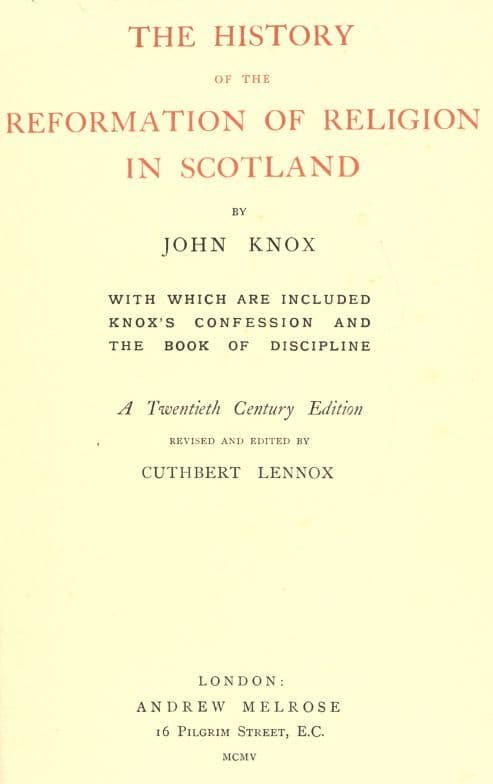
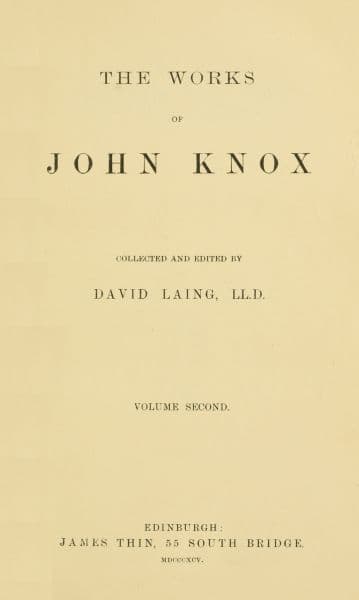
Books from the author


Link to this page
Add a free, dofollow link to Lex on your blog, forum, syllabus, or reading list.

<a href="https://lex-books.com/author/john-knox"><img src="https://lex-books.com/badges/read-on-lex.svg" alt="John Knox on Lex" width="160" height="40"></a>[](https://lex-books.com/author/john-knox)[url=https://lex-books.com/author/john-knox][img]https://lex-books.com/badges/read-on-lex.svg[/img][/url]John Knox on Lex: https://lex-books.com/author/john-knox