
Joanna Baillie
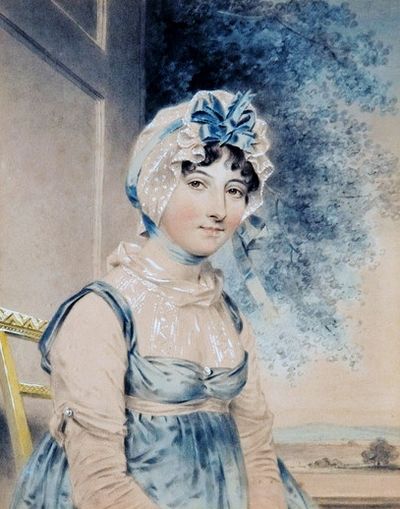
Joanna Baillie was a prominent Scottish poet and dramatist whose work significantly contributed to the literary landscape of the late 18th and early 19th centuries. Best known for her three-volume collection, 'Plays on the Passions' (1798–1812), Baillie's writings explored the depths of human emotion and moral philosophy, often incorporating elements of the Gothic tradition. Her plays were notable for their psychological insight and innovative structure, which set a precedent for later dramatic works. Baillie's poetry, collected in 'Fugitive Verses' (1840), further showcased her lyrical prowess and thematic depth, reflecting her keen observations of society and the human condition. Throughout her life, Baillie was well-connected within literary circles, forming friendships with influential contemporaries such as Anna Barbauld, Lucy Aikin, and Walter Scott. Her critical acclaim during her lifetime established her as a significant figure in the literary community, and she was recognized for her contributions to both poetry and drama. Although her work fell into relative obscurity after her death, Baillie's exploration of passion and morality in her plays and poems has since garnered renewed interest, affirming her place in the canon of early modern literature.
Famous Quotes
View all 3 quotes“Amongst the many trials to which the human mind is subjected, that of holding intercourse, real or imaginary, with the world of spirits: of finding itself alone with a being terrific and awful, whose nature and power are unknown, has been justly considered the most severe.”
“...Tell it, I pray thee. And let me cow'ring stand, and be my touch The valley's ice: there is a pleasure in it. Yea, when the cold blood shoots through every vein; When every pore upon my shrunken skin A knotted knoll becomes, and to mine ears Strange inward sounds awake, and to mine eyes Rush stranger tears, there is a joy in fear.”
“This charm is wasted on the earth and sky, Tell them, dear, that, if eyes were made for seeing, Then beauty is its own excuse for Being; Why thou wert there, O rival of the rose!”
Books from the author


Link to this page
Add a free, dofollow link to Lex on your blog, forum, syllabus, or reading list.

<a href="https://lex-books.com/author/joanna-baillie"><img src="https://lex-books.com/badges/read-on-lex.svg" alt="Joanna Baillie on Lex" width="160" height="40"></a>[](https://lex-books.com/author/joanna-baillie)[url=https://lex-books.com/author/joanna-baillie][img]https://lex-books.com/badges/read-on-lex.svg[/img][/url]Joanna Baillie on Lex: https://lex-books.com/author/joanna-baillie