
Harriet Martineau
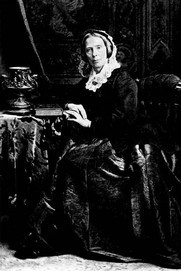
Harriet Martineau was an influential English social theorist and writer, recognized for her pioneering contributions to sociology and her advocacy for social reform. Born in a time when women's voices were often marginalized, Martineau distinguished herself by earning a living through her writing, a remarkable feat for a woman of her era. She approached her work from a holistic perspective, addressing a wide range of societal issues, including the roles of domestic life, politics, religion, and social institutions. Her translations of Auguste Comte's works helped introduce and popularize sociological ideas in England. Martineau's writings garnered the attention of notable figures, including the young Princess Victoria, who invited her to her coronation in 1838. Martineau's commitment to social justice, particularly her staunch abolitionism, positioned her as a significant figure in the fight against slavery. Her work has been studied extensively, especially in American educational institutions, where her contributions to social theory and reform are recognized. Wendell Phillips, a prominent abolitionist, honored her legacy by referring to her as the 'greatest American abolitionist' during the unveiling of her statue in Boston in 1883. Martineau's unique blend of sociological insight and advocacy for women's rights and social issues has left a lasting impact on both literature and social thought, establishing her as a key figure in the development of modern sociology and feminist theory.
Famous Quotes
View all 14 quotes“You better live your best and act your best and think your best today, for today is the sure preparation for tomorrow and all the other tomorrows that follow.””
“Readers are plentiful; thinkers are rare.””
“Happiness consists in the full employment of our faculties in some pursuit.””
Books from the author













Link to this page
Add a free, dofollow link to Lex on your blog, forum, syllabus, or reading list.

<a href="https://lex-books.com/author/harriet-martineau"><img src="https://lex-books.com/badges/read-on-lex.svg" alt="Harriet Martineau on Lex" width="160" height="40"></a>[](https://lex-books.com/author/harriet-martineau)[url=https://lex-books.com/author/harriet-martineau][img]https://lex-books.com/badges/read-on-lex.svg[/img][/url]Harriet Martineau on Lex: https://lex-books.com/author/harriet-martineau