
Graham Wallas
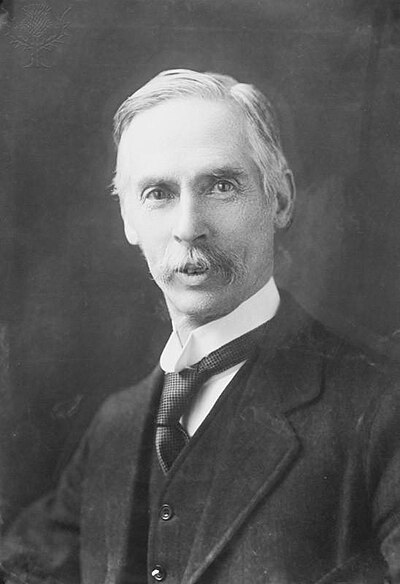
Graham Wallas was an influential English socialist, social psychologist, and educational reformer, best known for his role as a leader of the Fabian Society and as a co-founder of the London School of Economics. Born in 1858, he dedicated much of his life to the advancement of social science and education, advocating for a more rational and scientific approach to understanding human behavior and society. His work emphasized the importance of social psychology in shaping public policy and education, making significant contributions to the intellectual landscape of his time. Wallas authored several notable works, including 'The Great Society' and 'Human Nature in Politics,' where he explored the interplay between individual psychology and collective social behavior. His ideas on the importance of social cooperation and the role of education in fostering democratic citizenship were particularly influential. Wallas's legacy endures through his contributions to the fields of sociology and political science, as well as his foundational role in establishing institutions that continue to shape social thought and policy today.
Famous Quotes
View all 3 quotes“Some day, for instance, the word 'opinion' itself may become the recognised name of the most dangerous political vice. Men may teach themselves by habit and association to suspect those inclinations and beliefs which, if they neglect the duty of thought, appear in their minds they know not how, and which, as long as their origin is not examined, can be created by any clever organiser who is paid to do so. The most easily manipulated State in the world would be one inhabited by a race of Nonconformist business men who never followed up a train of political reasoning in their lives, and who, as soon as they were aware of the existence of a strong political conviction in their minds, should announce that it was a matter of 'conscience' and therefore beyond the province of doubt or calculation.”
“Party leaders again have always to remember that the organisation which they control is an entity with an existence in the memory and emotions of the electors, independent of their own opinions and actions.”
“In England, to any one who looks forward, the rampant bribery of the old fishing-ports, or the traditional and respectable corruption of the cathedral cities, seem comparatively small and manageable evils. The more serious grounds for apprehension come from the newest inventions of wealth and enterprise, the up-to-date newspapers, the power and skill of the men who direct huge aggregations of industrial capital, the organised political passions of working men who have passed through the standards of the elementary schools, and who live in hundreds of square miles of new, healthy, indistinguishable suburban streets. Every few years some invention in political method is made, and if it succeeds both parties adopt it. In politics, as in football, the tactics which prevail are not those which the makers of the rules intended, but those by which the players find that they can win, and men feel vaguely that the expedients by which their party is most likely to win may turn out not to be those by which a State is best governed.”
Books from the author

Link to this page
Add a free, dofollow link to Lex on your blog, forum, syllabus, or reading list.

<a href="https://lex-books.com/author/graham-wallas"><img src="https://lex-books.com/badges/read-on-lex.svg" alt="Graham Wallas on Lex" width="160" height="40"></a>[](https://lex-books.com/author/graham-wallas)[url=https://lex-books.com/author/graham-wallas][img]https://lex-books.com/badges/read-on-lex.svg[/img][/url]Graham Wallas on Lex: https://lex-books.com/author/graham-wallas