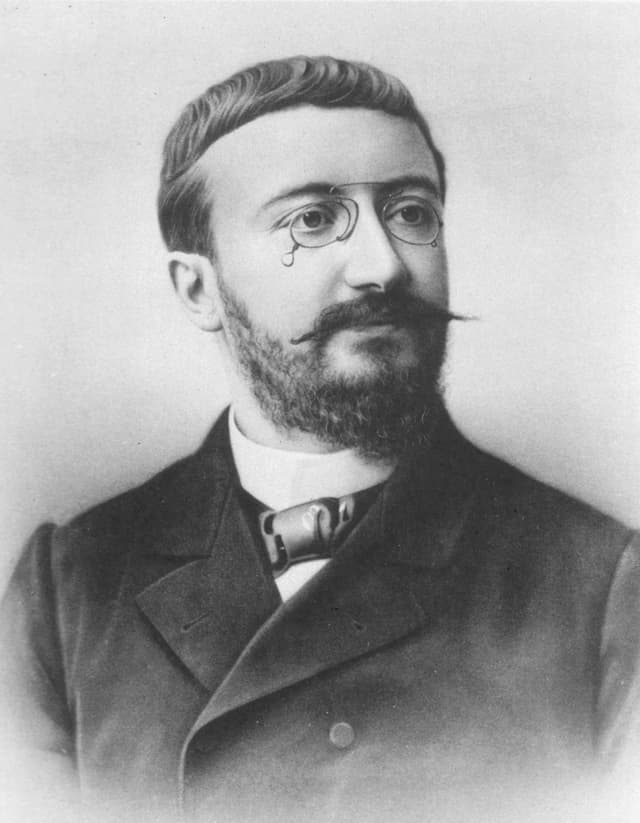
Alfred Binet
Alfred Binet was a pioneering French psychologist best known for his groundbreaking work in intelligence testing. Born Alfredo Binetti, he became a prominent figure in the field of psychology, particularly through his collaboration with Théodore Simon in developing the Binet–Simon test, the first practical intelligence test. This innovative assessment emerged from Binet's involvement in a commission by the French Ministry of Education in 1904, which debated the educational placement of children with learning difficulties. Binet advocated for an objective approach to assessing a child's capabilities, opposing the idea that medical professionals alone should determine educational paths based on subjective criteria. The Binet–Simon test was first published in 1905, with a more comprehensive version released in 1908 and a final revision shortly before Binet's death in 1911. This test laid the foundation for modern IQ testing and significantly influenced educational practices and psychological assessment. Binet's emphasis on empirical evidence in evaluating intelligence marked a shift in the understanding of cognitive abilities, making him a key figure in the evolution of educational psychology. His legacy continues to shape the fields of psychology and education, as his work established a framework for assessing learning potential that remains relevant today.
Famous Quotes
View all 2 quotes“A person may be a moron or an imbecile if he is lacking in judgment; but with good judgment he can never be either. Indeed the rest of the intellectual faculties seem of little importance in comparison with judgment.”
“Materialism is the metaphysics of those who refuse to be metaphysicians.”
Books from the author


Link to this page
Add a free, dofollow link to Lex on your blog, forum, syllabus, or reading list.

<a href="https://lex-books.com/author/alfred-binet"><img src="https://lex-books.com/badges/read-on-lex.svg" alt="Alfred Binet on Lex" width="160" height="40"></a>[](https://lex-books.com/author/alfred-binet)[url=https://lex-books.com/author/alfred-binet][img]https://lex-books.com/badges/read-on-lex.svg[/img][/url]Alfred Binet on Lex: https://lex-books.com/author/alfred-binet