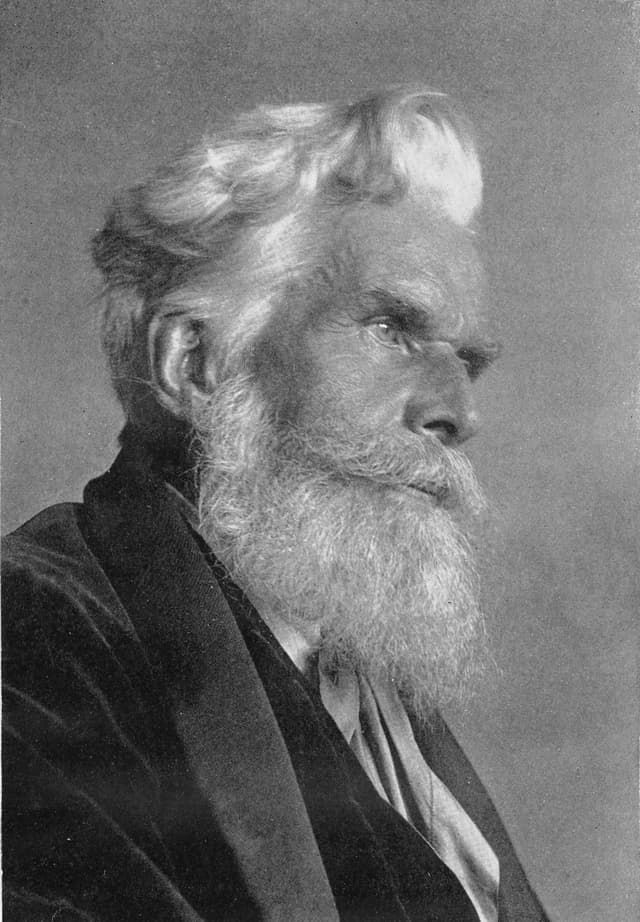
Havelock Ellis
Henry Havelock Ellis was an influential English physician and writer known for his groundbreaking studies on human sexuality. He co-authored the first medical textbook in English on homosexuality in 1897, which marked a significant step in the understanding and acceptance of diverse sexual orientations. His extensive writings explored various sexual practices and inclinations, as well as transgender psychology, contributing to the early discourse on sexual identity and expression. Ellis's work laid the foundation for future studies in sexology and psychology, particularly with his concepts of narcissism and autoeroticism, which were later integrated into psychoanalytic theory. In addition to his contributions to sexuality studies, Ellis was a pioneer in the investigation of psychedelic substances, famously documenting his own experience with mescaline in 1896. His progressive views extended to eugenics, where he served as a vice-president of the Eugenics Society, reflecting the complex and often controversial nature of his legacy. Havelock Ellis's writings and ideas were instrumental in shaping modern understandings of sexuality and psychology, making him a significant figure in the fields of medicine and social reform during the late 19th and early 20th centuries.
Famous Quotes
View all 18 quotes“Jealousy, that dragon which slays love under the pretence of keeping it alive. ””
“There is nothing that war has ever achieved that we could not better achieve without it.””
“All the art of living lies in a fine mingling of letting go and holding on.””
Books from the author














Link to this page
Add a free, dofollow link to Lex on your blog, forum, syllabus, or reading list.

<a href="https://lex-books.com/author/havelock-ellis"><img src="https://lex-books.com/badges/read-on-lex.svg" alt="Havelock Ellis on Lex" width="160" height="40"></a>[](https://lex-books.com/author/havelock-ellis)[url=https://lex-books.com/author/havelock-ellis][img]https://lex-books.com/badges/read-on-lex.svg[/img][/url]Havelock Ellis on Lex: https://lex-books.com/author/havelock-ellis