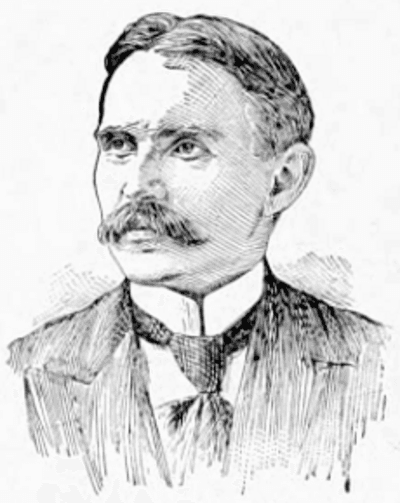
George Stuart Fullerton
George Stuart Fullerton was an influential American philosopher and psychologist known for his contributions to the fields of psychology and philosophy during the late 19th and early 20th centuries. He was a prominent figure in the development of psychological thought, particularly in the areas of perception and consciousness. Fullerton's academic career included teaching positions at various institutions, where he emphasized the importance of empirical research and the scientific method in understanding human behavior and mental processes. Among his notable works, Fullerton authored 'The Principles of Psychology' and 'Psychology and the Teacher,' which explored the implications of psychological principles for education. His writings often bridged the gap between philosophy and psychology, reflecting his belief in the interconnectedness of these disciplines. Fullerton's legacy lies in his role as a pioneer in applying scientific methods to psychological inquiry, influencing future generations of psychologists and educators. His work contributed to the establishment of psychology as a respected field of study, paving the way for further advancements in understanding the human mind.
Famous Quotes
View all 3 quotes“There are many subjects upon which, if we hold an opinion at all, we should hold it tentatively, waiting for more light, and retaining a willingness to be enlightened. Many a bitter and fruitless quarrel might be avoided, if more persons found it possible to maintain this philosophical attitude of mind. Philosophy is, after all, reflection, and the reflective man must realize that he is probably as liable to error as are other men. He is not infallible, nor has the limit of human knowledge been attained in his day and generation. He who realizes this will not assume that his neighbor is always wrong, and he will come to have that wide, conscientious tolerance, which is not indifference, but which is at the farthest remove from the zeal of mere bigotry.”
“Take psychology as an instance. How does it happen that the physicist calmly develops his doctrine without finding it necessary to make his bow to philosophy at all, while the psychologist is at pains to explain that his book is to treat psychology as "a natural science," and will avoid metaphysics as much as possible?”
“Appearances and realities are experiences which are observed to be related in certain ways. That which is not open to observation at all, that of which we have, and can have, no experience, we have no reason to call the reality of anything. We have, in truth, no reason to talk about it at all, for we know nothing whatever about it; and when we do talk about it, it is because we are laboring under a delusion.”
Books from the author




Link to this page
Add a free, dofollow link to Lex on your blog, forum, syllabus, or reading list.

<a href="https://lex-books.com/author/george-stuart-fullerton"><img src="https://lex-books.com/badges/read-on-lex.svg" alt="George Stuart Fullerton on Lex" width="160" height="40"></a>[](https://lex-books.com/author/george-stuart-fullerton)[url=https://lex-books.com/author/george-stuart-fullerton][img]https://lex-books.com/badges/read-on-lex.svg[/img][/url]George Stuart Fullerton on Lex: https://lex-books.com/author/george-stuart-fullerton