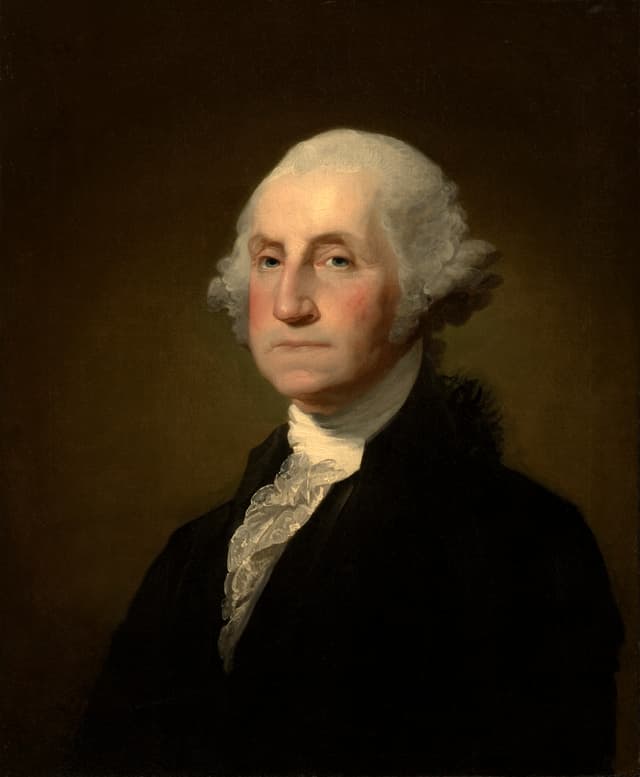
George Washington
George Washington was a pivotal figure in American history, recognized as a Founding Father and the first president of the United States. Born in Virginia, he gained military experience as the commander of the Virginia Regiment during the French and Indian War. His leadership qualities came to the forefront during the American Revolutionary War, where he was appointed commander-in-chief of the Continental Army. Despite facing numerous challenges, including a lack of resources and troop morale, Washington's strategic victories at the Siege of Boston, Trenton, and Yorktown ultimately secured American independence from British rule. His role in the drafting of the U.S. Constitution further solidified his importance in shaping the nation. Elected unanimously as the first president, Washington served two terms from 1789 to 1797, establishing key precedents for the office, such as the two-term limit and the title 'Mr. President.' His leadership during a time of political division set a standard for future presidents. Washington's farewell address emphasized the significance of national unity and warned against the perils of partisanship and foreign entanglements. Although he was a slave owner throughout his life, he began to oppose the institution of slavery later in life, providing for the emancipation of his slaves in his will. Washington's legacy as a leader and statesman continues to resonate in American political life today.
Famous Quotes
View all 17 quotes“It is better to offer no excuse than a bad one.””
“The grand essentials to happiness in this life are something to do, something to love, and something to hope for.””
“It is better to be alone than in bad company.””
Books from the author



Link to this page
Add a free, dofollow link to Lex on your blog, forum, syllabus, or reading list.

<a href="https://lex-books.com/author/george-washington"><img src="https://lex-books.com/badges/read-on-lex.svg" alt="George Washington on Lex" width="160" height="40"></a>[](https://lex-books.com/author/george-washington)[url=https://lex-books.com/author/george-washington][img]https://lex-books.com/badges/read-on-lex.svg[/img][/url]George Washington on Lex: https://lex-books.com/author/george-washington