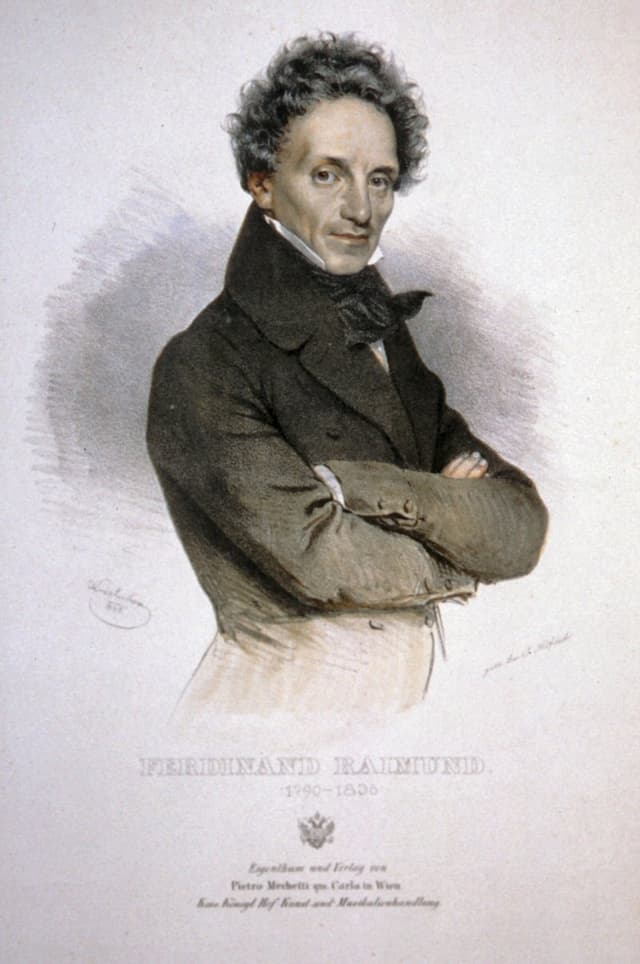
Ferdinand Raimund
Ferdinand Raimund was an influential Austrian actor and playwright, renowned for his contributions to the genre of romantic drama in the early 19th century. Born Ferdinand Jakob Raimann, he initially pursued a career in acting, which laid the foundation for his later success as a playwright. Raimund's works often blended elements of fantasy and social critique, reflecting the cultural and political climate of his time. His most notable plays, such as 'Der Verschwender' (The Wasteful), 'Der Alpenkönig und der Menschenfeind' (The King of the Alps and the Misanthrope), and 'Die gefesselte Phantasie' (The Bound Fantasy), showcased his ability to weave together humor, pathos, and moral lessons, making them popular among audiences and critics alike. Raimund's legacy is significant as he helped to establish a distinct Austrian theatrical tradition that combined local folklore with broader European influences. His innovative use of stagecraft and his exploration of psychological themes paved the way for future generations of playwrights. Despite his relatively short life, his impact on the Austrian theater scene was profound, and he is remembered as a key figure in the development of modern drama in the German-speaking world. His works continue to be performed, reflecting the enduring appeal of his imaginative storytelling and complex characters.
Famous Quotes
View all 1 quotes“Eduard: O, so laß mich zu deinen Füßen stürzen, Tochter des Himmels. Hoffnung: Langsam, mein Herr, nicht so rasch! Sieh, sieh, wie exaltiert. Hat Sie meine Feindin, die Furcht, schon verlassen, weil Sie so schnell wieder zu meiner Fahne schwören? Wissen Sie vielmehr, daß das sehr unartig ist, eine Dame vor sich stehen zu lassen, ohne ihr einen Sitz anzubieten! Oder glauben Sie, weil sich so viele Leute auf mich stützen, daß ich keiner Stütze bedürfe? Nein, mein Herr, einen Sitz.”
Books from the author


Link to this page
Add a free, dofollow link to Lex on your blog, forum, syllabus, or reading list.

<a href="https://lex-books.com/author/ferdinand-raimund"><img src="https://lex-books.com/badges/read-on-lex.svg" alt="Ferdinand Raimund on Lex" width="160" height="40"></a>[](https://lex-books.com/author/ferdinand-raimund)[url=https://lex-books.com/author/ferdinand-raimund][img]https://lex-books.com/badges/read-on-lex.svg[/img][/url]Ferdinand Raimund on Lex: https://lex-books.com/author/ferdinand-raimund