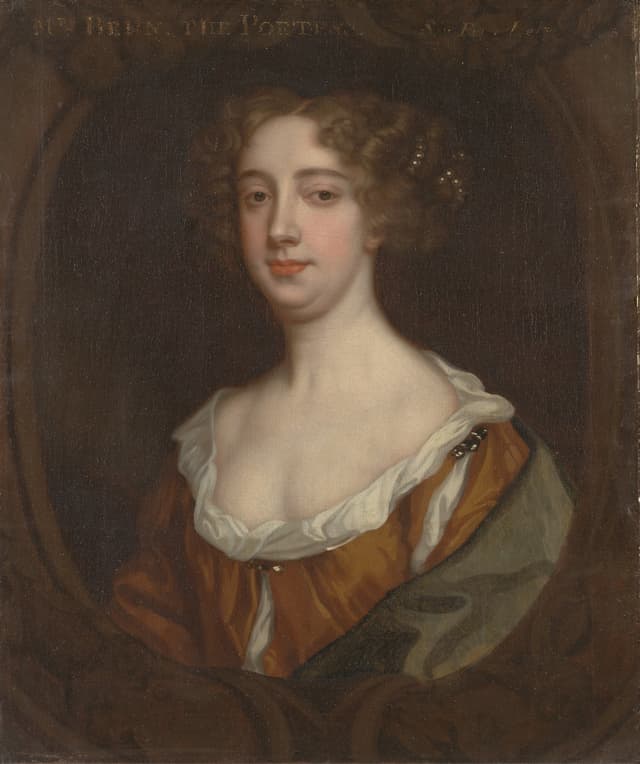
Aphra Behn
Aphra Behn was a pioneering English playwright, poet, and prose writer of the Restoration era, notable for being one of the first women to earn a living through her writing. Emerging from relative obscurity, she gained the attention of King Charles II, who employed her as a spy in Antwerp. After returning to London, Behn faced financial difficulties, including a stint in debtors' prison, which propelled her into the literary world. She became part of a vibrant circle of poets and libertines, including John Wilmot, Lord Rochester, and adopted the pastoral pseudonym Astrea. Her works often reflected the tumultuous political climate of her time, particularly during the Exclusion Crisis, leading to legal troubles that shifted her focus primarily to prose and translation. Behn's literary contributions include the groundbreaking novella "Oroonoko: or, the Royal Slave," which is often regarded as one of the earliest English novels, and the play "The Rover," which showcases her wit and insight into gender dynamics. A staunch supporter of the Stuart monarchy, she notably declined to write a welcoming poem for the new king, William III, shortly before her death. Aphra Behn's legacy is significant; she is celebrated as a literary role model for future generations of women writers. Virginia Woolf famously recognized her impact, suggesting that Behn earned women the right to express their thoughts freely. Today, her grave, located in Westminster Abbey's East Cloister, serves as a testament to her enduring influence in literature.
Famous Quotes
View all 3 quotes“That perfect tranquility of life, which is nowhere to be found but in retreat, a faithful friend and a good library.”
“There is no sinner like a young saint.”
“Money speaks sense in a language all nations understand.”
Books from the author




Link to this page
Add a free, dofollow link to Lex on your blog, forum, syllabus, or reading list.

<a href="https://lex-books.com/author/aphra-behn"><img src="https://lex-books.com/badges/read-on-lex.svg" alt="Aphra Behn on Lex" width="160" height="40"></a>[](https://lex-books.com/author/aphra-behn)[url=https://lex-books.com/author/aphra-behn][img]https://lex-books.com/badges/read-on-lex.svg[/img][/url]Aphra Behn on Lex: https://lex-books.com/author/aphra-behn