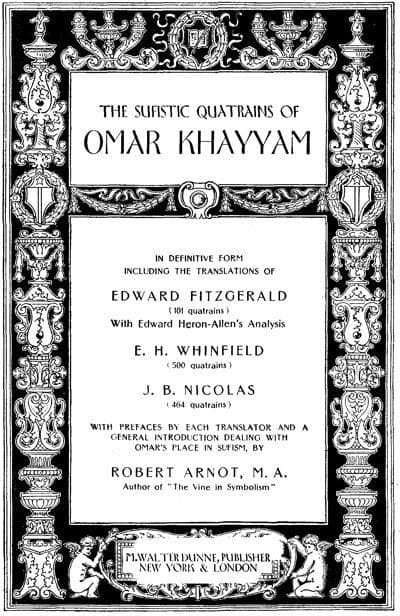
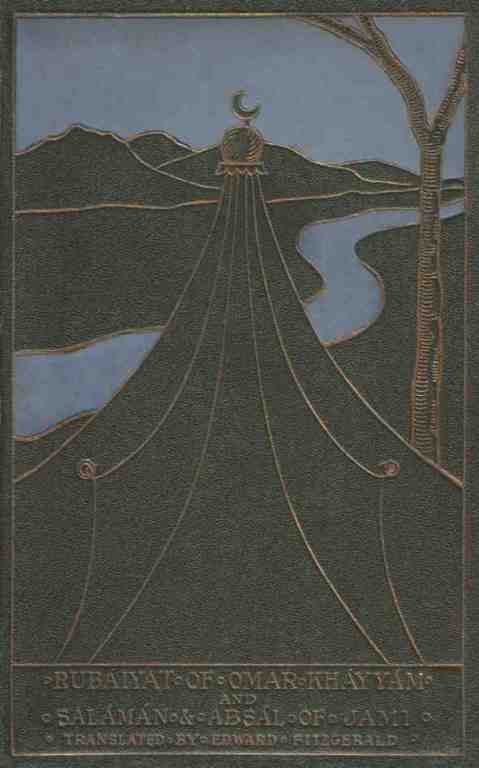
The Rubaiyat of Omar Khayyam
1859
The Rubaiyat of Omar Khayyam
1859
Translated by Edward FitzGerald
Here is the thing about The Rubaiyat: it feels like it was written last Tuesday, not nine hundred years ago. A Persian mathematician-astronomer wrestles with questions that keep us awake at 3am, why are we here, what does it matter, should we drink wine or weep?:and answers not with certainty but with a raised glass. Edward Fitzgerald's 1859 translation became the surprise literary phenomenon of the English-speaking world, sparking clubs and cults and countless dog-eared copies on nightstands. Each quatrain is a small explosion: 'A jug of wine, a loaf of bread, and thou' beside me singing in the wilderness. The poetry is earthy and transcendent in equal measure, urging you to seize this one fleeting life while also acknowledging that none of it may mean a thing. That is the paradox at its heart: embrace pleasure precisely because everything ends.
Editions
X-Ray
“Be happy for this moment. This moment is your life.””
— Omar Khayyam
“Drink wine. This is life eternal. This is all that youth will give you. It is the season for wine, roses and drunken friends. Be happy for this moment. This moment is your life.””
— Omar Khayyam
“To wisely live your life, you don't need to know muchJust remember two main rules for the beginning:You better starve, than eat whateverAnd better be alone, than with whoever.””
— Omar Khayyam
“Oh threats of Hell and Hopes of Paradise!One thing at least is certain - Life flies;One thing is certain and the rest is Lies -The Flower that once has blown forever dies.””
— Omar Khayyam
“As far as you can avoid it, do not give grief to anyone. Never inflict your rage on another. If you hope for eternal rest, feel the pain yourself; but don’t hurt others.””
— Omar Khayyam
“And do you think that unto such as youA maggot-minded, starved, fanatic crewGod gave a secret, and denied it me?Well, well”
— Omar Khayyam
“Your hand can seize today, but not tomorrow; and thoughts of your tomorrow are nothing but desire. Don’t waste this breath, if your heart isn’t crazy, since "the rest of your life" won’t last forever.””
— Omar Khayyam
“Beyond the earth,beyond the farthest skiesI try to find Heaven and Hell.Then I hear a solemn voice that says:"Heaven and hell are inside.””
— Omar Khayyam
“How sad, a heart thatdoes not know how to love, thatdoes not know what it is to be drunk with love.If you are not in love, how can you enjoythe blinding light of the sun,the soft light of the moon?””
— Omar Khayyam
About The Rubaiyat of Omar Khayyam
Chapter Summaries
- 1
- This section provides a biographical sketch of Omar Khayyam, detailing his life, friendships with Nizam ul Mulk and Hasan Ben Sabbah, and his scientific achievements, particularly in astronomy and calendar reform. Fitzgerald also introduces his interpretation of Omar as a 'material Epicurean,' contrasting it with the 'Sufi mystic' view proposed by others like Monsieur Nicolas, and discusses the scarcity and corruption of Omar's original manuscripts.
- 2
- This section contains supplementary notes and explanations for specific points made in the Introduction. It clarifies references, provides additional anecdotes (like Omar's grave wish), and offers further context for cultural and historical allusions, including a discussion on the etymology of 'Assassin' and the meaning of Omar's name.
- 3
- This section presents Fitzgerald's initial translation of 75 Rubaiyat, independent quatrains strung together to form a loose narrative or 'Eclogue.' The poems explore themes of seizing the day, the transience of life, the futility of seeking ultimate answers, and finding solace in wine and companionship, often with a melancholic and skeptical tone.
Key Themes
- Carpe Diem / Seize the Day
- This theme is central, urging the reader to embrace the present moment and its pleasures (especially wine and companionship) because life is fleeting and the future uncertain. It manifests in repeated calls to drink and be merry before death inevitably arrives.
- Fate vs. Free Will / Predestination
- Omar frequently grapples with the concept of predestination, questioning whether human actions are predetermined and if there is any escape from destiny. The poems often express a sense of helplessness against the 'Moving Finger' of fate, leading to a defiant embrace of present enjoyment.
- The Ephemeral Nature of Life / Mortality
- The transient beauty of roses, the rapid passage of seasons, and the inevitable decay of all things serve as constant reminders of human mortality. The poems lament the loss of past glories and loved ones, emphasizing that all, from kings to commoners, eventually turn to dust.
Characters
- Omar Khayyam(protagonist)
- An Astronomer-Poet of Persia (11th-12th century) renowned for his scientific contributions and philosophical quatrains that often celebrated transient pleasures and questioned fate.
- Edward Fitzgerald(supporting)
- The English poet who rendered Omar Khayyam's Rubaiyat into English verse, providing extensive biographical and critical commentary.
- Nizam ul Mulk(supporting)
- A powerful Vizier to Seljuk Sultans, who recounts the story of his youth with Omar Khayyam and Hasan Ben Sabbah, and later became Omar's patron.
- Hasan Ben Sabbah(supporting)
- A brilliant but ill-fated school friend who, after failing in court intrigue, became the feared 'Old Man of the Mountains' and leader of the Ismailians.
- Imam Mowaffak of Naishapur(minor)
- A highly honored and wise teacher in Khorassan whose pupils, including Omar Khayyam, Nizam ul Mulk, and Hasan Ben Sabbah, were believed to attain honor and happiness.
- Monsieur Nicolas(minor)
- A French Consul and scholar who published a different interpretation of Omar Khayyam's work, arguing for a Sufi mystic view.
Link to this book
Add a free, dofollow link to Lex on your blog, forum, syllabus, or reading list.

<a href="https://lex-books.com/book/the-rubaiyat-of-omar-khayyam-e754a761-bec7-4fcf-ae10-66e03d6cc3fc"><img src="https://lex-books.com/badges/read-on-lex.svg" alt="Read The Rubaiyat of Omar Khayyam by Omar Khayyam free on Lex" width="160" height="40"></a>[](https://lex-books.com/book/the-rubaiyat-of-omar-khayyam-e754a761-bec7-4fcf-ae10-66e03d6cc3fc)[url=https://lex-books.com/book/the-rubaiyat-of-omar-khayyam-e754a761-bec7-4fcf-ae10-66e03d6cc3fc][img]https://lex-books.com/badges/read-on-lex.svg[/img][/url]Read The Rubaiyat of Omar Khayyam by Omar Khayyam free on Lex: https://lex-books.com/book/the-rubaiyat-of-omar-khayyam-e754a761-bec7-4fcf-ae10-66e03d6cc3fcCite this book
Reading this edition for a paper or guide? Copy a citation.
Khayyam, Omar. The Rubaiyat of Omar Khayyam. Lex, lex-books.com/book/the-rubaiyat-of-omar-khayyam-e754a761-bec7-4fcf-ae10-66e03d6cc3fc.Khayyam, O. (1859). The Rubaiyat of Omar Khayyam. Lex. https://lex-books.com/book/the-rubaiyat-of-omar-khayyam-e754a761-bec7-4fcf-ae10-66e03d6cc3fcKhayyam, Omar. The Rubaiyat of Omar Khayyam. Lex. https://lex-books.com/book/the-rubaiyat-of-omar-khayyam-e754a761-bec7-4fcf-ae10-66e03d6cc3fc.