The Public and Its Problems
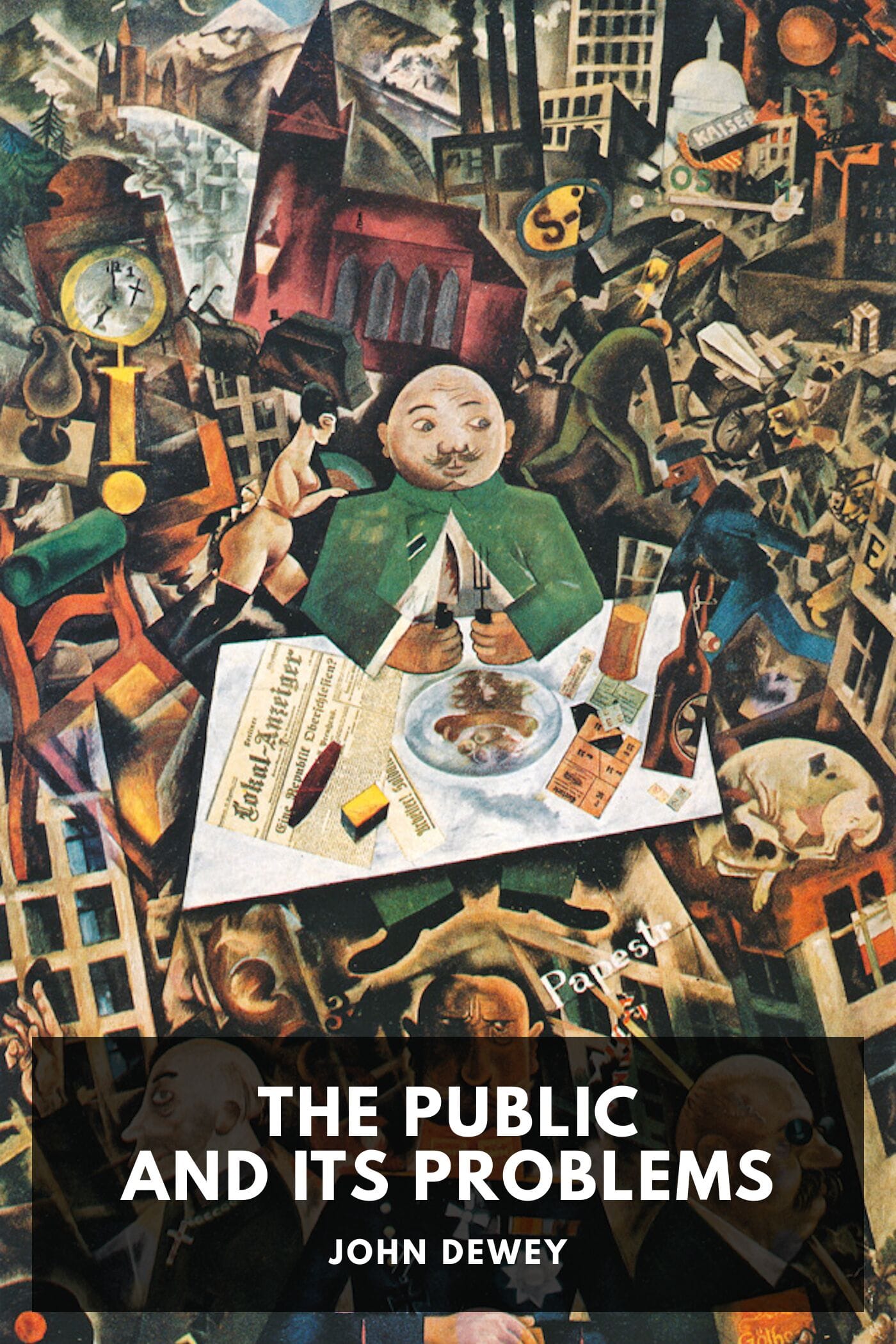
John Dewey's 1927 treatise, *The Public and Its Problems*, offers a robust defense of democracy amidst the disillusionment following WWI, directly engaging with Walter Lippmann's critiques of an uninformed populace. Dewey largely agrees with Lippmann that 'the Public' has become disoriented and susceptible to manipulation, struggling to comprehend the vast, interconnected consequences of modern society. He acknowledges the difficulty for citizens to form coherent opinions when information is overwhelming and the effects of actions are remote. However, Dewey vehemently rejects Lippmann's proposed solution of a technocratic elite, arguing that such a class, even if well-intentioned, would be inherently conservative and resistant to necessary societal change. Instead, Dewey champions a radical vision: simplifying the economic system to empower individuals to understand the direct consequences of their actions. He advocates for decentralization, urging a return to localized, participatory communities where citizens can actively engage in their own organization. Drawing on his earlier work, Dewey posits that education is not merely beneficial but *essential* for cultivating the informed, active citizenry required to realize a truly democratic society. His arguments resonate profoundly today, echoing contemporary debates about information overload, the role of experts, and the enduring tension between centralized power and local autonomy.
Editions


Link to this book
Add a free, dofollow link to Lex on your blog, forum, syllabus, or reading list.

<a href="https://lex-books.com/book/the-public-and-its-problems-bd398c3a-c9a0-446e-9fef-9ef8248fa9f4"><img src="https://lex-books.com/badges/read-on-lex.svg" alt="Read The Public and Its Problems by John Dewey free on Lex" width="160" height="40"></a>[](https://lex-books.com/book/the-public-and-its-problems-bd398c3a-c9a0-446e-9fef-9ef8248fa9f4)[url=https://lex-books.com/book/the-public-and-its-problems-bd398c3a-c9a0-446e-9fef-9ef8248fa9f4][img]https://lex-books.com/badges/read-on-lex.svg[/img][/url]Read The Public and Its Problems by John Dewey free on Lex: https://lex-books.com/book/the-public-and-its-problems-bd398c3a-c9a0-446e-9fef-9ef8248fa9f4Cite this book
Reading this edition for a paper or guide? Copy a citation.
Dewey, John. The Public and Its Problems. Lex, lex-books.com/book/the-public-and-its-problems-bd398c3a-c9a0-446e-9fef-9ef8248fa9f4.Dewey, J. (n.d.). The Public and Its Problems. Lex. https://lex-books.com/book/the-public-and-its-problems-bd398c3a-c9a0-446e-9fef-9ef8248fa9f4Dewey, John. The Public and Its Problems. Lex. https://lex-books.com/book/the-public-and-its-problems-bd398c3a-c9a0-446e-9fef-9ef8248fa9f4.